
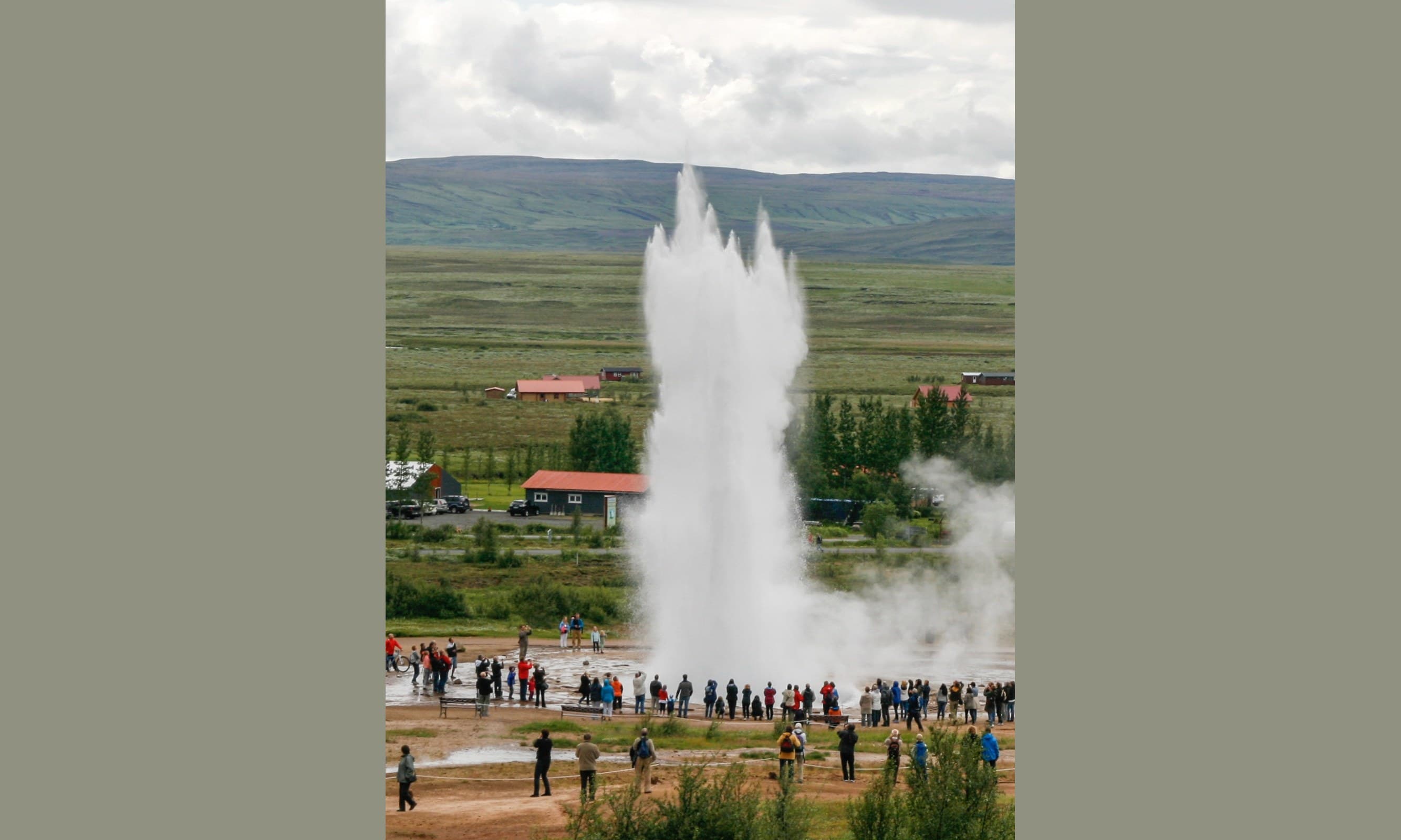
Geysers happen because Iceland sits right on top of a place where the Earth's hot rocks are very close to the surface. Rainwater sinks down through cracks in the rock, hits the hot rocks deep down, boils into steam, and then explodes back up through a hole in the ground.
The original Geysir doesn't erupt very often any more. But just next door is a smaller geyser called Strokkur ('the churn'), and Strokkur is wonderfully reliable - it shoots a tall column of boiling water about 20 metres up into the sky every 6 to 10 minutes. People stand in a circle around it and wait, then jump back when it goes off.
Before it erupts, the water bulges up into a beautiful blue dome the size of a small car. The dome wobbles for a second, then BOOM - it bursts upward in a tall white tower of water and steam. The whole show is over in about three seconds.
Iceland has so much underground hot water that many houses are warmed by it. Pipes carry water straight from the hot ground into people's radiators. Even some pavements have hot water running underneath them, so the snow melts off in winter.