
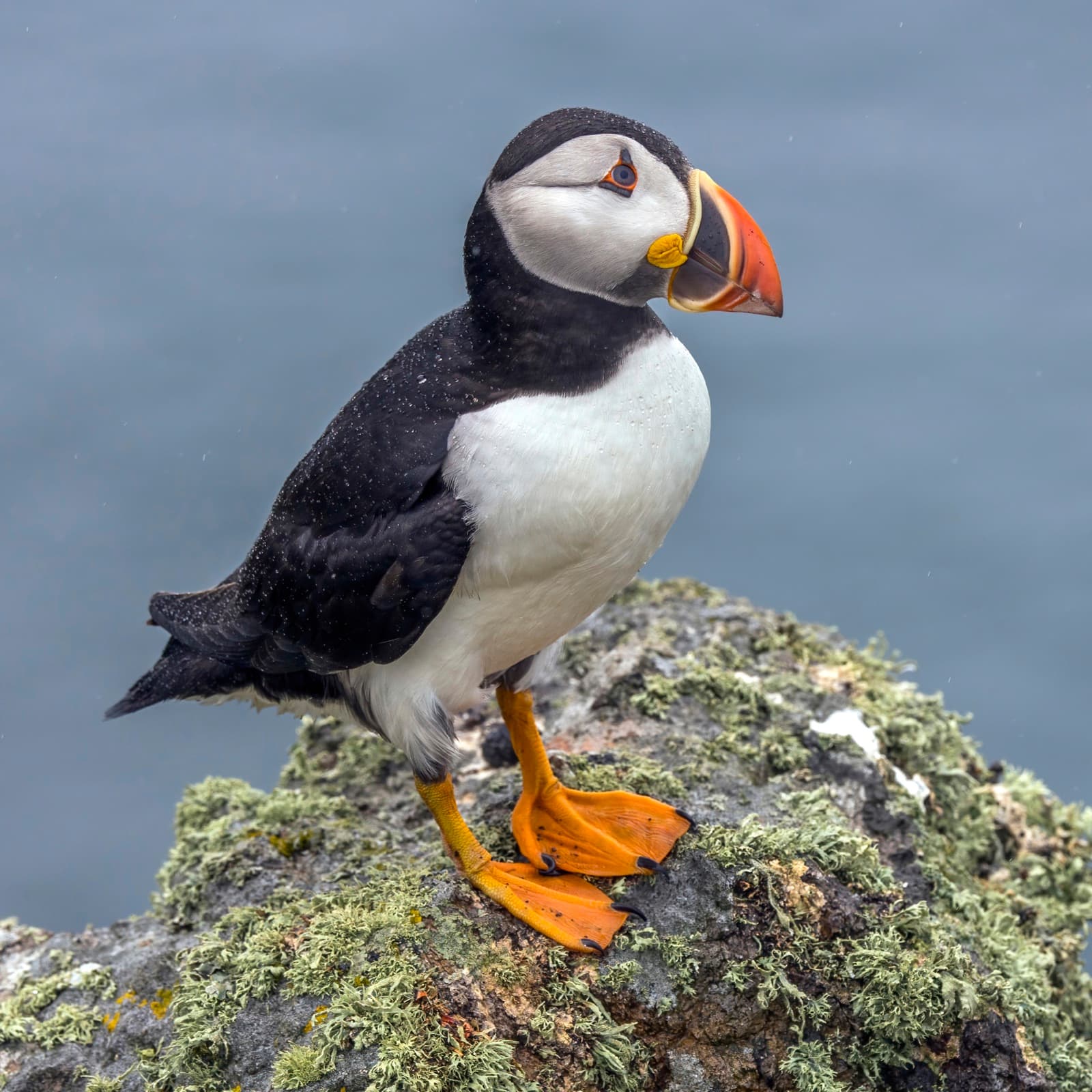
Puffins spend most of their lives at sea - swimming and diving for tiny fish in the cold North Atlantic. They are excellent swimmers, using their wings to 'fly' underwater. They can dive down 60 metres - deeper than a 15-storey building is tall.
Every summer, around 8 million puffins come ashore in Iceland to lay their eggs. They build their nests in long burrows that they dig with their beaks and feet into the soft cliff-top earth. A puffin couple uses the same burrow year after year, and they recognise each other by tapping beaks - a kind of puffin handshake.
Their famous orange beak is only orange in summer - it is their special 'meet the parents' colour for finding a partner. In winter, the bright outer layer falls off, and the beak goes a duller grey for the months they are out at sea. Their feet do the same trick.
When a baby puffin (called a 'puffling') hatches, it stays in the burrow for about six weeks. Then one night it walks out alone, looks up at the moon, and heads down to the sea. In the village of Heimaey, children stay up late on 'puffling nights' to gently rescue any chicks that get confused by the town lights, and let them go safely at the shore.