
Scientists think Arctic foxes walked to Iceland from Greenland over thousands of years ago, when there was much more sea ice in the North Atlantic. They padded across a frozen 'bridge' of floating ice, and when the ice melted, they were stuck on Iceland - and made it home.
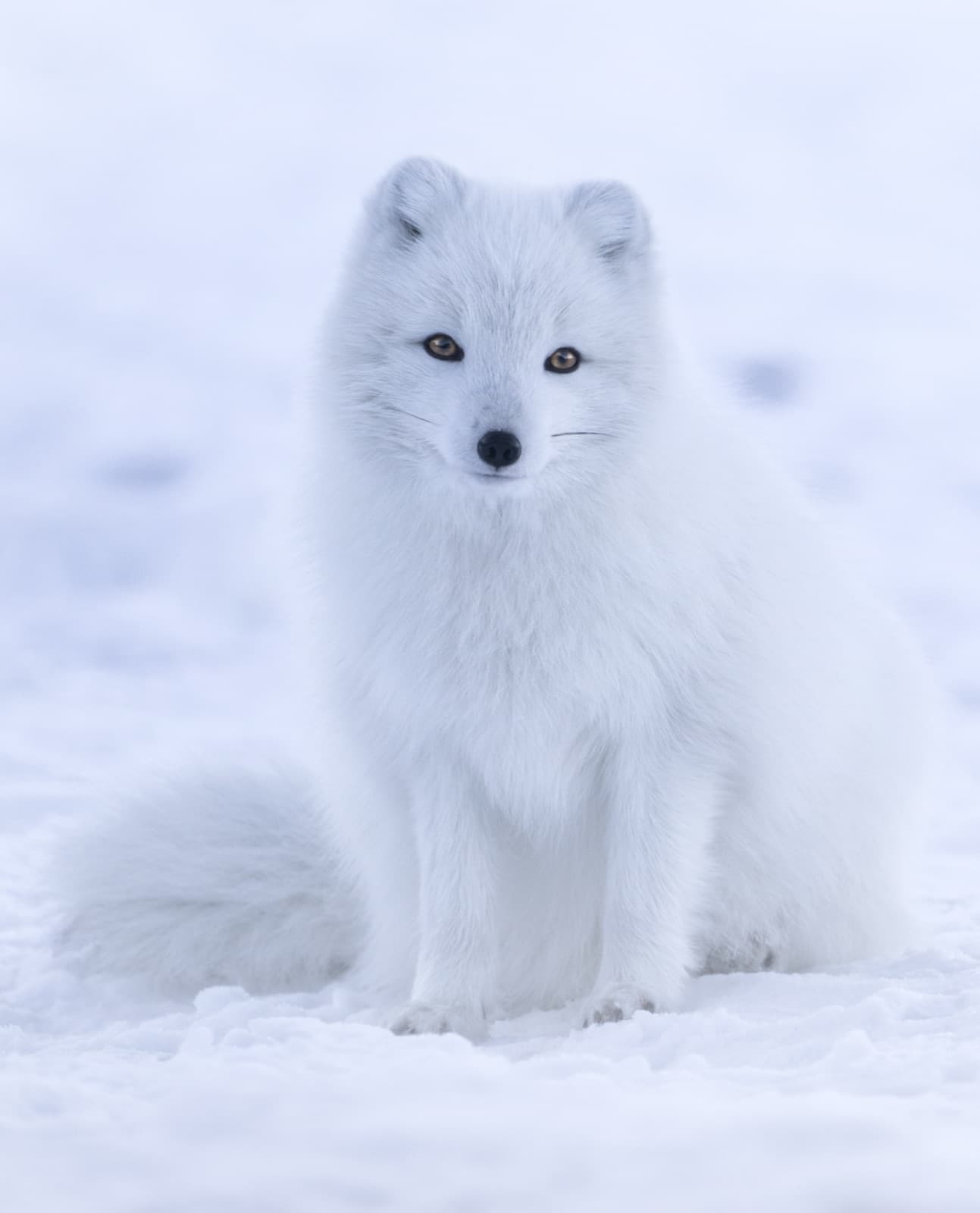
Arctic foxes are perfectly built for the cold. They have two layers of fur (a thick fluffy under-layer, and longer hairs on top) and fur on the bottoms of their feet, so they can walk on ice without slipping or freezing. Their ears are small and rounded - tucked in to lose less heat. Their tail is huge and bushy, and they curl it around themselves like a scarf when they sleep.
They change colour with the seasons. In summer, their fur is brown or grey, to match the rocks and moss. In winter, almost all of them turn pure white, to match the snow. A few - called 'blue foxes' - turn a beautiful smoky-grey-blue instead. Blue foxes are more common in Iceland than anywhere else in the world.
There is a place called the Arctic Fox Centre in a small village called Súðavík, in the wild Westfjords. Researchers there study the foxes and have an injured one or two living in a big outdoor pen. School groups visit to learn about how they survive the long Arctic winters.