
Classroom lesson 路 The Nile馃嚜馃嚞 Egypt

The River Nile

One of the longest rivers on Earth, and the reason Egypt exists

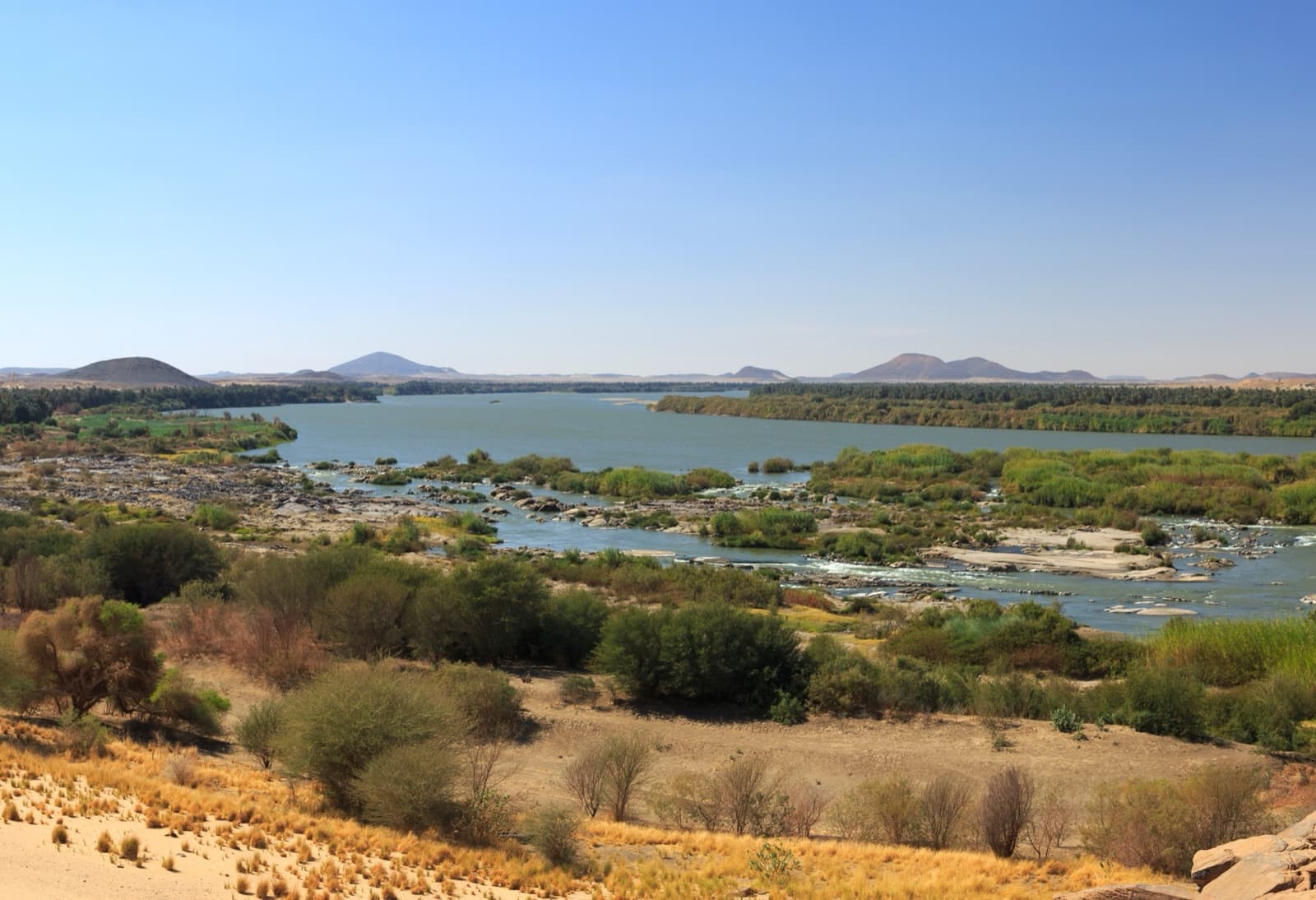
The River Nile winding between rocky shores and green banks

Photo 路 Wikimedia Commons

What is it?

The Nile is the river that runs through the whole length of Egypt. It is around 6,650 kilometres long - one of the two longest rivers on Earth (it has been swapping the record with the Amazon for years). Without the Nile, there would be no Egypt at all.

Tell me more

Egypt is mostly desert, but a thin green strip runs through it from south to north. That strip is the Nile and the land it waters. Almost every Egyptian lives along the river or in the wide delta where it meets the sea. Photos taken from space show Egypt looking like a green flower on a sandy stem.

The Nile is unusual because it flows the 'wrong' way - north. Most big rivers in the world flow south. The Nile starts deep in the African highlands and flows all the way up through Sudan and Egypt before pouring out into the Mediterranean Sea.

For thousands of years, the Nile would flood every summer, spreading a layer of dark, rich mud across the fields. When the water went down, the fields were ready to grow wheat, barley, onions, melons and lettuces. Egyptians called the mud 'the gift of the river'.

The Nile is full of life. Crocodiles, hippos, kingfishers and pelicans live along its banks. Wooden sailing boats called feluccas still glide across it. Cities, farms, ancient temples and tiny villages all line its edge, the same way they did 4,000 years ago.

In the classroom

Walk your class through this in 15 minutes.

Talk together

Discussion prompts

  1. 01If a river is 6,650 km long, how long would it take to walk from one end to the other?
  2. 02Why might a community choose to live by a river? What does a river give you?
  3. 03Most rivers flow south. The Nile flows north. Does the direction of a river change anything about it?
Try this

Classroom activity

On a world map, trace the Nile from its source in the African highlands to the Mediterranean Sea. Mark roughly where Egypt's biggest cities are. Notice how they cluster along the river. Compare with another country's biggest cities - do they cluster the same way?