
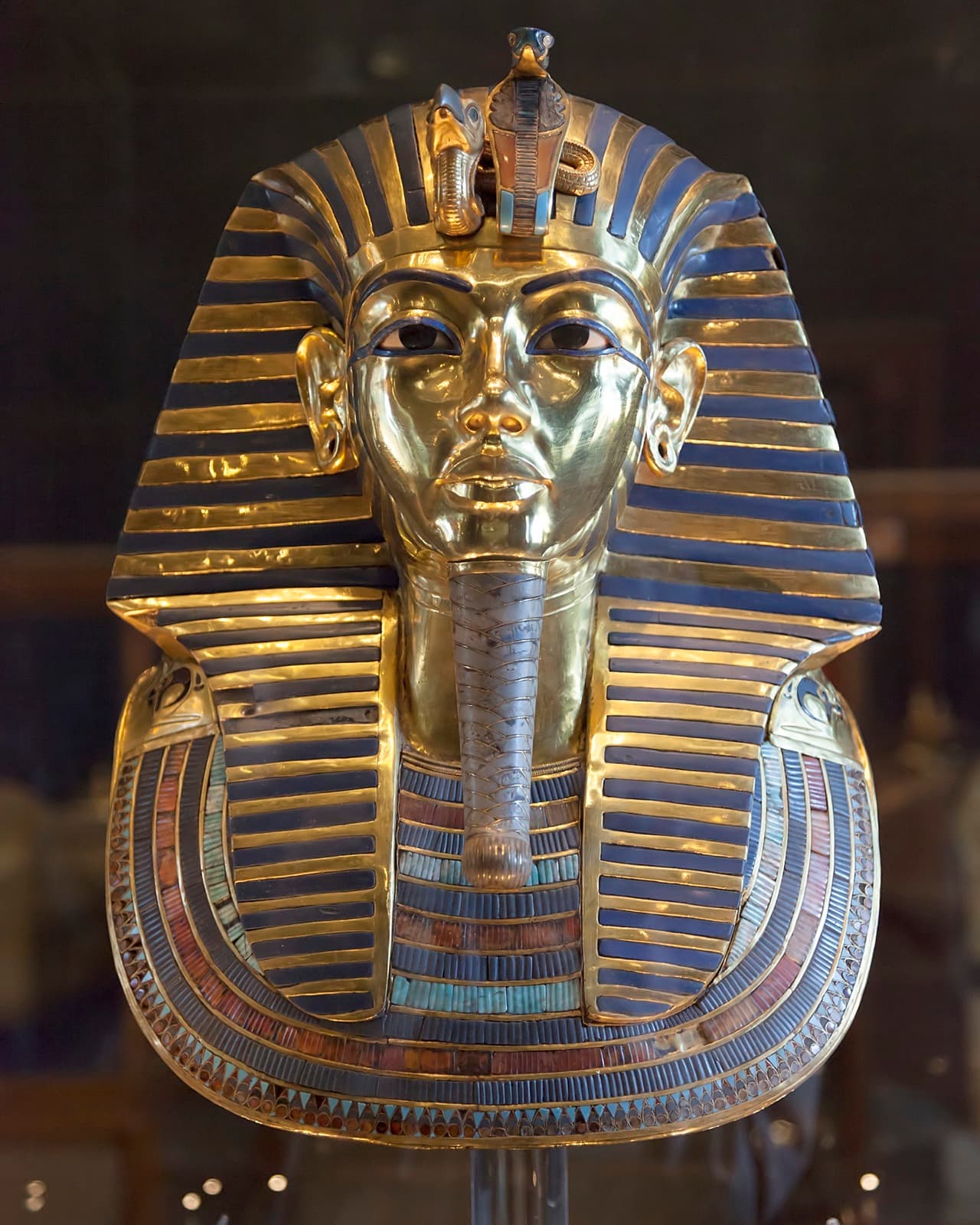
Pharaohs were treated like the most important people in the world. They wore tall blue-and-gold crowns, lived in painted palaces, and were carried around on chairs called sedans. Egyptians believed the pharaoh's job was to keep the land in balance - to make sure the Nile flooded, the harvests came in, and everyone was fed.
There were many famous pharaohs. Khufu built the Great Pyramid. Hatshepsut was one of the most successful female pharaohs - she sent ships on long trade voyages. Ramesses II ruled for 66 years and had so many statues of himself that you still find them all over Egypt.
Tutankhamun, often nicknamed King Tut, became pharaoh when he was just 9. He died young, in his late teens, around 1323 BC. His name was almost forgotten for over 3,000 years. Other pharaohs were more famous; his story slipped quietly into history.
Then in 1922, a British archaeologist called Howard Carter and his team dug through the rubble of a Valley of the Kings hillside and found something unbelievable. A tiny doorway. Behind it, a room. Behind that, more rooms. All packed with over 5,000 objects: a golden chariot, board games, sandals, gold jewellery, painted boxes, and the most famous gold mask in the world. It was a treasure room nobody had opened for thirty-three centuries.