
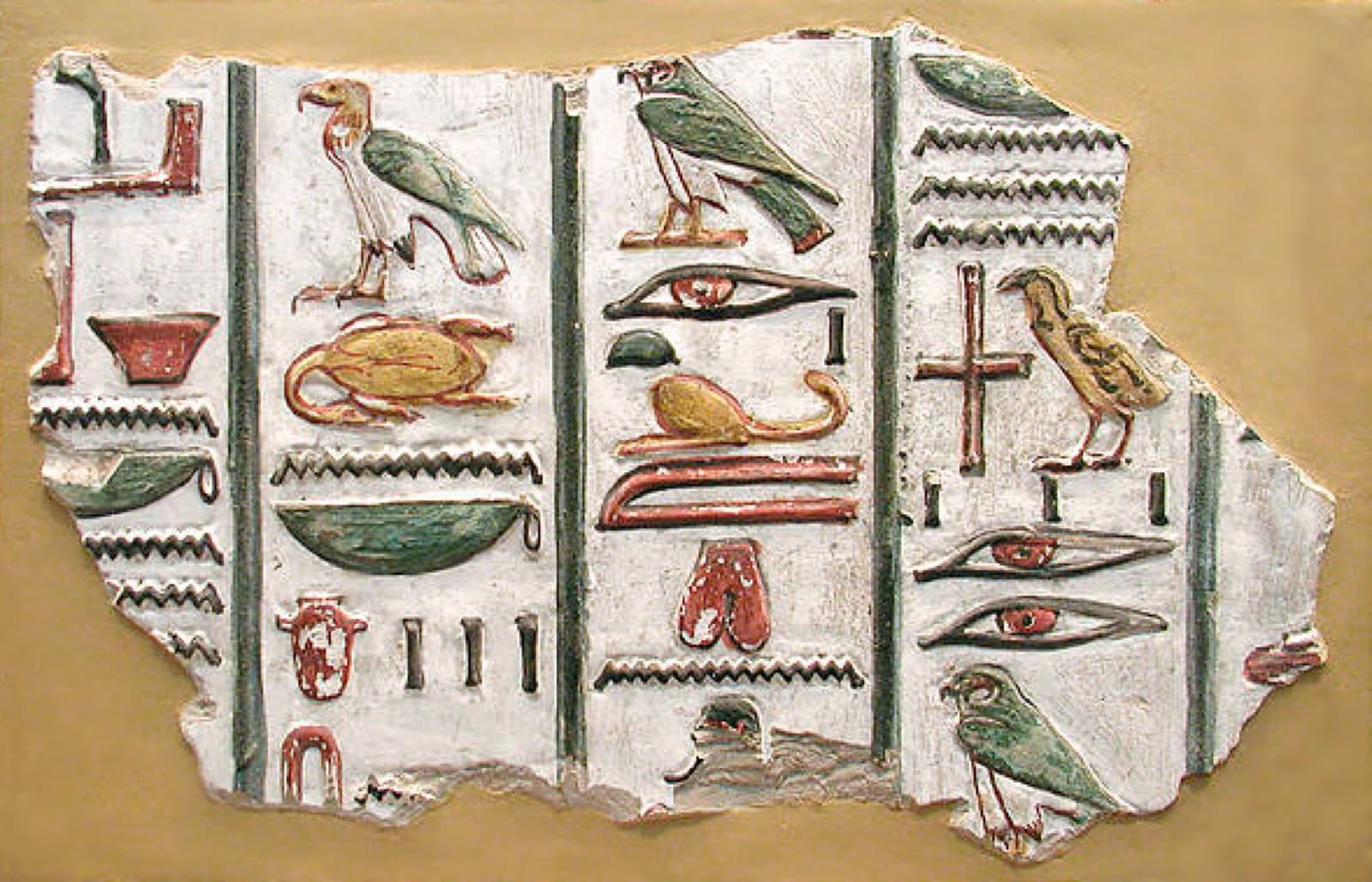
Some hieroglyphs stand for a whole word - the picture of a sun means 'sun'. Others stand for a sound, the way 'b' and 'a' do in English. Egyptian scribes would mix the two together. Reading them is a bit like reading a cross between an alphabet and a puzzle.
Egyptians used hieroglyphs for over 3,000 years - to record stories, write down recipes, label boxes, and decorate temple walls. After a while, people stopped speaking ancient Egyptian, and for nearly 1,400 years nobody on Earth could read what the symbols meant.
Then in 1799, soldiers found a chunk of stone with the same message written three times in three different scripts. It is called the Rosetta Stone. A young Frenchman called Jean-François Champollion spent years comparing them. In 1822 he finally cracked the code, and the ancient Egyptians could speak to us again.
Names of pharaohs are easy to spot. They are written inside an oval loop called a 'cartouche', which acted like a frame. If you can find a cartouche on an Egyptian wall, the symbols inside it are almost certainly a king or queen's name.