
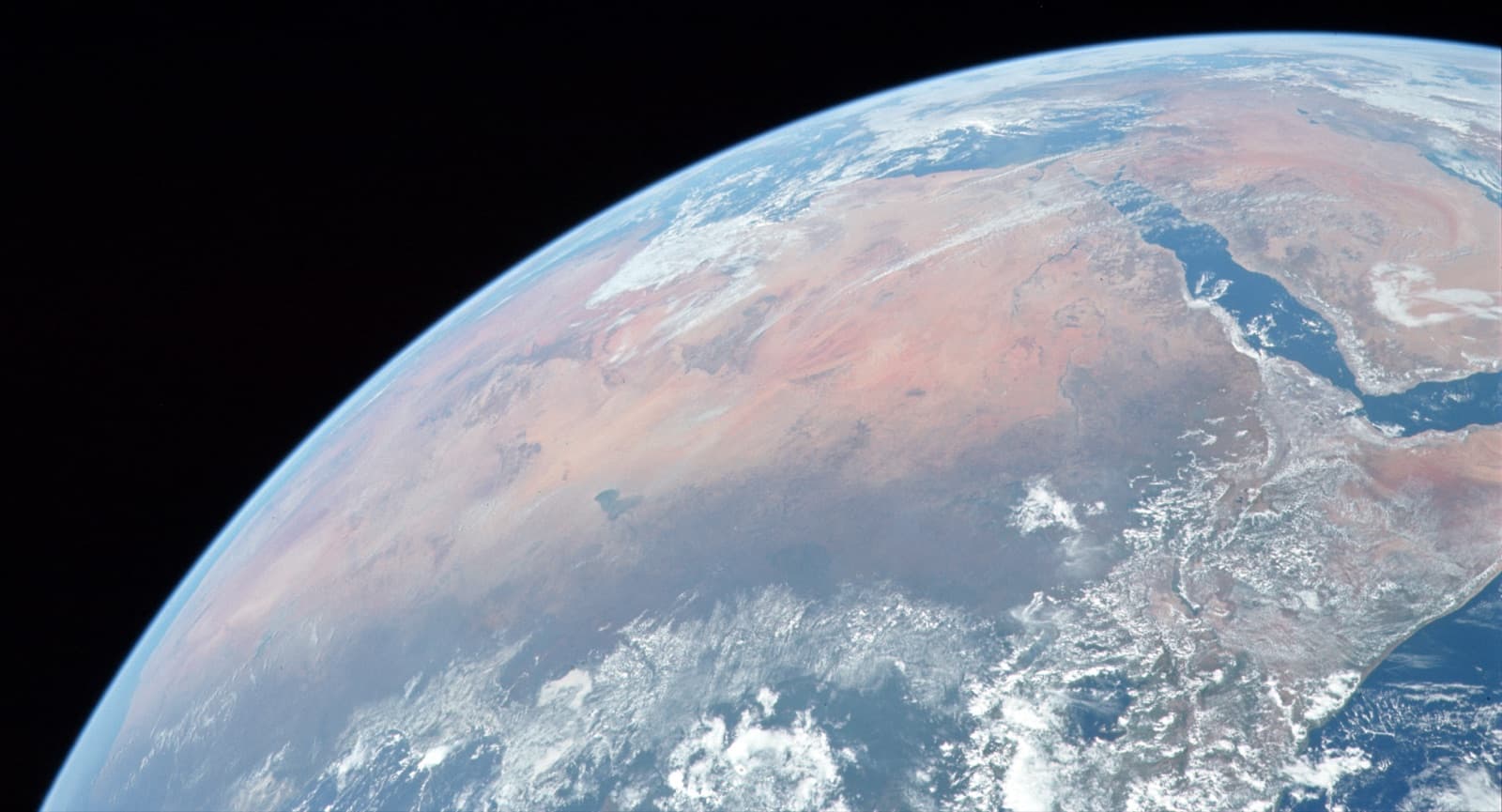
The Sahara is about 9 million square kilometres - roughly the same size as China or the United States. Most of it is rocky and stony. Only about a quarter is the rolling golden sand dunes you see in films, but those dunes can be hundreds of metres tall.
It gets surprisingly cold at night. During the day the sand can reach 50°C - hot enough to fry an egg. At night, with no clouds to hold the heat in, the temperature can drop close to freezing. You'd need shorts and a thick jumper in the same 24 hours.
Plants and animals here are masters of using a tiny amount of water. The Sahara is home to fennec foxes, dromedary camels, gazelles, desert hedgehogs, and lizards that can run across hot sand without burning their feet. Some plants store water inside their thick leaves for months.
People live here too. The Bedouin and Tuareg peoples have crossed the Sahara on camelback for thousands of years, navigating by the stars. Where there is enough water for a spring, an 'oasis' grows: a patch of palm trees and farms in the middle of the sand.