
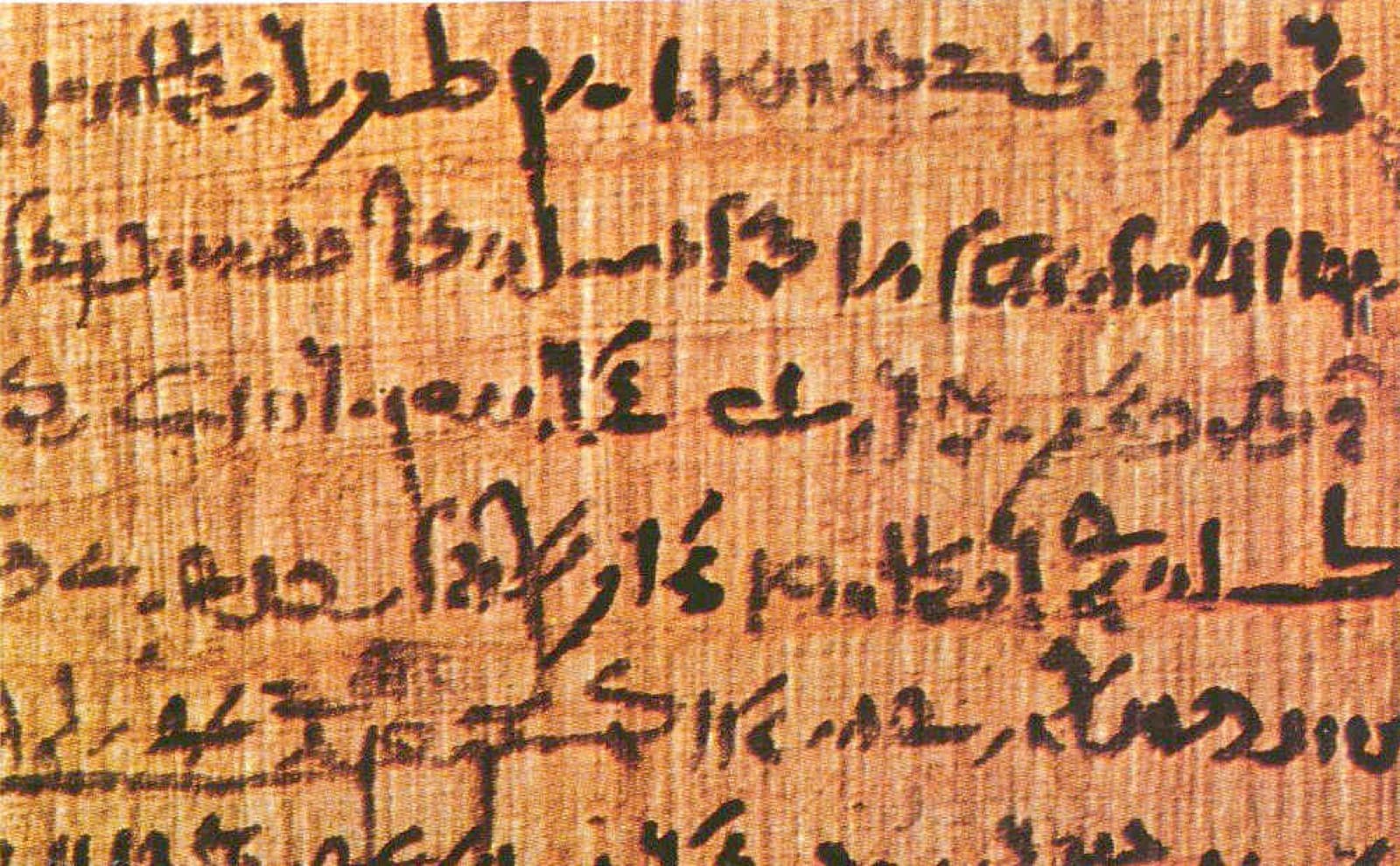
Papyrus plants grow up to 4 metres tall, with a triangular green stem and a feathery top that looks like a firework. The Egyptians cut the stems into thin strips, laid them side by side, then put another layer crossways on top. They squashed the layers together until the natural juice of the plant glued them into a sheet.
Once it dried in the sun, papyrus was strong, light, and rolled up neatly. A long document was glued end-to-end into a scroll - sometimes 20 metres long when unrolled. Egyptians used papyrus for letters, recipes, instructions, songs, lists, drawings, even shopping lists.
Papyrus changed the world. Before it, people wrote on heavy stone or clay tablets. With papyrus you could fold information, send it across a country, store it on a shelf. Scribes - the people who could read and write - were among the most important people in Egypt.
Real papyrus sheets are so tough that some have survived for over 4,000 years. They are like a window straight back to the people who wrote on them. A teacher's note. A child's school exercise. A doctor's prescription. The handwriting is still right there.