
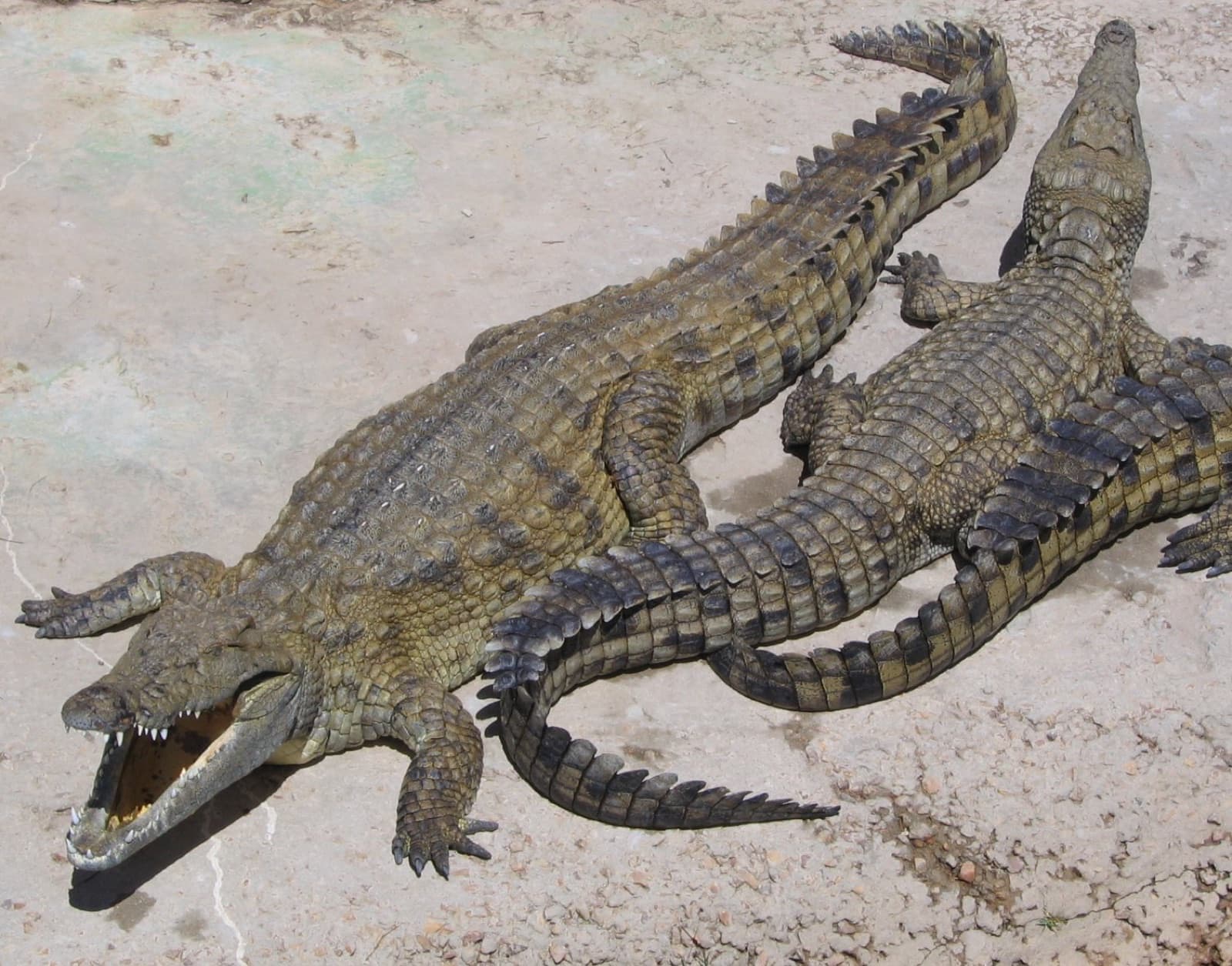
A Nile crocodile's skin is made of thick scaly plates - tougher than leather. Each plate is reinforced with little bone discs underneath called osteoderms. It is basically wearable armour, and it works as a sunshield too: crocodiles bask in the sun for hours without getting burnt.
Crocodiles are reptiles, like lizards and snakes, which means they are cold-blooded. They can't make their own body heat, so they spend a lot of the day lying in the sun to warm up. When they're hot enough, they slip into the river and stay cool. When their mouths are open and they look like they're 'smiling', they are actually cooling off, the way a dog pants.
Mother crocodiles are surprisingly gentle. When her eggs hatch, the mum carefully picks up each baby in her huge mouth and carries them down to the water without hurting them. She'll guard her chicks for months - one of the most caring mums in the reptile world.
Ancient Egyptians had complicated feelings about crocodiles. They were a bit scary, but they were also a sign that the Nile was healthy. The Egyptians had a god with a crocodile head, called Sobek, who they thought of as the protector of the river.