
Classroom lesson 路 Wildlife馃嚜馃嚞 Egypt

The Egyptian vulture

A clever bird that uses stones as tools

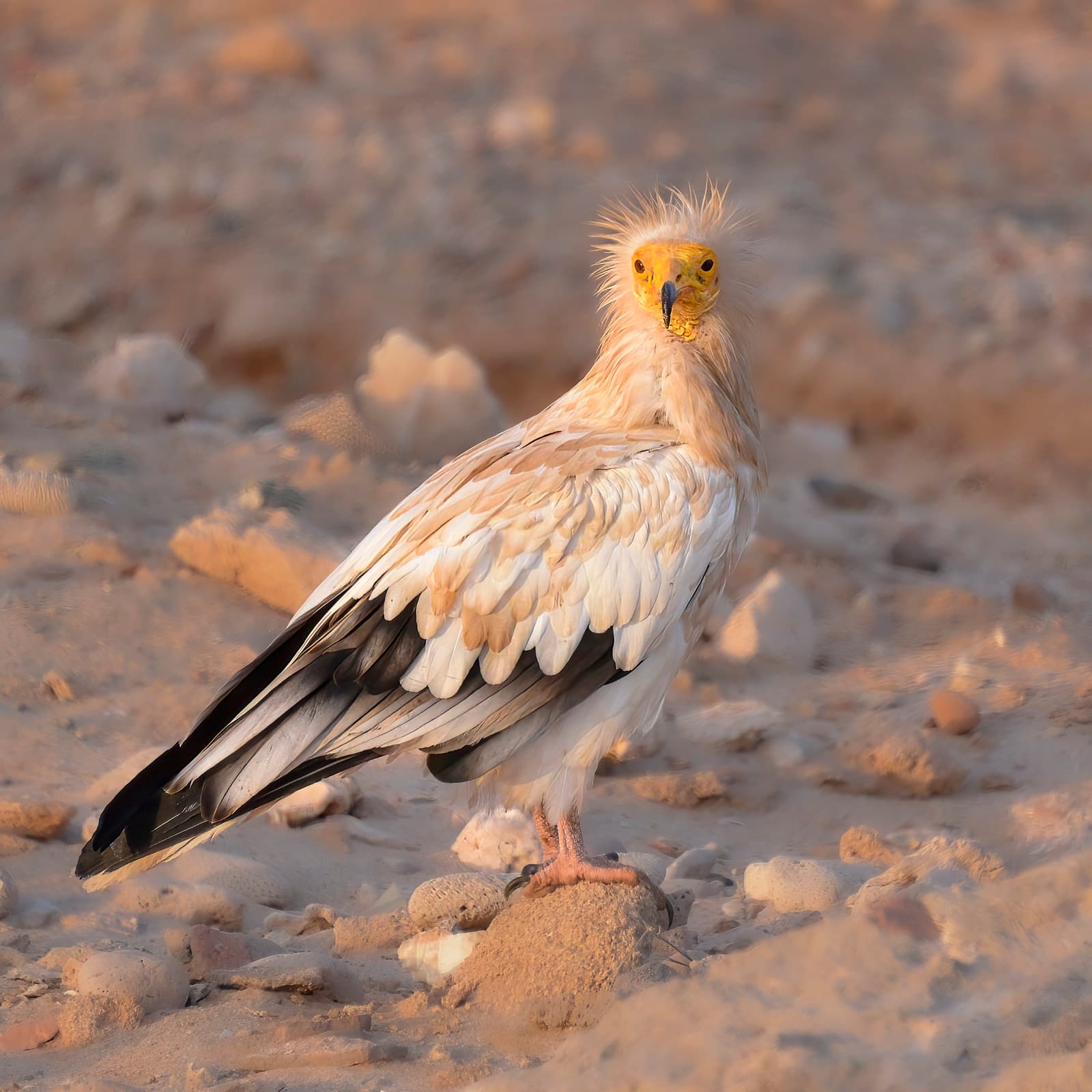
An Egyptian vulture with a bright yellow face standing on sandy ground

Photo 路 Wikimedia Commons

What is it?

The Egyptian vulture is a small white vulture with a bright yellow face. It lives in the deserts of Egypt and many other warm parts of the world. What makes it really special is its brain: it is one of the very few birds known to use tools.

Tell me more

Egyptian vultures love to eat ostrich eggs. The trouble is, an ostrich egg's shell is so thick a normal beak can't crack it. So the vulture finds a rock, picks it up in its beak, and throws it down at the egg, again and again, until the egg cracks open. Scientists watched them do this for years before they believed it.

Using a tool is something most animals never do. Apart from us, only a handful of birds and a few clever mammals figure it out. Egyptian vultures sit firmly in that small, clever club.

Egyptian vultures are 'nature's clean-up crew'. By eating things other animals leave behind, they keep their habitat clean and healthy, like a feathered recycling team. Without vultures, leftover food and bones would pile up.

The ancient Egyptians admired this bird so much that they put it into their hieroglyph alphabet. There is a hieroglyph that looks exactly like an Egyptian vulture, and it stands for the sound 'A'. Egyptian writing literally begins with this bird.

In the classroom

Walk your class through this in 15 minutes.

Talk together

Discussion prompts

  1. 01Using a tool is rare in animals. What do you think it takes - a particular brain? Particular hands or beaks?
  2. 02Why might it be a good thing to have animals that clean up after other animals?
  3. 03Some birds are clever in different ways - crows, parrots, owls. Can you think of any other clever bird stories?
Try this

Classroom activity

Try to crack a hard-boiled egg using only your hands. Then try using a small wooden spoon. As a class, discuss: how much easier was it with the tool? Now imagine doing it without hands - only your mouth and a stone. How would a vulture solve it?