
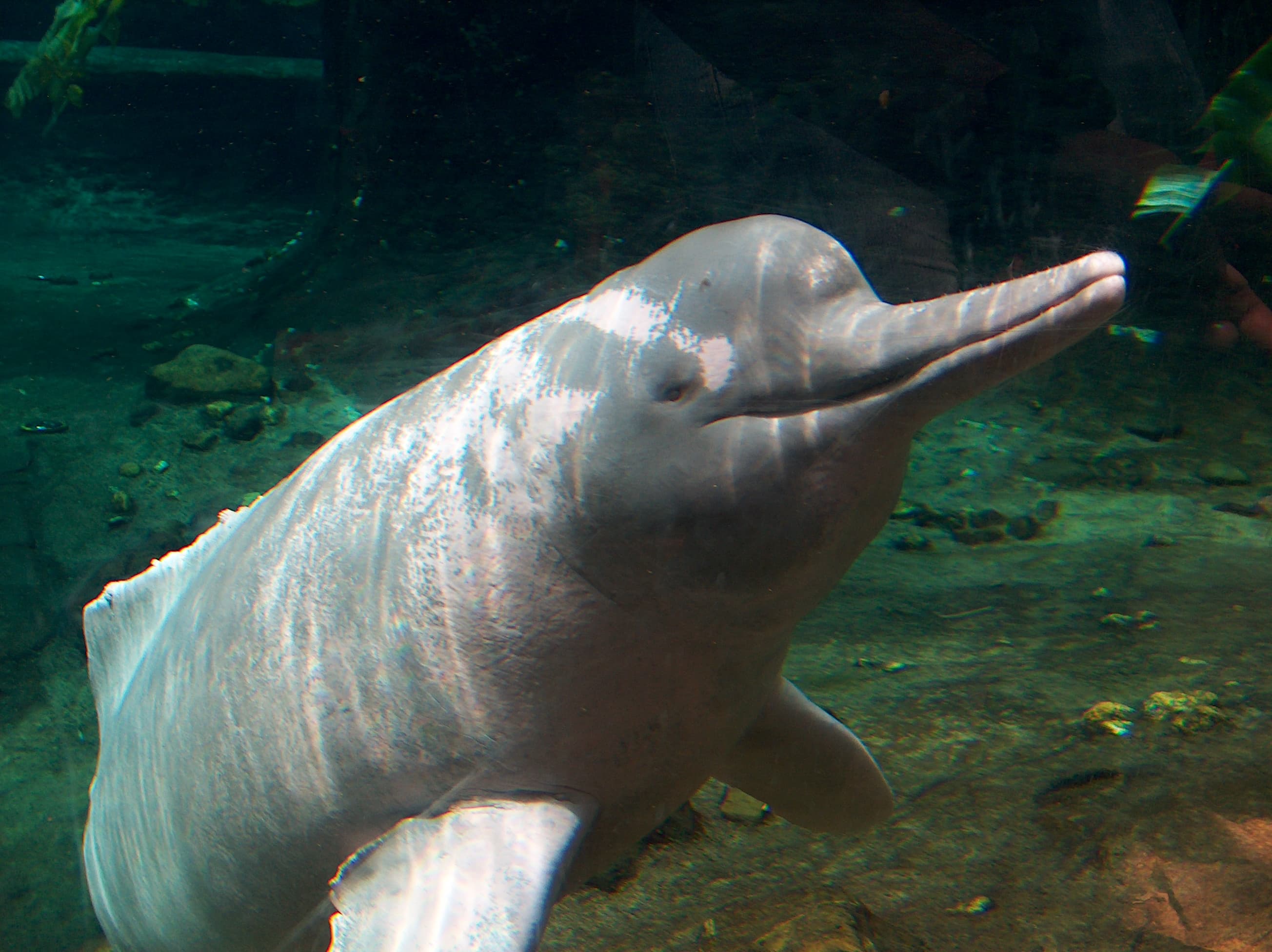
Pink river dolphins are born grey and gradually turn pink as they grow older. The pink colour comes from blood vessels close to the surface of the skin - blushing, in a way. Males are usually pinker than females, and a dolphin that is excited or active may blush a brighter pink. Very old males can be almost completely bubble-gum pink.
Unlike ocean dolphins, pink river dolphins have a flexible neck - they can turn their head 180 degrees. This helps them navigate through flooded forests in the rainy season, weaving between tree roots and branches to catch fish. Their eyes are small but they have good echolocation - they bounce sound waves off objects to 'see' in the muddy brown water.
Pink river dolphins are often seen swimming alone or in small groups. They are curious animals and sometimes approach boats or swimming children to investigate. In many Amazon communities there are traditional stories about botos - some say they are magical beings who can take human form at night.
The pink river dolphin is protected in Colombia and across the Amazon. Scientists monitor populations by photographing the dolphins' dorsal fins, which are unique to each individual. Keeping rivers clean and free of pollution is the most important thing people can do to help them.