
Classroom lesson · The Amazon Rainforest · 🇨🇴 Colombia

The Amazon Rainforest

The largest tropical rainforest on Earth, alive with millions of species

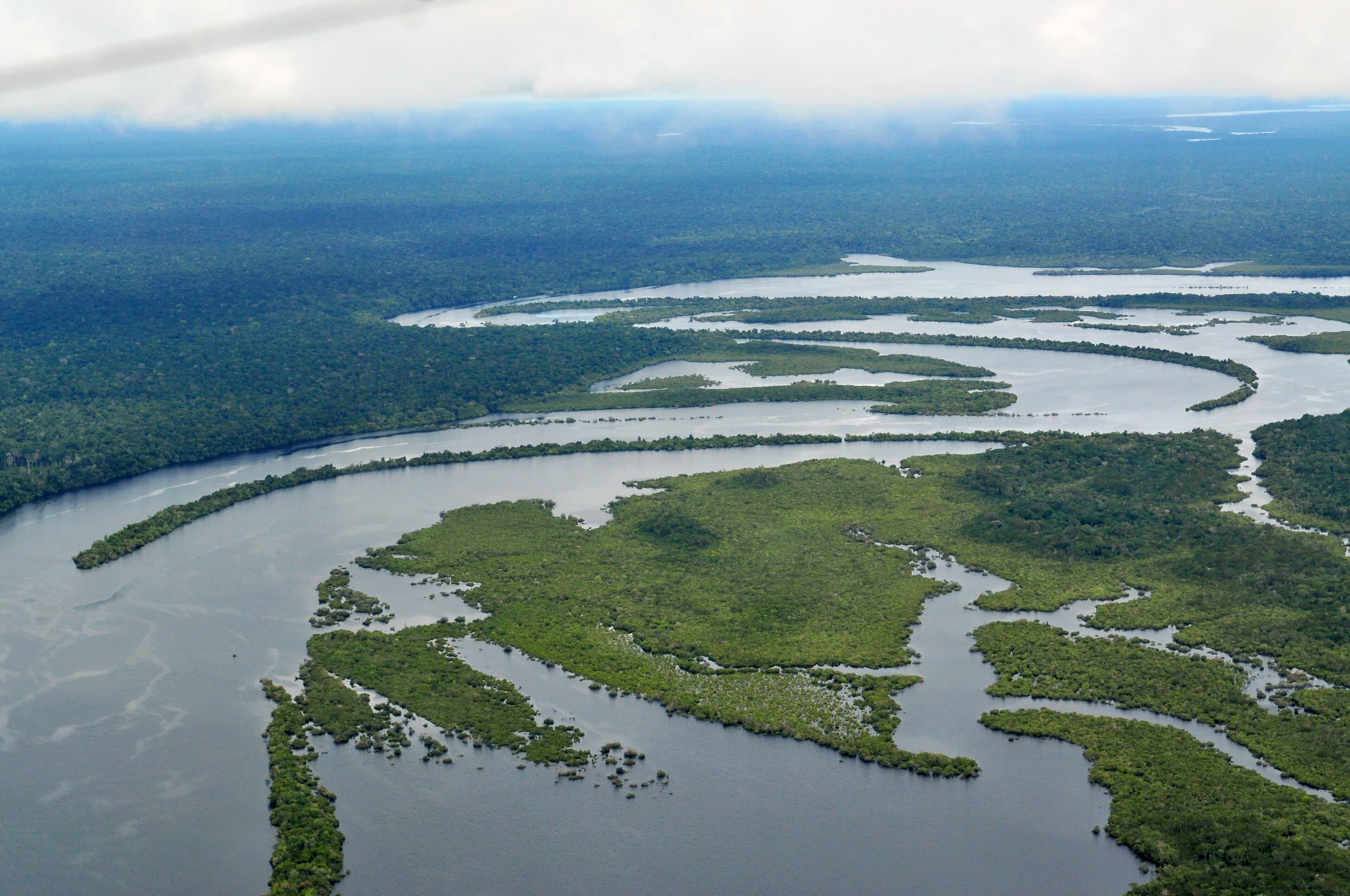
A lush green canopy of Amazon rainforest seen from above, with a winding river below

Photo · Wikimedia Commons

What is it?

The Amazon Rainforest is the biggest tropical rainforest on Earth, and a large piece of it sits in southern Colombia. It is so packed with life that scientists discover new species there almost every year. The forest creates so much oxygen that people sometimes call it 'the lungs of our planet'.

Tell me more

The Colombian Amazon is a world of layers. At the very top, the tallest trees poke up above everything else - these are the 'emergent' trees, and eagles nest up here in the sunshine. Below them is a dense roof of leaves called the 'canopy', where monkeys, toucans and sloths spend most of their lives. Below that is the 'understory', dim and cool, home to frogs, snakes and insects. On the forest floor it is darker still.

Walking through the Amazon feels like being inside a living building. Roots twist out of the ground like giant fingers. Giant lily pads float on the surface of slow brown rivers. Butterflies the size of your hand flutter between shafts of light. The air smells of mud, flowers and rain all at the same time.

The Amazon river itself is extraordinary. It carries more water than any other river in the world - about one fifth of all the fresh water on Earth that flows into the sea. In the rainy season, the river spreads so wide that parts of the forest flood - and fish swim between the trees.

Many Indigenous communities have lived in the Colombian Amazon for thousands of years. They know the plants, animals and rivers better than anyone. Some plants that doctors use today were first discovered by these communities, who shared their knowledge with scientists.

In the classroom

Walk your class through this in 15 minutes.

Talk together

Discussion prompts

  1. 01The Amazon has four layers. Which layer would you most like to visit, and what would you hope to see there?
  2. 02Why might a forest be called 'the lungs of the planet'? What do lungs do, and how is a forest like them?
  3. 03Indigenous communities have known the Amazon for thousands of years. What might we learn by listening to people who know a place very well?
Try this

Classroom activity

On a large piece of paper, draw the four layers of the Amazon rainforest as a cross-section: emergent trees at the top, canopy, understory and forest floor at the bottom. Research and add three animals to each layer. Compare with a partner - did you choose different animals?