
Classroom lesson · The Colombian Andes · 🇨🇴 Colombia

The Colombian Andes

Three mountain ranges running through the heart of the country

Three green ridges of the Colombian Andes rising into low cloud

Photo · Wikimedia Commons

What is it?

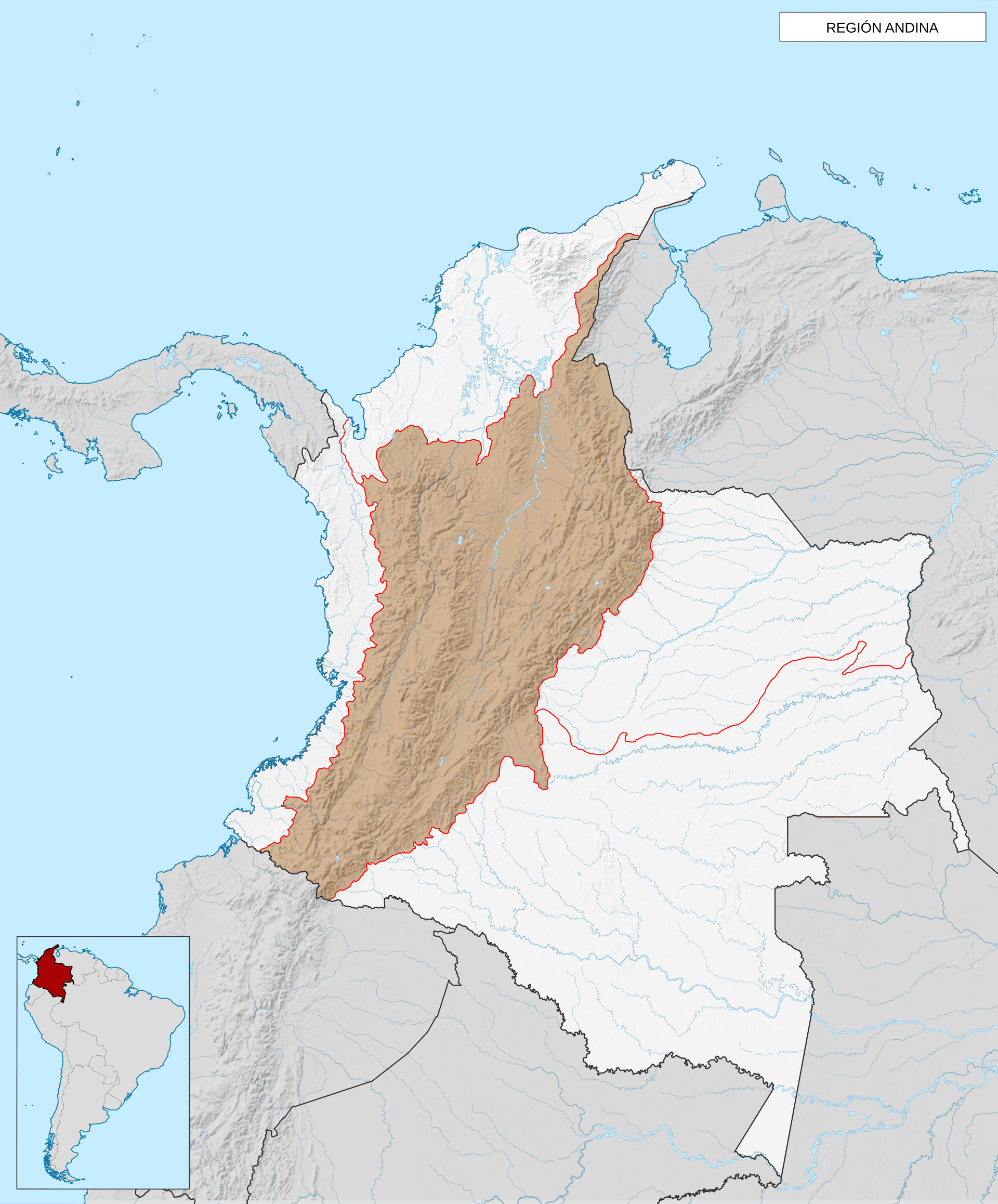
The Andes are the longest mountain range on Earth, running all the way down the western side of South America. In Colombia, the Andes split into three separate ranges - the Western, Central and Eastern Cordilleras - like three fingers spreading north. Between them run deep river valleys and some of the most fertile farmland in the world.

Tell me more

The word 'cordillera' means 'mountain chain' in Spanish. Colombia's three cordilleras were formed millions of years ago as huge plates of rock underground slowly collided and pushed the land upwards. Today those peaks are still covered in cloud forests, moorlands and snowfields - a completely different world from the tropical coast just a few hundred kilometres away.

Because Colombia's mountains are so close to the Equator, temperatures don't change much between summer and winter - instead, the temperature depends on how high up you go. Colombians talk about 'clima' (climate) in terms of altitude: warm and tropical near the valleys, cool and misty in the middle, cold and windy near the peaks. Farmers grow different crops at different heights.

The Andes in Colombia are full of ancient volcanoes, some still active. Hot springs bubble up where water seeps deep underground and is heated by rock. Communities living near volcanic soil have some of the most productive farmland anywhere - volcanic soil is incredibly rich in minerals.

At the very highest points of the Andes in Colombia, above about 3,000 metres, is a special kind of landscape called 'páramo' - a high-altitude moorland covered in strange spiky plants and often wrapped in mist. Páramos are incredibly important because they store water and feed the rivers that flow down to the cities below.

In the classroom

Walk your class through this in 15 minutes.

Talk together

Discussion prompts

  1. 01In Colombia, altitude controls temperature instead of season. How does weather where you live change through the year - and what controls it?
  2. 02Why might farmers grow different crops at different heights?
  3. 03If you lived at 3,000 metres in the páramo, what challenges would be different from living at sea level?
Try this

Classroom activity

Draw a cross-section of a Colombian mountain from the warm valley to the cold peak. Label what crops or plants might grow at each height (tropical fruit at the bottom, coffee in the middle, potatoes higher up, frost near the top). Compare with a classmate - are there mountains where you live that work the same way?