
Classroom lesson · The Caribbean Coast · 🇨🇴 Colombia

The Caribbean Coast

Warm turquoise sea, coral reefs and beaches where two worlds meet

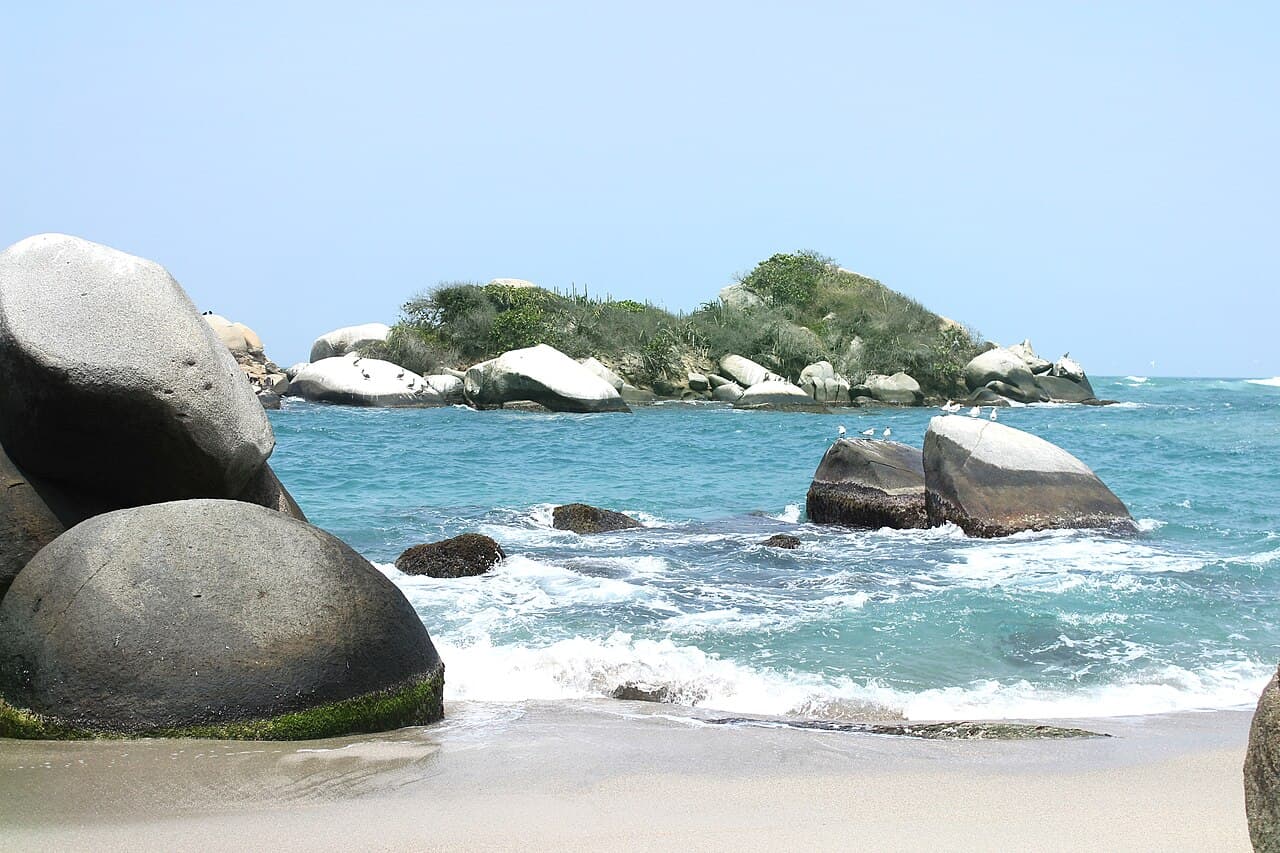
A turquoise Caribbean bay with white sand and palm trees in Colombia

Photo · Wikimedia Commons

What is it?

Colombia's Caribbean coast stretches for about 1,760 kilometres along the northern edge of the country. Here, warm turquoise water meets white sand beaches, coral reefs, and colourful coastal towns. It is one of the few places in the world where the mountains come right down to a tropical sea.

Tell me more

The Caribbean Sea off Colombia is home to some of the most beautiful coral reefs in the Americas. Coral reefs are built by tiny animals over thousands of years, creating an underwater city of colour and shape. Fish of every pattern weave in and out. Sea turtles glide past on their way to nest on the beaches.

The coast has a different feel from the Andes. The pace is slower, the music louder, the food spicier, and the nights warmer. Cumbia music - Colombia's most famous rhythm - was born here, from the mix of African, Indigenous and European traditions that all met on this stretch of coast.

One of the most remarkable parts of the Caribbean coast is the Rosario Islands - a collection of small coral islands about an hour by boat from Cartagena. Many of them are so flat that they barely rise above the water. They are famous for their coral reefs and for being home to Colombia's first marine national park.

At the far north of the coast, near the Venezuelan border, is the Guajira Peninsula - a dry, windswept place unlike anything else in Colombia. Here the land is sandy and almost desert-like, and the sky is full of pink flamingos feeding in the shallow coastal lagoons.

In the classroom

Walk your class through this in 15 minutes.

Talk together

Discussion prompts

  1. 01The Caribbean coast is where African, Indigenous and European traditions all met. How might that mixing of people create new kinds of music and food?
  2. 02Coral reefs are built by tiny animals over thousands of years. Why might it be important to look after them?
  3. 03How might life feel different on a coast compared to life in the mountains?
Try this

Classroom activity

Draw a map of Colombia's north coast. Mark the Rosario Islands, Cartagena, and the Guajira Peninsula. Then find a picture of a coral reef and draw three animals you might see there. Label which layer of the reef each one lives in.