
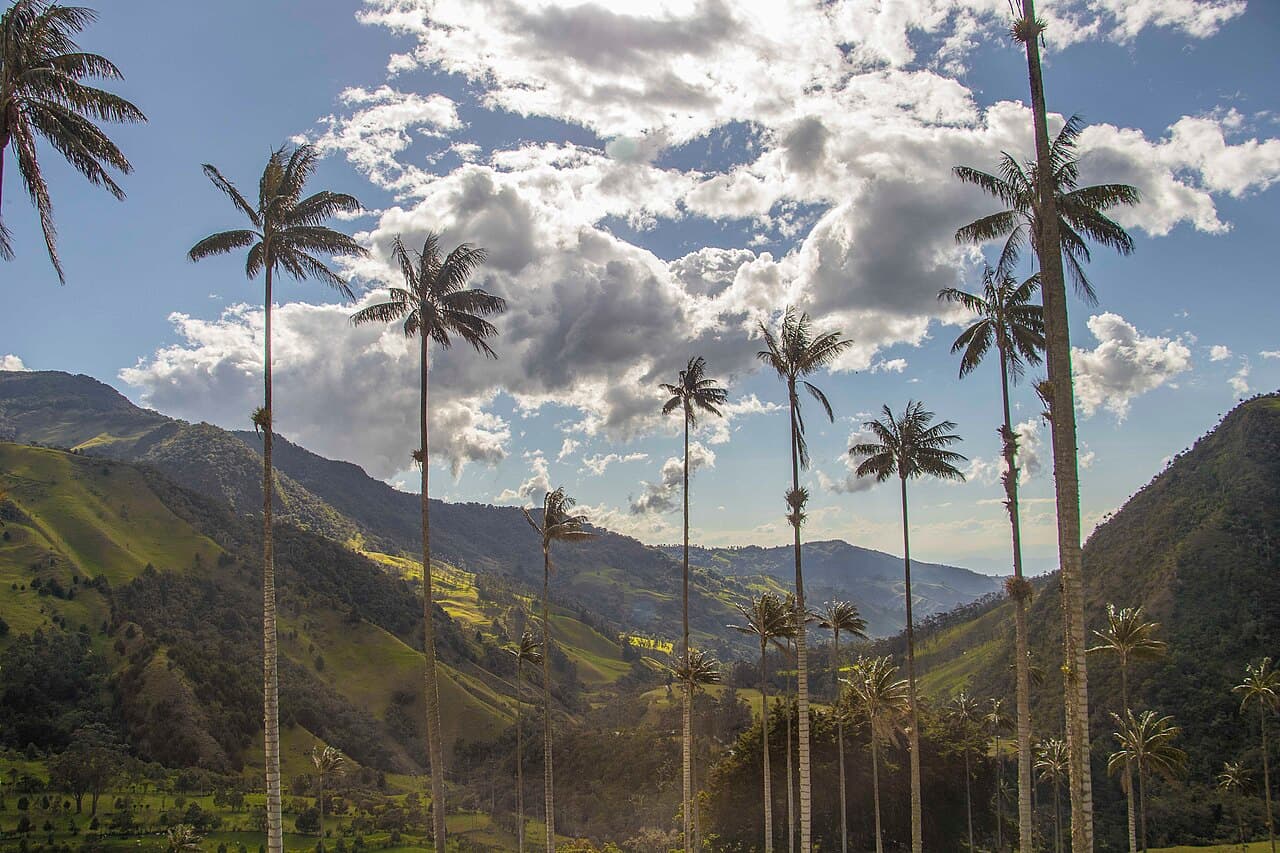
A 60-metre wax palm is taller than a 15-storey building. What makes them even more dramatic is where they grow - not in a flat tropical landscape, but in a high, cool, misty valley in the Andes, surrounded by green hills. They look completely otherworldly, like trees from a fairy tale.
The wax palm gets its name from a waxy coating that covers its trunk. Indigenous communities in the Andes used to collect this wax to make candles. The tree was named Colombia's national tree in 1985, and it is now protected by law. It takes a wax palm about 100 years to reach its full height.
The Cocora Valley is also a wonderful place for birdwatching. Hummingbirds dart between flowers in the lower meadows. The endangered yellow-eared parrot nests at the top of the wax palms - it is one of the only birds in the world that nests in this kind of tree. Conservationists have worked hard to help both the parrots and the palms recover.
Visitors arrive on horseback or on foot through deep cloud forest before emerging into the open valley. Looking up at the wax palms from below, with cloud drifting around their crowns, is one of the most famous views in all of Colombia.