
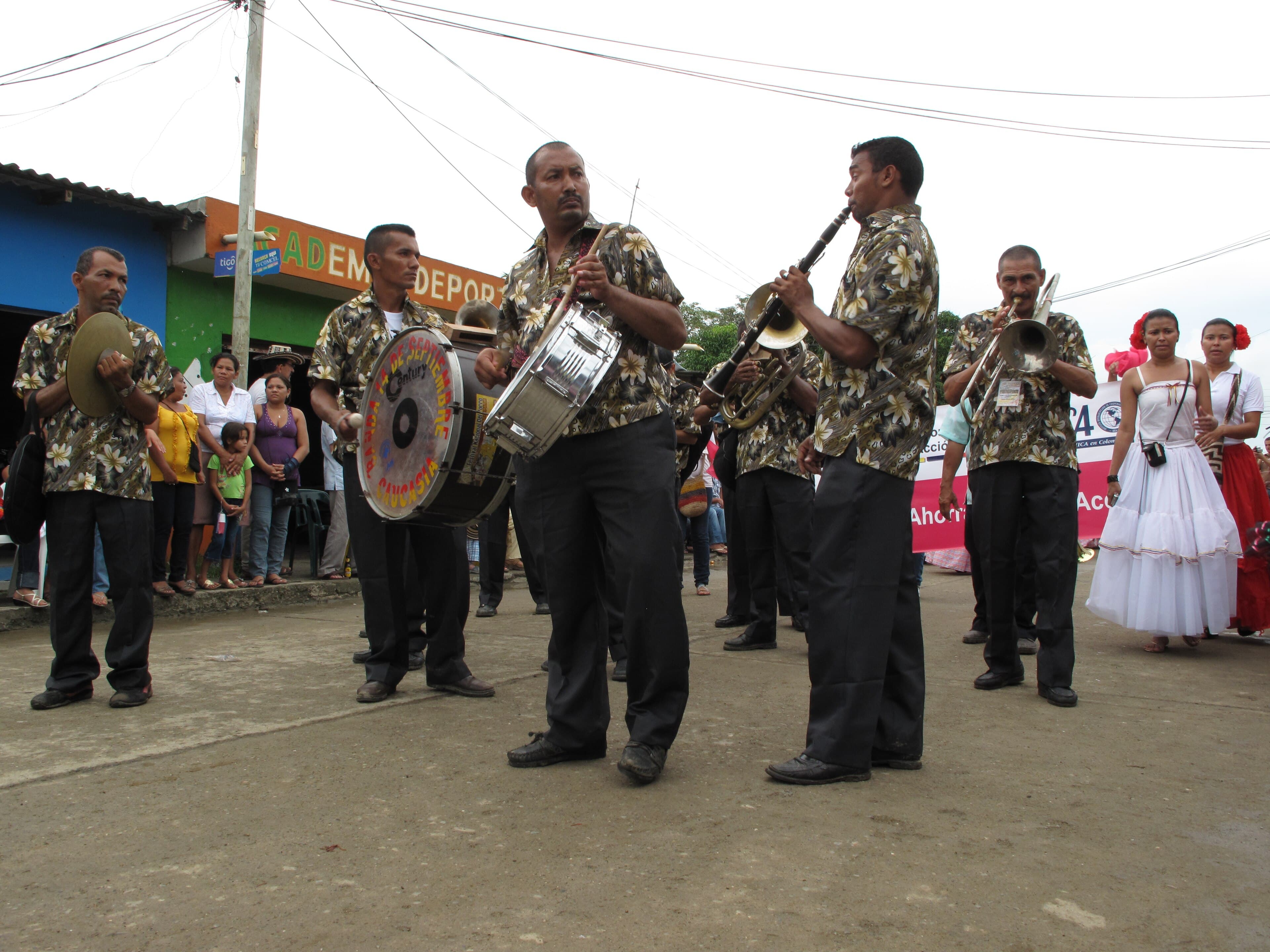
Cumbia has a strong, hypnotic beat that you feel in your feet almost immediately. The main instrument is the caja - a drum made from a hollowed log. Alongside it plays a flauta de millo (a small cane flute) and maracas. In traditional cumbia, a group of women in wide white skirts hold candles in one hand and dance with their partner while keeping the candle steady.
The dance is slow and dignified, with a gentle swaying step. The women hold their wide skirts out with one hand, and the couple revolves slowly in a circle. In some traditions, the man tries to get close and the woman gently keeps distance, using her skirt like a fan - it is a kind of gentle, playful conversation done in movement.
Cumbia spread from Colombia's coast throughout Latin America during the 20th century. In Mexico, Peru, Argentina and beyond, local musicians heard the rhythm and added their own instruments and styles. Today there are Mexican cumbias, Peruvian cumbias and many others. The Colombian original inspired them all.
The Carnaval de Barranquilla, Colombia's famous coastal carnival, is the biggest celebration of cumbia music and dance. Thousands of musicians and dancers perform in the streets for four days. UNESCO has recognised it as a world cultural heritage, like the tango and flamenco.