
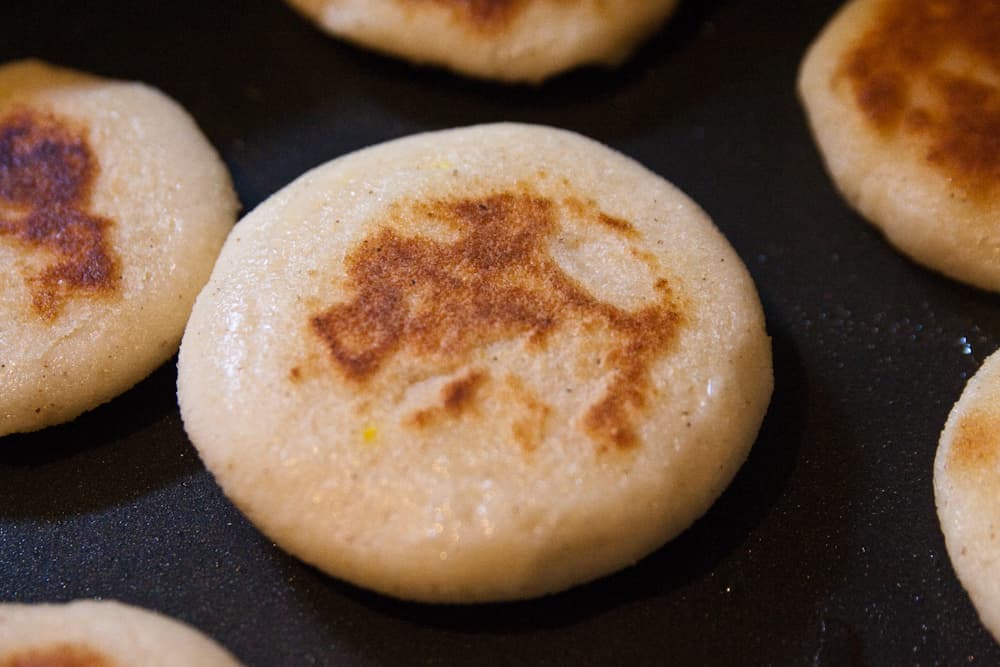
To make a basic arepa, you mix ground corn flour with a little salt and water, shape the dough into a flat disc, and cook it on a griddle until golden on both sides. That's it. But the real variety comes in what you do next: split it open and fill it with cheese, butter or egg; top it with hogao sauce (a tomato and onion mix); stuff it with black beans and shredded chicken.
Different regions of Colombia have completely different arepa traditions. On the Atlantic coast, arepas are often thin and large, eaten plain. In Medellín and the Paisa region, the arepa is thick, small and always buttered. In Chocó on the Pacific coast, arepas are made with coconut milk. In Boyacá, there is the arepa de choclo - a sweet corn version.
Arepas have been around for at least 3,000 years. Indigenous peoples across Colombia and Venezuela were making them long before any European arrived. The word 'arepa' comes from the language of the Cumanagoto people. It is one of the oldest foods in the Americas still eaten every day.
A plate of arepas on the table in Colombia is like bread in France or rice in Japan - it is so normal that it is barely noticed. But when Colombians live abroad, the thing they often miss most is a proper arepa, made from the right kind of corn flour, golden on both sides.