
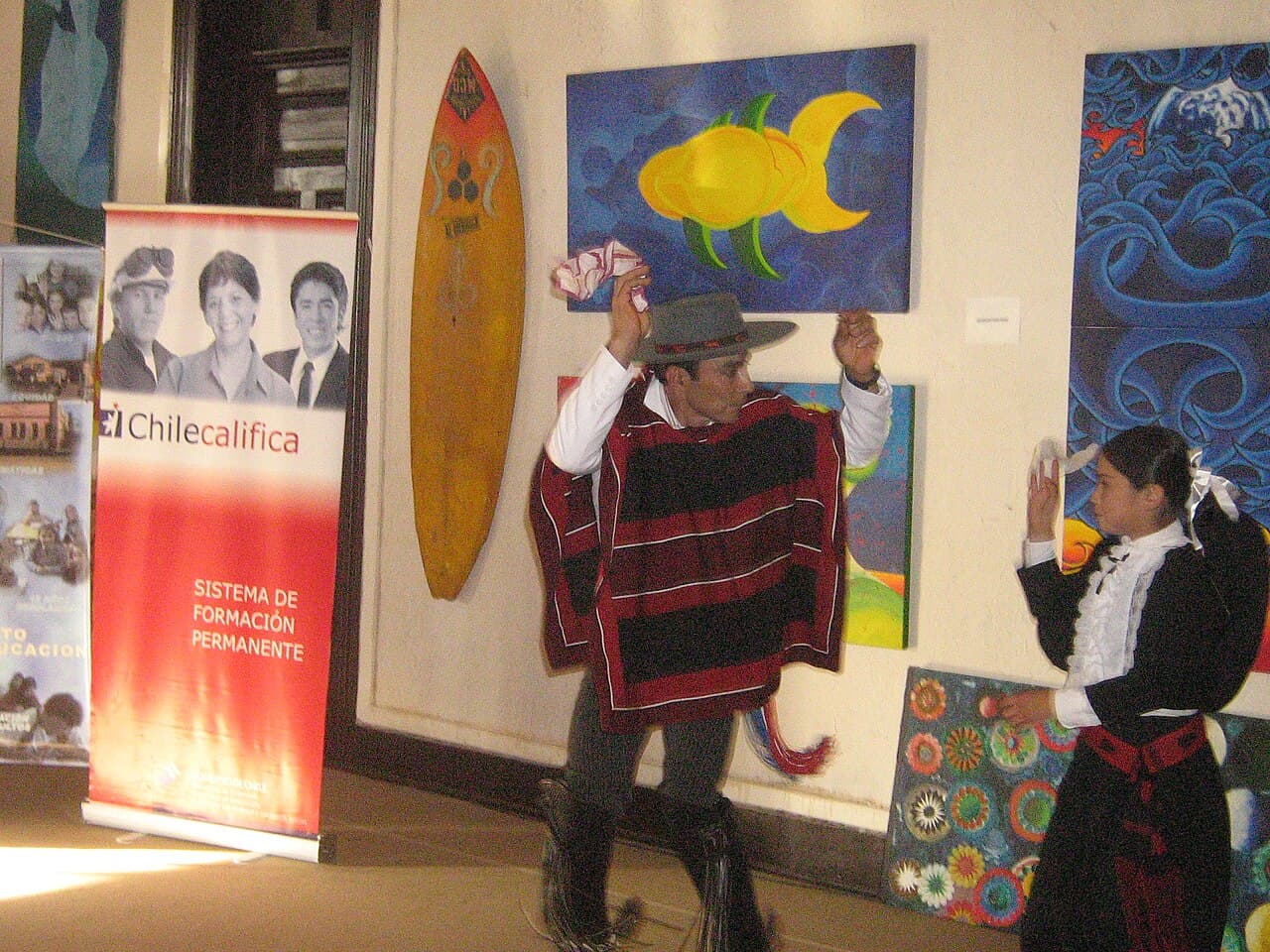
Cueca music is played on guitar, accordion and sometimes the guitarrón - a large, deep-voiced guitar unique to Chile. The rhythm is lively and bouncy, and the dancers stamp their feet, call out and wave their handkerchiefs in wide, sweeping arcs. Audiences clap along and often shout encouragement to the dancers. The atmosphere at a cueca performance feels more like a celebration than a show.
Traditional cueca costumes for women include a colourful flower-patterned dress called a 'china dress', with the skirt gathered up at one side to show the layers underneath. Men wear the 'huaso' outfit - a short jacket called a 'manta', a flat-topped hat called a 'chupalla', high leather boots and beautifully tooled spurs. The huaso is Chile's equivalent of a cowboy.
Every region of Chile has its own local style of cueca. The city version danced in Santiago is elegant and precise; the rural version called 'cueca campesina' is earthier and more improvised; and the northern desert version has its own distinct rhythm influenced by Andean music. At competitions, judges look at footwork, handkerchief technique, expression and how well the partners stay in harmony.
On 18 September - Chile's National Day, called Fiestas Patrias - the cueca is danced everywhere. Parks, school playgrounds, town squares and farms all become temporary dance floors. School children learn the cueca as part of the curriculum so that every generation knows how to dance it. Seeing hundreds of handkerchiefs waving in the open air on a warm spring afternoon is one of Chile's most memorable sights.