
Classroom lesson · Chile's Pacific Coast · 🇨🇱 Chile

Chile's Pacific Coast

A 4,300-kilometre coastline stretching almost from the tropics to the Antarctic

Rocky Pacific coastline in Chile with waves crashing against dramatic cliffs

Photo · Wikimedia Commons

What is it?

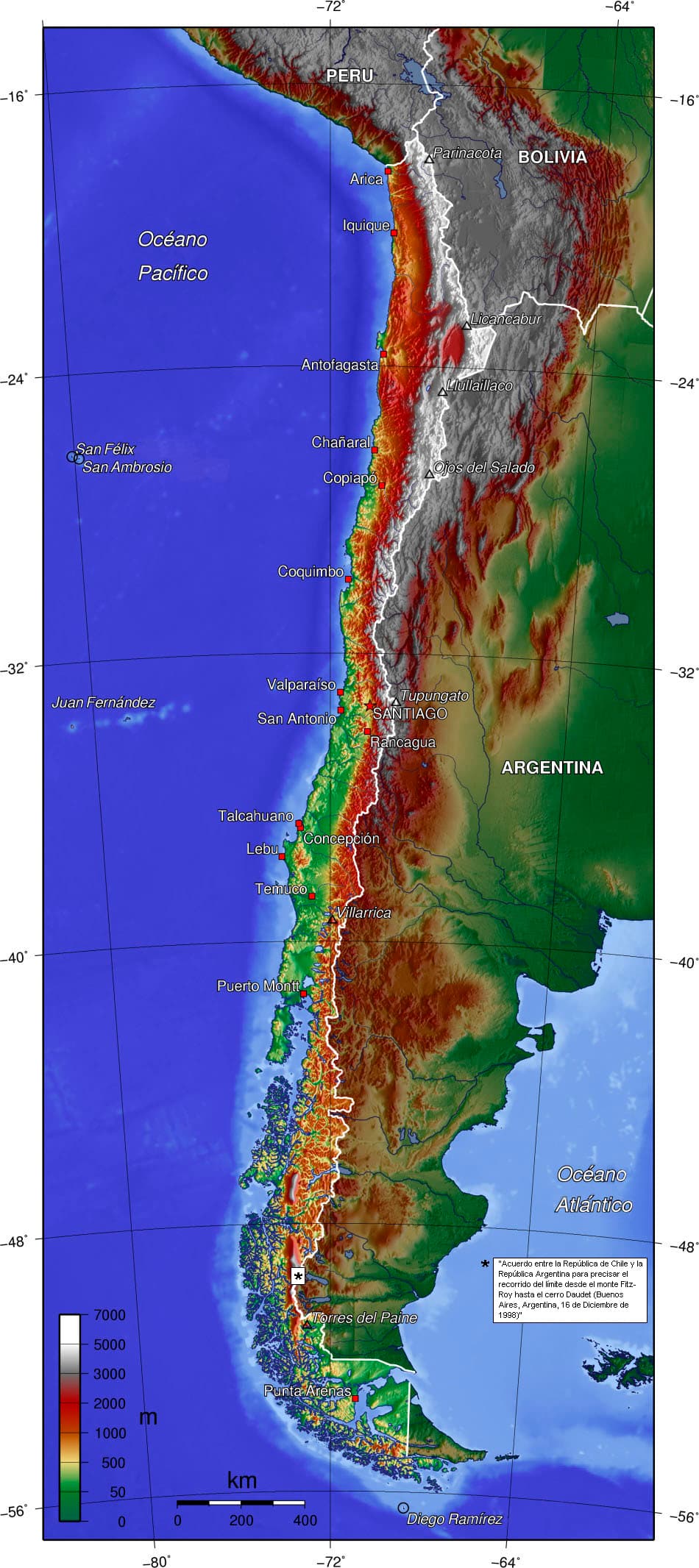
Chile has one of the longest coastlines in the world - over 4,300 kilometres from the warm north to the icy south. The entire coast faces the Pacific Ocean, the world's biggest ocean. Cold ocean currents flowing up from Antarctica bring some of the world's richest fishing grounds right to Chile's doorstep.

Tell me more

The Humboldt Current is a river of cold water that flows northwards along Chile's coast from Antarctica. It is packed with nutrients that feed billions of tiny creatures, which in turn feed fish, sea lions, penguins and seabirds. Chile is one of the world's biggest fishing nations because the cold current keeps the coastal waters so full of life.

Along the northern coast, wide sandy beaches meet calm, sunny weather almost all year round. Pelicans stand on rocks like patient statues, and sea lions laze on jetties. Further south, the coastline becomes wilder - deep fjords cut into the land, sea otters float on their backs eating shellfish, and Humboldt penguins nest in burrows in the cliffs.

Chilean fishermen have gone out to sea in small wooden boats for thousands of years. Today, fishing villages still sell freshly caught fish from open stalls on the docks. One of the most famous Chilean seafoods is the giant 'loco' sea snail - a large shellfish prized by chefs and protected by strict fishing rules so there are always enough left.

The port city of Valparaíso on Chile's central coast is famous for its colourful houses stacked up steep hills. Funicular tram-cars called 'ascensores' carry people up and down the slopes. From the top of the hills, you can see the Pacific stretching all the way to the horizon - reminding you just how enormous that ocean truly is.

In the classroom

Walk your class through this in 15 minutes.

Talk together

Discussion prompts

  1. 01Cold water from Antarctica travels thousands of kilometres to bring food to fish near Chile. How might ocean currents be like invisible roads for sea life?
  2. 02Why might fishing villages need strict rules about how many fish can be caught each day? What might happen if there were no rules?
  3. 03Chile's coastline goes from warm to icy cold. If you walked the whole length, what changes in animals and plants might you notice?
Try this

Classroom activity

Fill two bowls with water - one with ice cubes (cold) and one warm. Add the same amount of salt and a tiny drop of food colouring to each. Carefully pour the cold water into the warm bowl at one side. Watch how the cold water sinks and flows under the warm water. Discuss: how might this be like the Humboldt Current moving along the coast?