
Classroom lesson · Atacama Desert · 🇨🇱 Chile

Atacama Desert

The driest non-polar desert on Earth, full of surprising colour

Red and orange rock formations in the Atacama Desert under a bright blue sky

Photo · Wikimedia Commons

What is it?

The Atacama Desert in northern Chile is the driest non-polar desert on Earth. In some parts, rain has not fallen for hundreds of years. Yet it is not all sand dunes - it is full of rust-red rocks, bright blue lagoons, pink flamingos and geysers that shoot hot steam into the air.

Tell me more

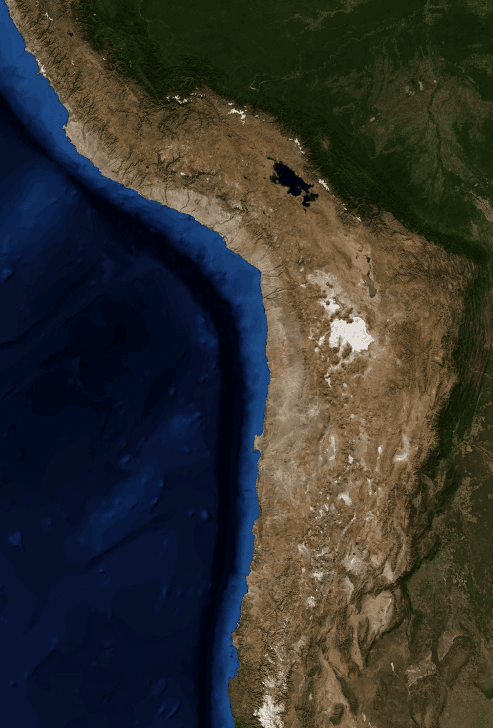
The Atacama sits between the Andes Mountains to the east and the Pacific Ocean to the west. Both of these neighbours actually keep rain away - the mountains block rain clouds, and cold ocean air makes clouds form low over the sea but not enough to reach the land. That is a double block that leaves the desert almost completely dry.

One of the most magical things about the Atacama is that, once every few years when a tiny bit of rain does fall, millions of wild flowers suddenly bloom across the desert floor all at once. Scientists call this the 'desierto florido' - the flowering desert. One week it looks like brown rock; the next it is a carpet of pink, purple and yellow.

Because the Atacama air is so dry and there are no lights or clouds, the night sky is extraordinary. Astronomers from all over the world have built huge telescopes there to study stars and galaxies that are almost impossible to see from anywhere else on Earth. Children living nearby can sometimes see the Milky Way every single night.

The Atacama also has giant salt flats - flat, white, crunchy areas where ancient lakes dried up long ago. Flamingos wade through shallow salty pools feeding on tiny shrimps. The salt crunches underfoot like fresh snow, and in the midday sun everything glitters white as far as you can see.

In the classroom

Walk your class through this in 15 minutes.

Talk together

Discussion prompts

  1. 01How do you think animals and plants survive in a place that almost never gets rain? What tricks might they use?
  2. 02The Atacama flowers bloom after a single drop of rain. What does that tell you about how living things wait for the right moment?
  3. 03Why might very dry, clear air make a better place for looking at stars? What gets in the way of stargazing where you live?
Try this

Classroom activity

Each child draws two side-by-side pictures of the same patch of Atacama - one in a dry year (brown and rocky) and one after the rare rain (covered in flowers). Add labels for what changed and what stayed the same. Compare your before-and-after with a partner.