
Classroom lesson · Wildlife · 🇨🇱 Chile

The Andean Condor

The world's largest flying bird, soaring above the Andes

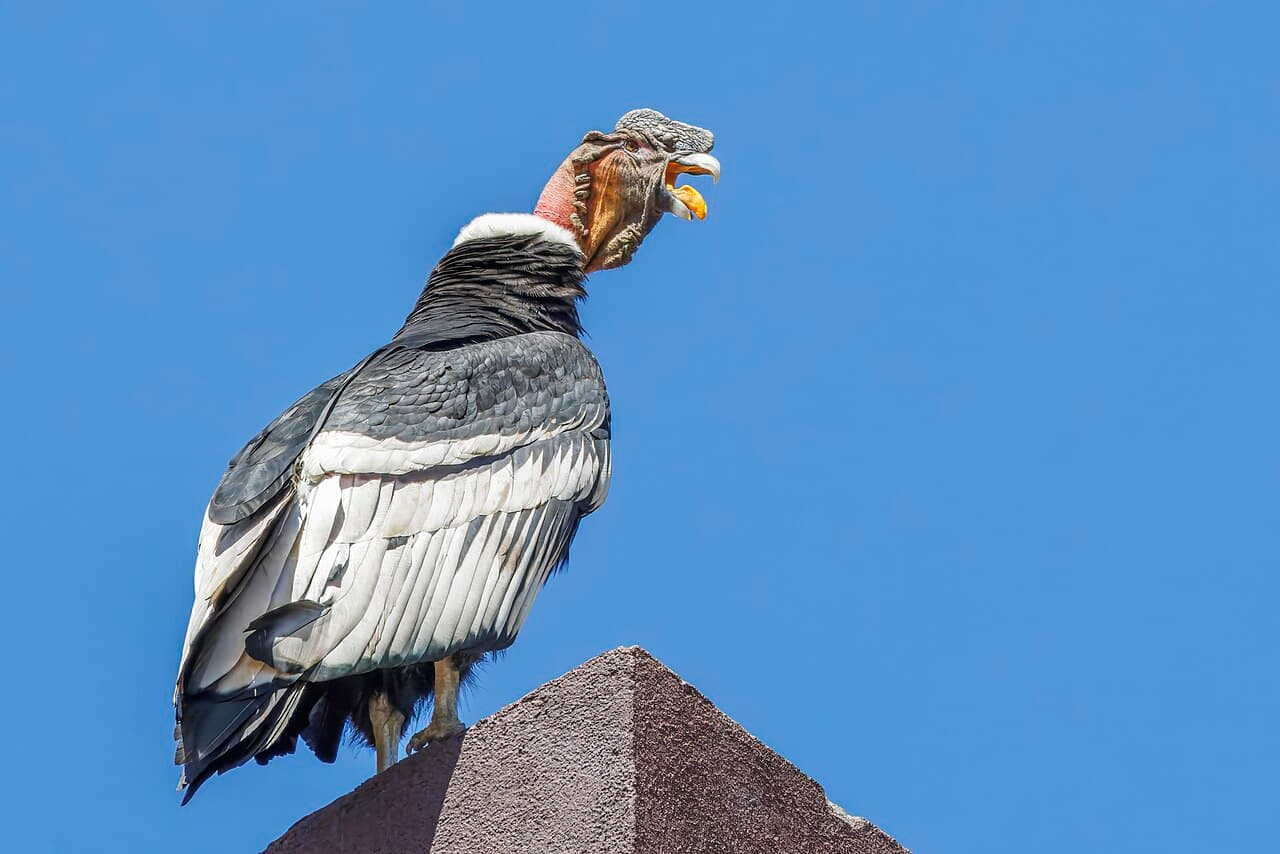
An Andean condor spreading its enormous black and white wings while soaring

Photo · Wikimedia Commons

What is it?

The Andean Condor is one of the most impressive birds on Earth. It is the world's largest flying bird by wingspan - its wings can stretch over 3 metres from tip to tip, wider than two adults lying head to toe. Condors can soar for hours without flapping their wings at all, riding warm currents of rising air high above the Andes.

Tell me more

Condors are part of the vulture family. They have black feathers on most of their body but white feathers on the tops of their wings and a frilly white collar of fluff around their neck. Their heads are bald and change colour from grey in young birds to deep red in adults - a bit like a built-in mood indicator, since the colour can change when the bird is excited.

Because their wings are so wide, condors use a soaring style of flying. They flap only rarely, instead tilting their wings slightly to catch thermals - columns of warm air that rise from sun-heated rock. A condor can travel 200 kilometres in a single day without barely flapping once. Scientists have tracked them rising to 5,000 metres above sea level.

The condor is the national symbol of Chile and appears on the Chilean coat of arms. It also appears on the coats of arms of Argentina, Bolivia, Colombia, Ecuador and Peru - making it perhaps the most symbolically important bird in South America. Indigenous Andean cultures have honoured the condor for thousands of years as a messenger between the earth and the sky.

Condors live for a very long time - up to 70 years in the wild, which is exceptionally old for a bird. They have only one chick at a time, and parents look after that chick for nearly two years before it can fly properly. That slow, careful approach to raising young means that every condor chick really matters.

In the classroom

Walk your class through this in 15 minutes.

Talk together

Discussion prompts

  1. 01A condor can fly 200 km without flapping. How do you think it uses the wind and warm air? Can you think of something else that flies without an engine?
  2. 02Condors raise only one chick at a time and care for it for almost two years. Why might some animals have just one baby instead of many?
  3. 03The condor is a symbol used by six different countries. Why might different countries all choose the same animal as a symbol of something important?
Try this

Classroom activity

Measure 3 metres across the classroom floor with tape - the wingspan of a condor. Then measure your own armspan. How many of you, arms outstretched and in a line, would it take to equal one condor wingspan? Record your results and compare with another class.