
Classroom lesson · Festival · 🇨🇱 Chile

Easter Island and the Moai

A remote Pacific island covered in giant stone statues

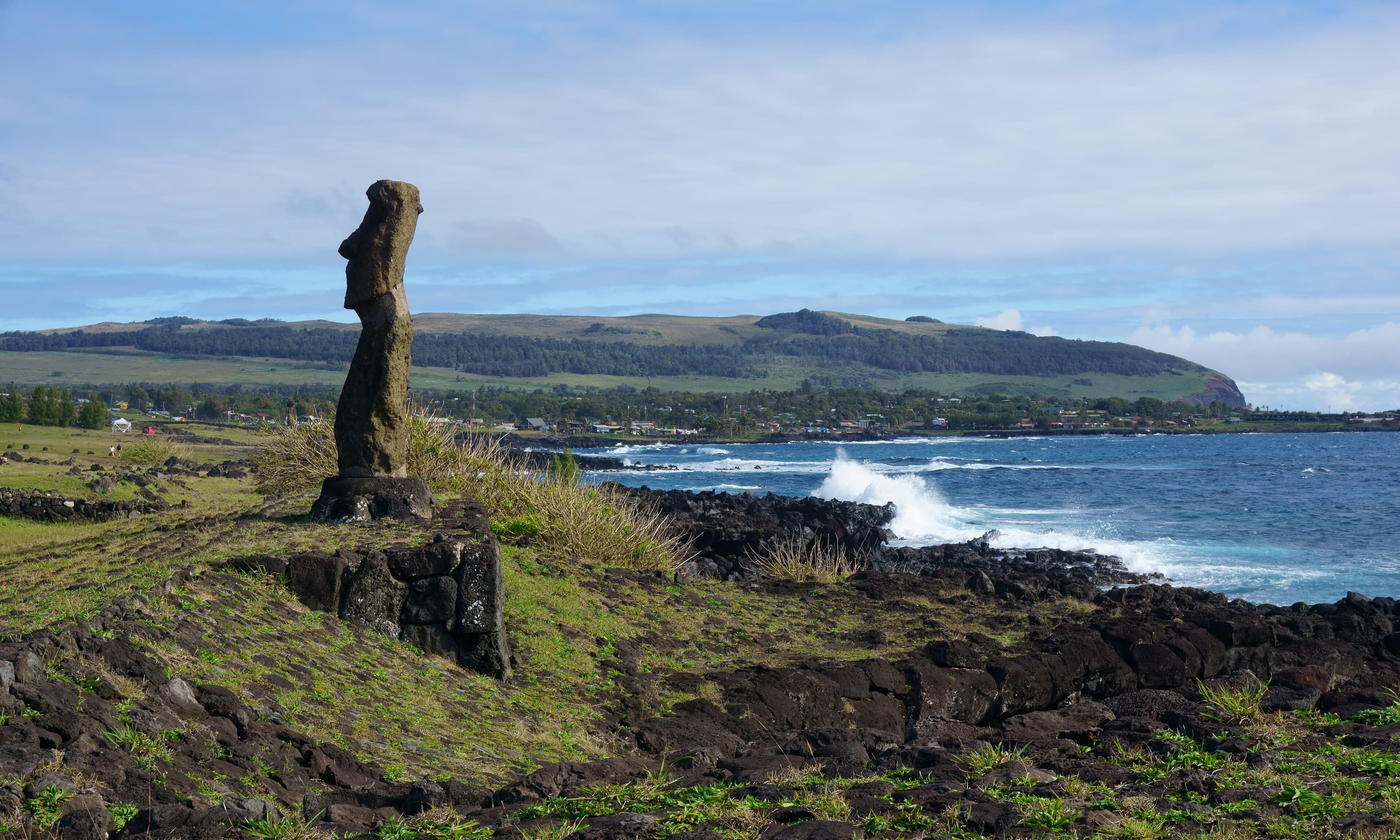
A row of moai statues standing on a grassy slope on Easter Island, facing inland

Photo · Wikimedia Commons

What is it?

Easter Island - called Rapa Nui by its people - is a tiny island in the middle of the Pacific Ocean, about 3,700 kilometres west of the Chilean coast. It is one of the most remote inhabited places on Earth. The island is famous for its moai - nearly 1,000 massive stone statues carved by the Rapa Nui people hundreds of years ago.

Tell me more

The moai are carved from a type of volcanic rock called tuff. Most are between 3 and 6 metres tall - about the height of two classrooms stacked on top of each other - but the tallest ever made is over 20 metres. They all have large heads, long ears and strong chins. Many are set on stone platforms called 'ahu' facing inland, watching over the villages they once protected.

Carving the moai was just the beginning. Moving them across the island, with no wheels and no horses, was an enormous challenge. Scientists think the Rapa Nui people used ropes and wood to 'walk' the statues in an upright rocking motion - tilting them side to side, just like you might rock a heavy wardrobe across a floor.

Easter Island belongs to Chile even though it is so far out in the Pacific. People fly there from the Chilean mainland - it is a five-hour flight. The Rapa Nui people who live there today speak their own language, which is related to languages spoken by Pacific Island communities thousands of kilometres away - showing that ancient Pacific people were brilliant navigators.

Some of the moai have red 'hats' called pukao, carved from red volcanic rock from a different part of the island. Archaeologists have found that many moai were originally painted with bright colours. Imagine seeing a whole hillside of painted giant stone faces - it must have been an extraordinary sight.

In the classroom

Walk your class through this in 15 minutes.

Talk together

Discussion prompts

  1. 01The Rapa Nui moved enormous stone statues with no wheels or machines. What does that tell you about what people can achieve when they work together?
  2. 02Easter Island is one of the most remote places on Earth. What might be good - and what might be tricky - about living somewhere so far from other places?
  3. 03The moai faced inland to watch over the villages. If you were building a giant statue to protect your school, what would it look like?
Try this

Classroom activity

Give each group a large block of modelling clay and some plastic tools. Challenge them to carve a moai face (big head, long ears, strong chin) in ten minutes - then discuss: how long might real carvers have taken? How would you move a 5-tonne stone across the island using only ropes and wood?