
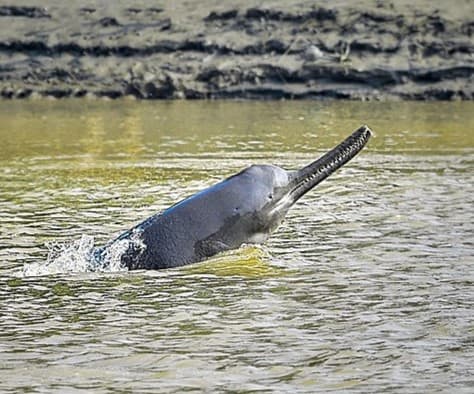
The Ganges river dolphin is almost blind. The rivers it lives in are full of mud and silt washed down from the Himalayas, so eyes are not very useful. Instead, the dolphin uses sound. It makes clicking noises that bounce off fish, rocks and other animals - a bit like the sonar that submarines use - and listens to the echoes to 'see' its world.
It has a long, thin snout, almost like a beak, full of small sharp teeth for catching fish. It swims on its side, sweeping its snout along the muddy river bottom, feeling for shrimp and small fish hiding there. Scientists think it is one of the only dolphins in the world that swims this way on purpose.
These dolphins are shy and rare. There are only a few thousand left in the wild. They live in family groups of two or three, surfacing every couple of minutes to breathe. If you take a boat down the right stretch of the Brahmaputra at dawn, sometimes you see a grey back and a quick puff of breath - then it's gone again.
Bangladesh, India and Nepal all work together to protect the Ganges river dolphin. Fishermen are taught how to free dolphins that get caught in their nets by accident, and large stretches of river have been turned into protected zones where the dolphins can live in peace.