
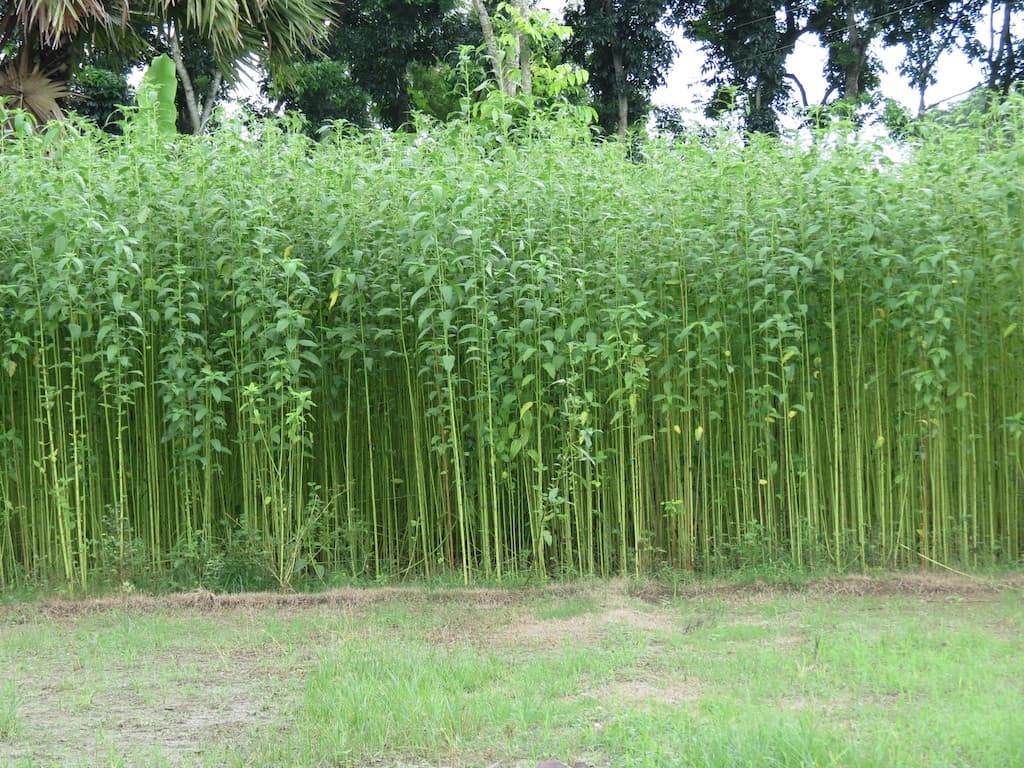
A jute plant grows incredibly fast - up to 4 metres tall in just four months. That is taller than the ceiling of most classrooms. Farmers plant the seeds in spring, the monsoon rains water them all summer, and by autumn the plants are ready to be harvested.
To get the fibre out, farmers cut the stems and tie them into bundles. The bundles are soaked in slow rivers or ponds for about two weeks. The soft, gluey parts of the stem wash away, and the long, strong fibres are left behind. They are dried in the sun until they turn a beautiful golden colour. That's why jute is the 'golden fibre'.
Jute thread is then spun and woven into many useful things. The brown shopping bags you might see in a supermarket - the ones that are reusable - are often jute. So are sacks for carrying coffee beans, rope for boats, mats, and rugs. Jute is also being used in cars, to make panels lighter.
People like jute because it grows naturally and breaks down again at the end. A jute bag is a plant. A plastic bag is not. That is why so many countries are using jute again instead of plastic. Bangladesh grows about a third of all the jute in the world.