
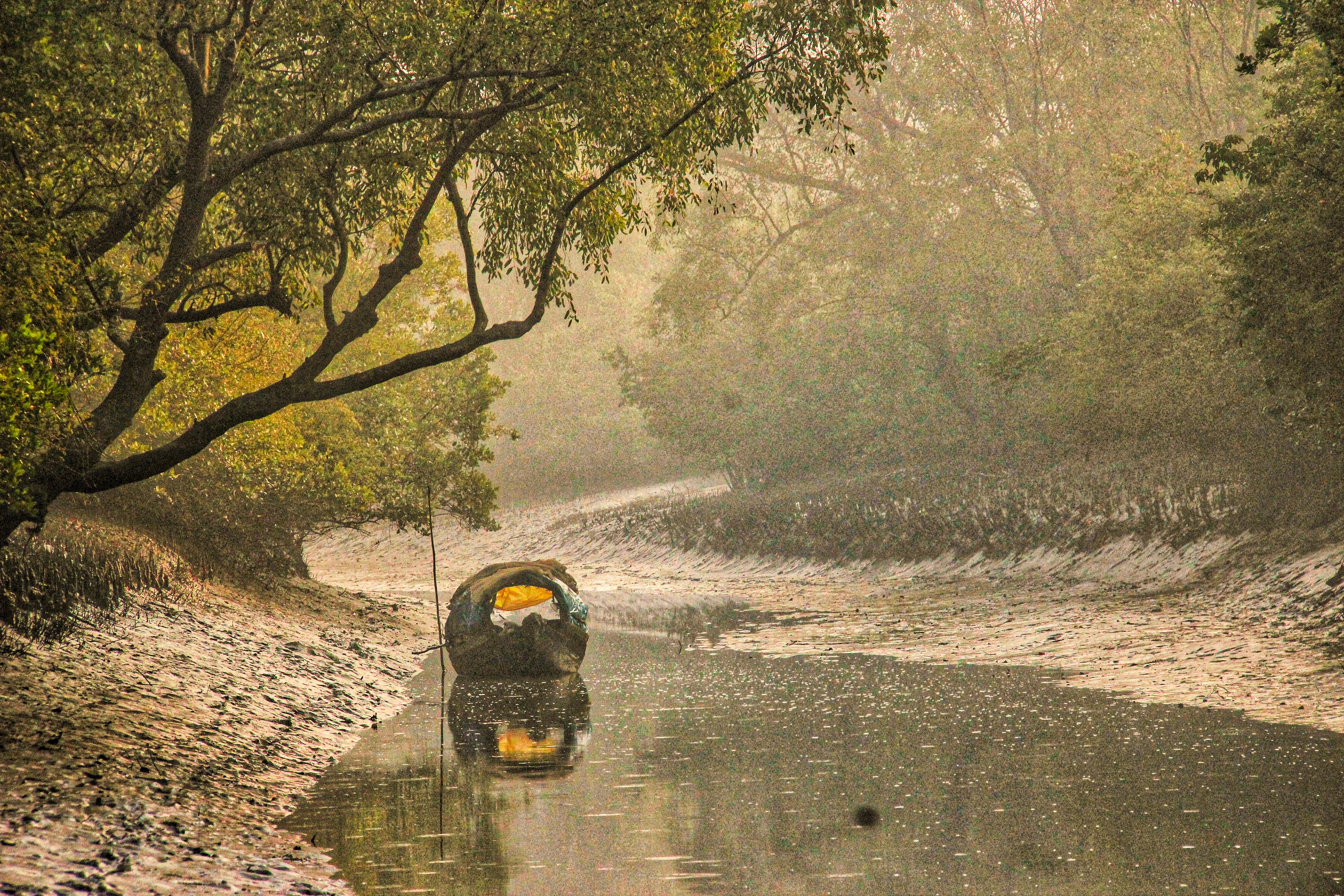
Mangrove trees are very special. Most trees would die if you planted them in salty water, but mangroves have learned how. Some of their roots stick up out of the mud like little snorkels, helping the tree breathe at low tide. Other roots squeeze the salt out of the water before it reaches the leaves.
The forest is enormous - around 10,000 square kilometres, which is bigger than some whole countries. About 60% of the Sundarbans is in Bangladesh; the rest is over the border in India. To get around, people travel by boat through the maze of waterways.
Every kind of animal lives in this watery forest. Bengal tigers, spotted deer, crocodiles, monkeys, kingfishers and hundreds of kinds of fish all share the same trees and rivers. The Ganges river dolphin even swims here. Many of these animals are found in only a few places on Earth.
The Sundarbans also protects Bangladesh. When big storms blow in from the Bay of Bengal, the tangled mangrove roots slow the wind and the waves down, so the towns inland stay safer. The forest is sometimes called Bangladesh's natural shield.