
Most cats hate getting wet. Bengal tigers in the Sundarbans are different: their forest is half land and half water, so they have to swim to get anywhere. They can paddle for several kilometres without stopping. Sometimes wildlife photographers see them just bobbing along, only the top of their head and tail showing.
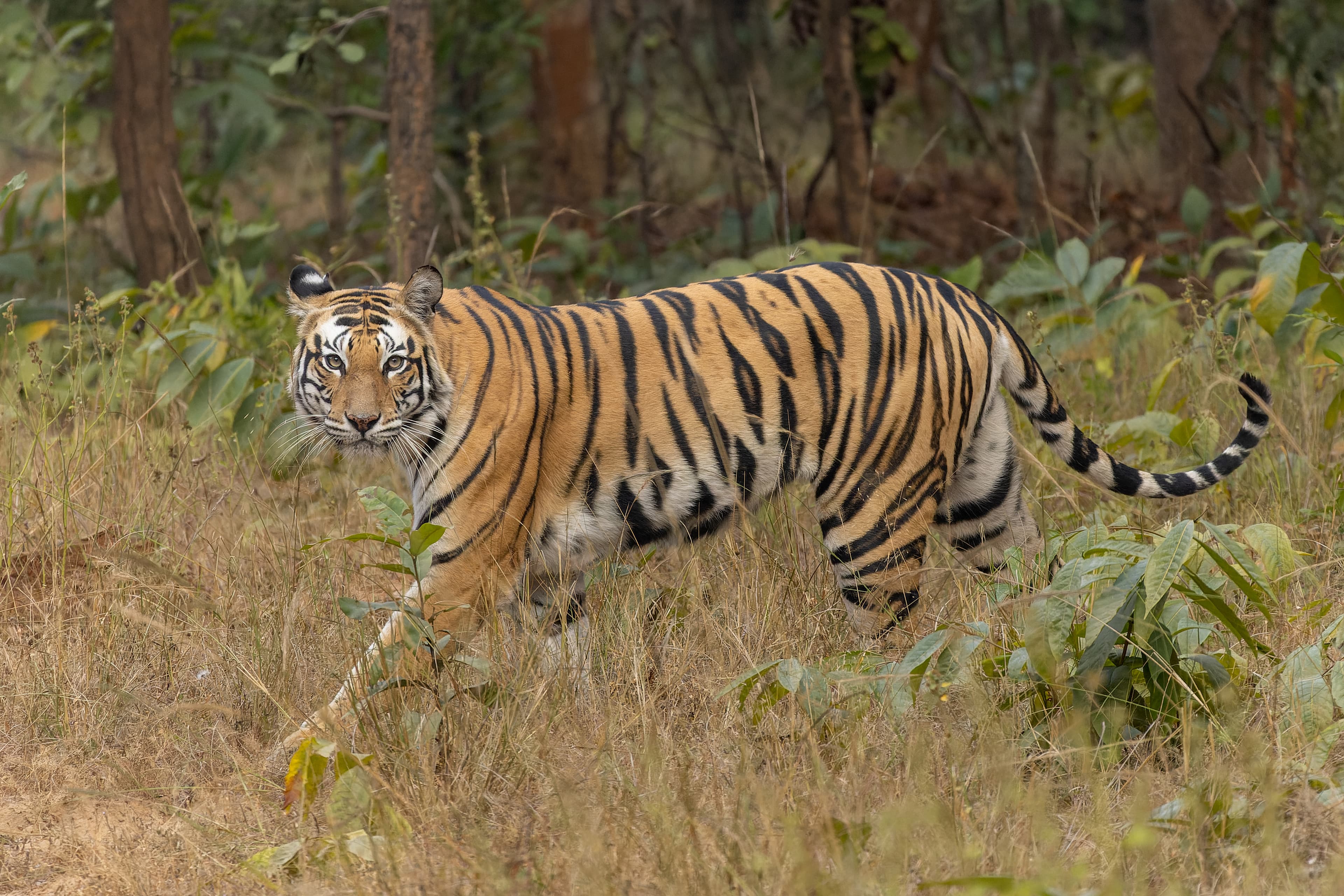
A grown-up Bengal tiger can weigh as much as three large adults put together. Its orange-and-black stripes look bright in a photo, but in the green-and-shadow of the mangrove forest they actually blend in - the stripes break up the tiger's shape so it disappears against the leaves.
Every tiger's stripe pattern is unique, like your fingerprint. Scientists who study tigers in the Sundarbans put hidden cameras in the trees. When a tiger walks past, the camera takes a photo. They can tell which tiger it is by the pattern of its stripes.
Bangladesh and India work together to look after the Sundarbans tigers. The forest is protected, fishermen are taught how to stay safe, and rangers count the tigers each year. There are only a few hundred tigers left in the whole Sundarbans, so every single one matters.