
The morning starts with traditional clothes. Many girls and women wear a red-and-white sari with flowers in their hair, and boys and men wear a white panjabi shirt. Even the smallest babies are dressed in red and white. The streets fill with these colours as families head out together.
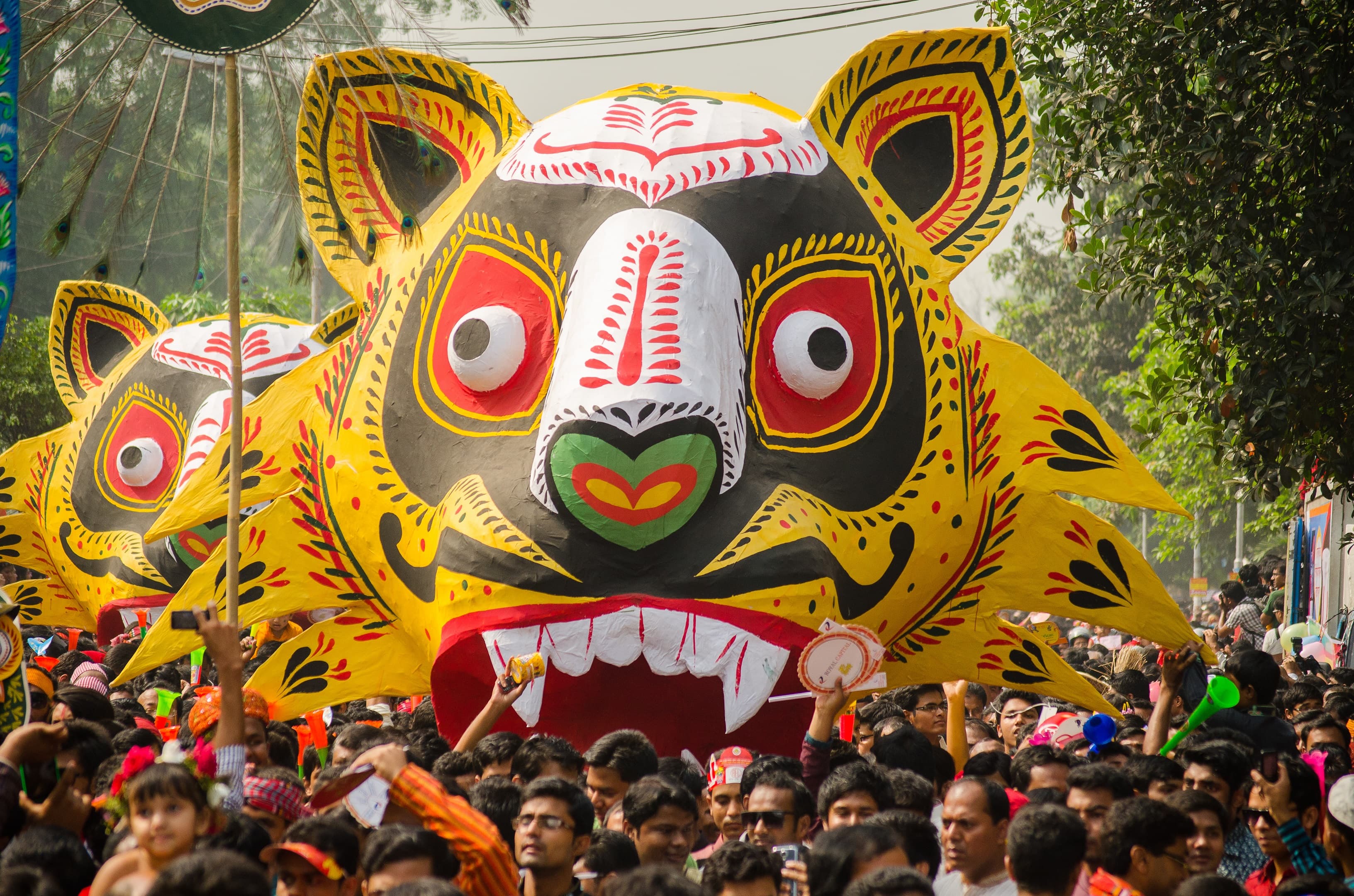
In Dhaka, art students at the famous university have spent weeks building giant, colourful masks and animal sculptures out of bamboo and paper. On Pohela Boishakh morning, they carry them through the streets in a huge procession called the Mangal Shobhajatra (the 'Procession for Well-Being'). Crowds line the route, drumming, singing and cheering.
Sweets are everywhere. Stalls sell mishti - little sweets made from milk and sugar - and special rice cakes called pitha. The first dish of the new year for many families is a simple breakfast of rice soaked in water with onion and chilli, called panta bhat. It is the food of farmers, eaten on Pohela Boishakh to remember the country's roots.
Shopkeepers open new account books on Pohela Boishakh. The old books are closed and put away, and bright new ones are opened to start the year fresh. Customers are invited in for sweets and tea. The whole country, from a tiny village shop to a big Dhaka office, takes a moment to start again.