
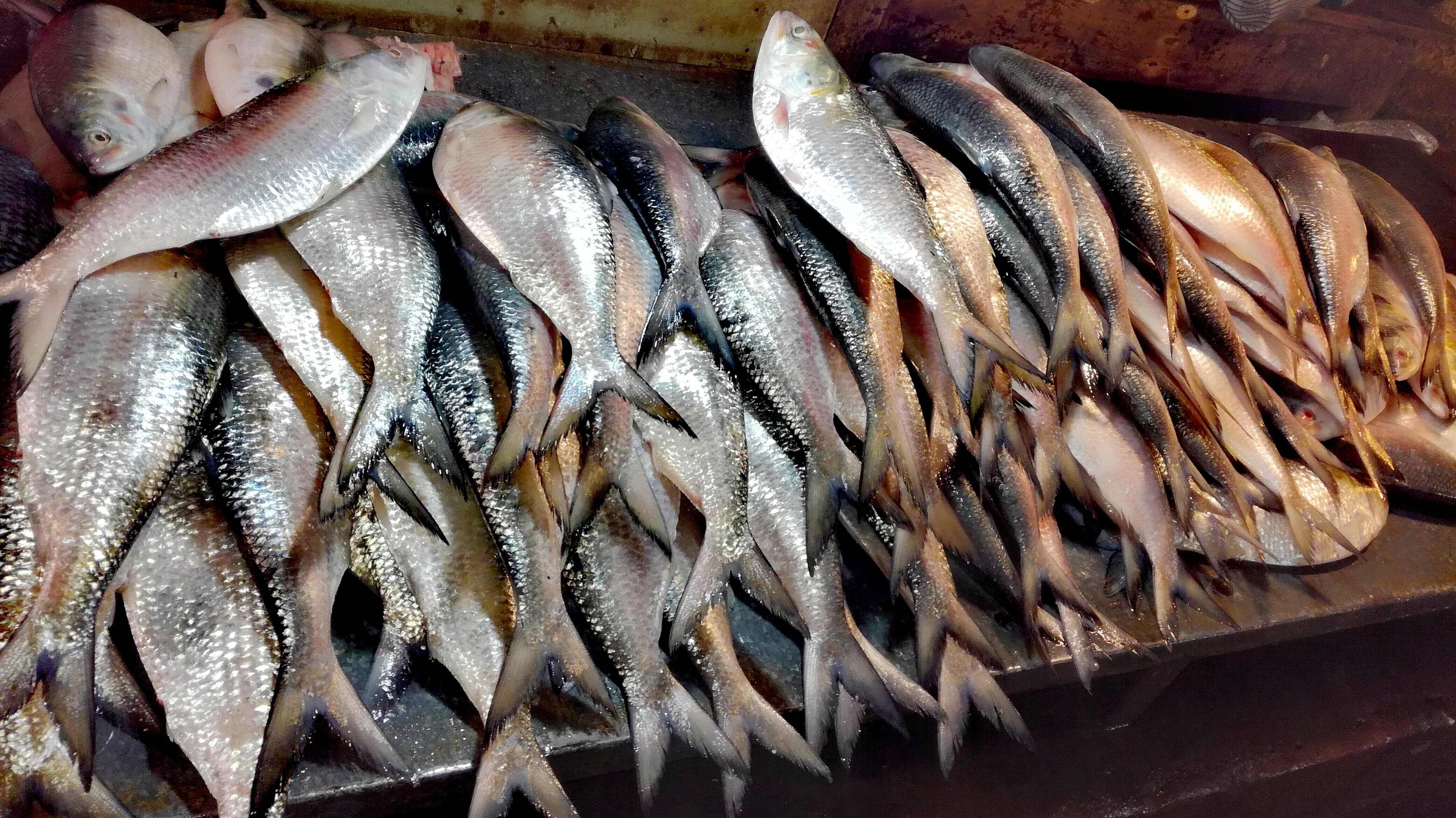
Hilsa lives most of its life in the salty sea - the Bay of Bengal - but every year, when it is time to lay eggs, the grown-up fish swim up the rivers into freshwater. Some swim hundreds of kilometres upriver. After the babies hatch and grow a little, they swim back down to the sea. So one hilsa might live in both salty AND fresh water in its lifetime.
It is a small but mighty fish. A grown hilsa is around 40-60 centimetres long - roughly the length of your forearm. It is full of tiny bones, which is part of what makes Bengali grandparents so impressed when a child learns how to eat it without trouble.
There are hundreds of ways to cook hilsa. The most famous is hilsa fish curry, called shorshe ilish, where the fish is cooked in a thick mustard sauce until the kitchen smells delicious. Hilsa is also smoked, fried, steamed in banana leaves, or simply grilled over a fire. Many Bengali families have their own family recipe.
Because so many people love it, Bangladesh works hard to make sure hilsa stocks don't run out. There are rules about how small a hilsa you are allowed to catch (no babies), and certain months when fishermen rest from hilsa fishing so the fish have time to breed. It is one of the most carefully looked-after fish in the world.