
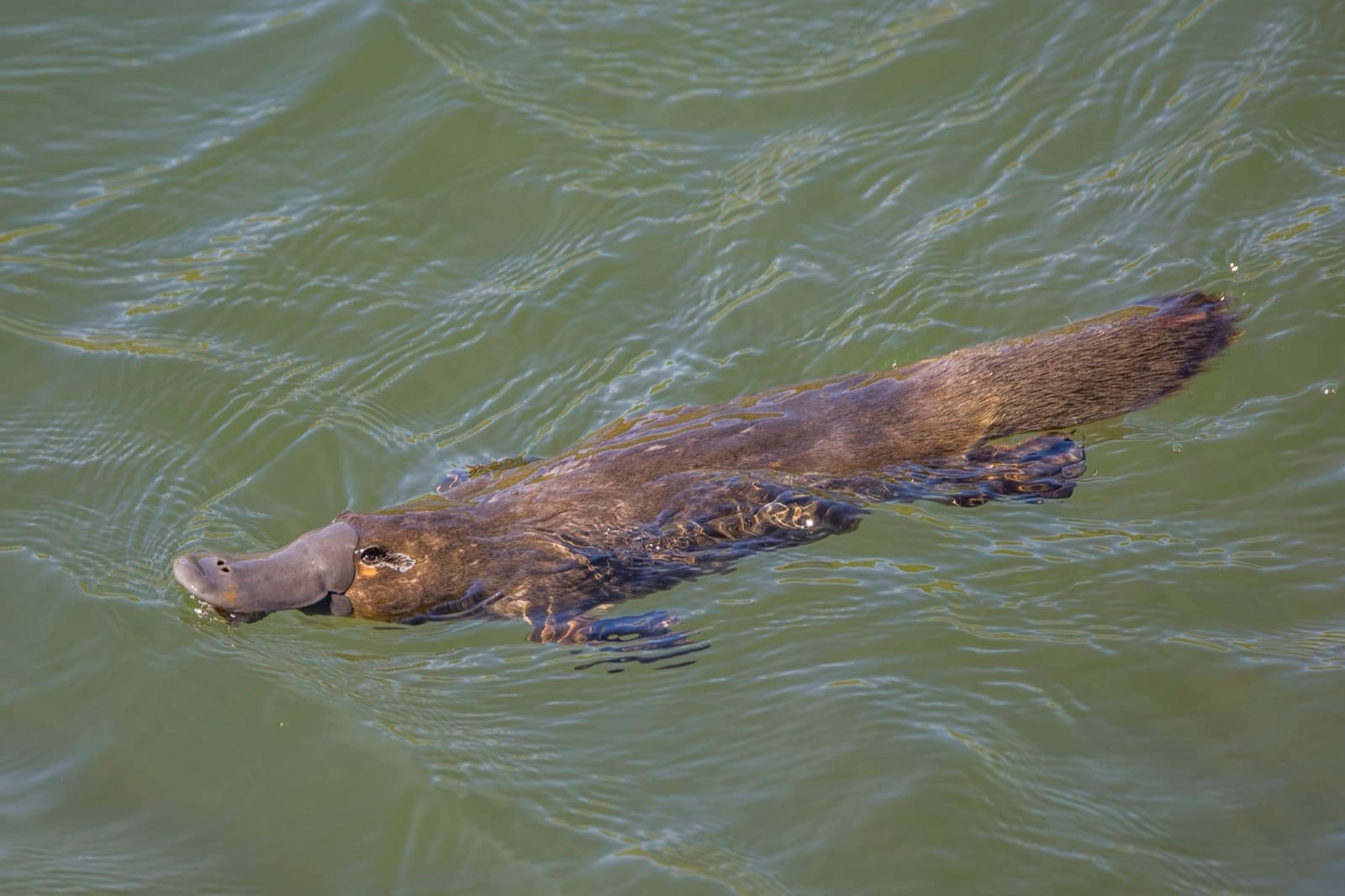
A platypus is what scientists call a monotreme. Monotremes are a tiny group of mammals (just five species in the whole world) that lay eggs instead of giving birth to live babies. Apart from the platypus, the only other monotremes are echidnas. They both live in Australia.
A platypus mum lays one to three soft, leathery eggs in a long burrow she digs into a riverbank. She curls around them to keep them warm. When the babies hatch, they drink milk - just like other mammals - but the mum doesn't have nipples. The milk seeps out of patches of skin on her tummy and the babies lick it up.
The duck-like bill isn't just for looks. It is full of tiny sensors that pick up the electric signals given off by small animals moving underwater. The platypus swims with its eyes, ears and nose all closed, finding food by 'feeling' for tiny electrical pulses with its bill. It is like a built-in underwater detective.
Platypuses are very good swimmers, with webbed front feet that work like flippers. Each dive lasts about a minute, then up they pop for a breath. They are mostly active around sunset and dawn, when they hunt for shrimps, insects and small crayfish hidden under river stones.