
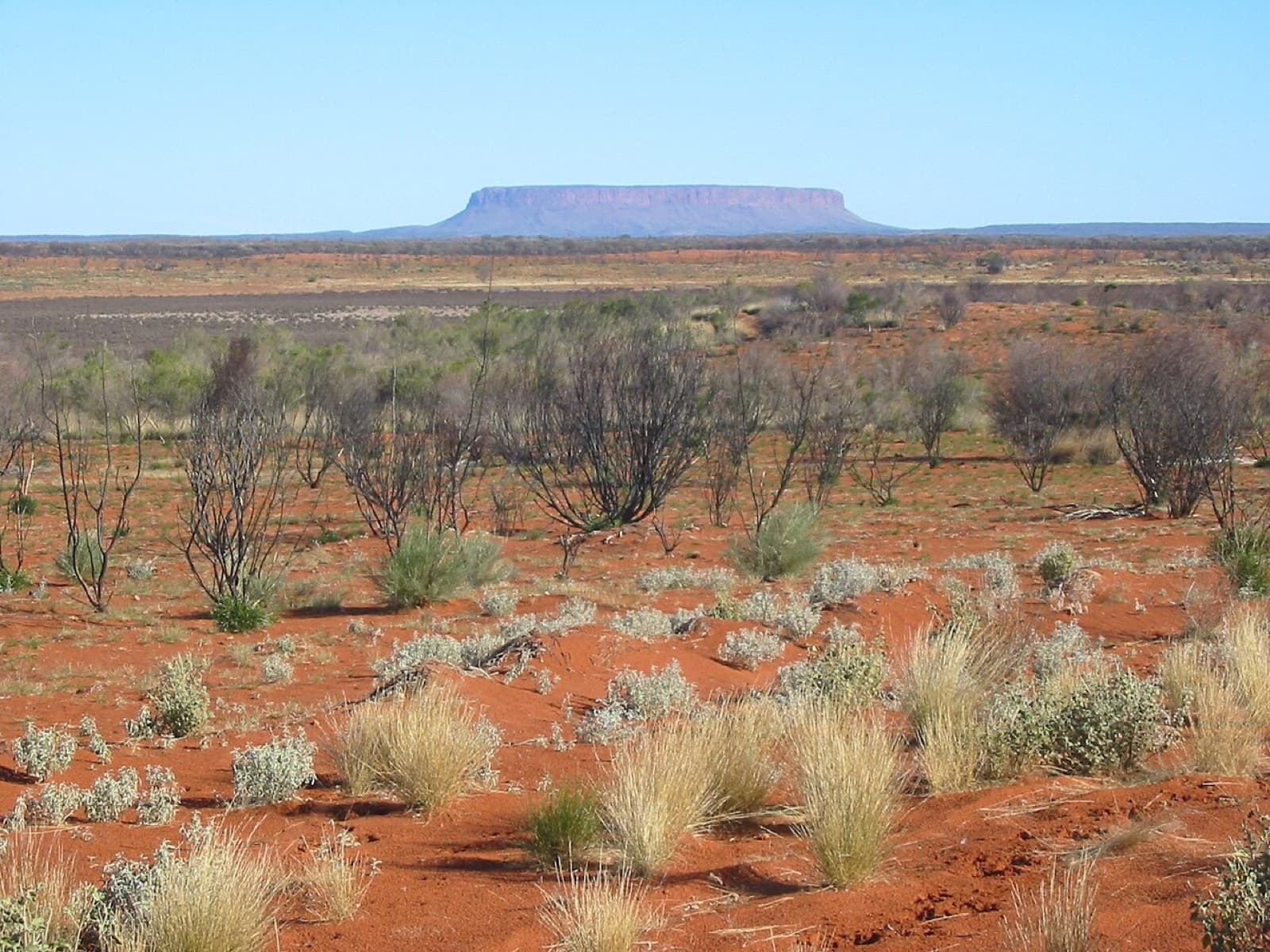
If you stood in the middle of the Outback and looked around, you might see red earth, scrubby bushes, big blue sky, and not much else. The closest neighbours could be a hundred kilometres away. In some parts, there is just one road that goes straight as a ruler for a whole day's drive.
Because the Outback is so big and so empty, schools out there have a clever trick. Children who live on remote farms learn by radio and online - it's called the School of the Air. A teacher in one town can run a class for kids spread across an area the size of France. Once a year, the whole class meets up in person for camp.
All sorts of animals are built for the Outback. Kangaroos, emus and wombats live there. So do dingoes (a kind of wild dog) and many kinds of lizard. Plants like spinifex grass and gum trees survive the heat by saving every drop of water. The whole landscape glows when the sun goes down.
Right in the middle of the Outback is Uluru, a giant red sandstone rock that is sacred to the Anangu people, the local Aboriginal community. People used to climb to the top, but climbing was stopped in 2019 out of respect. Visitors can still walk around the bottom and learn about the stories painted into its caves.