
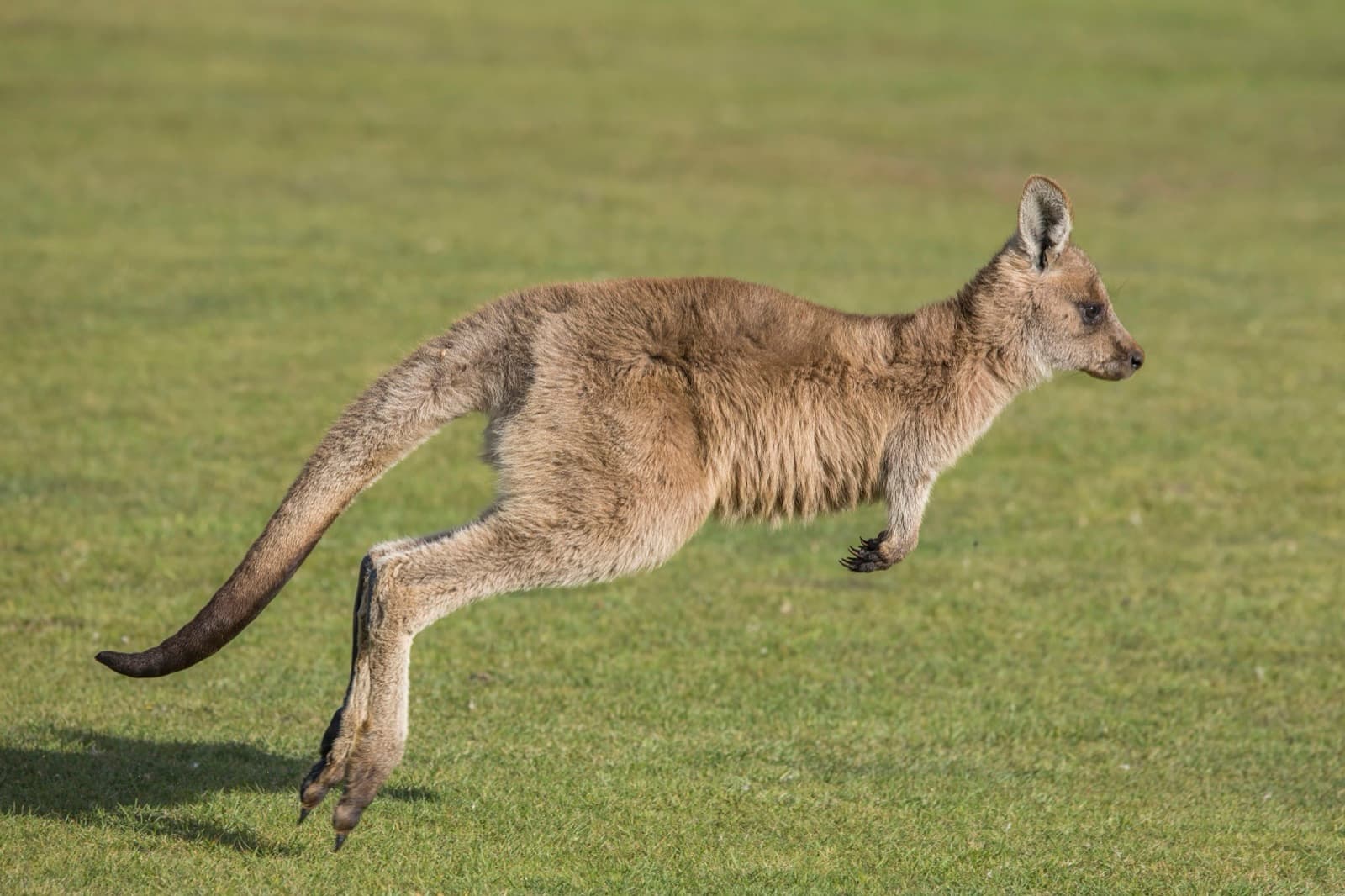
Most baby mammals - like puppies, kittens, or human babies - finish growing inside their mum before they are born. Marsupial babies are different. They are born when they are still no bigger than a jellybean. Then they crawl up their mum's tummy and into her pouch, where they stay warm, drink milk, and grow for months.
Inside the pouch it is dark, soft and exactly the right temperature, a bit like a built-in sleeping bag. A baby kangaroo, called a joey, will live in there for about six months before it starts to peek out. Even after it can hop on its own, it might dive back into the pouch if it gets scared.
Australia has so many marsupials because long, long ago it became a separate island, far away from other land. While other mammals were evolving everywhere else, Australia's marsupials had the place to themselves and developed in their own way. There are big marsupials (kangaroos), tiny marsupials (the honey possum is smaller than a mouse) and stripy ones (the numbat).
Not every marsupial has a forward-facing pouch like a kangaroo. A wombat's pouch faces backwards, so its baby doesn't get dirt in its face when the mum digs a tunnel. A koala's pouch also faces backwards. Nature has more than one way of solving the same problem.