
Classroom lesson 路 Didgeridoo馃嚘馃嚭 Australia

The didgeridoo

One of the oldest instruments in the world

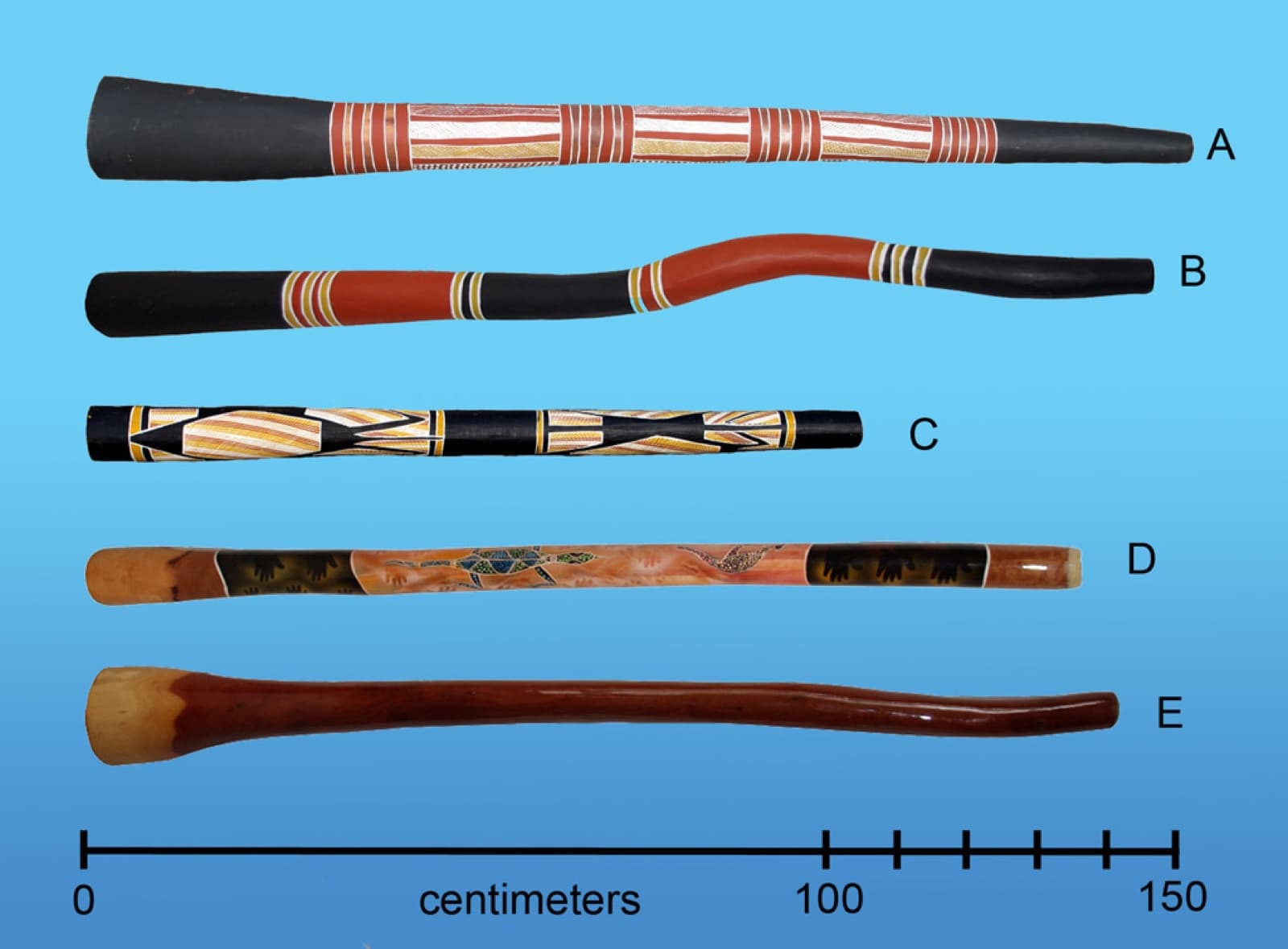
Five painted didgeridoos of different shapes laid out beside a centimetre scale

Photo 路 Wikimedia Commons

What is it?

The didgeridoo (sometimes spelled didjeridu) is a long wooden tube that you blow into to make a deep, humming sound. It was invented by Aboriginal peoples in the far north of Australia at least 1,500 years ago - possibly much longer - which makes it one of the oldest musical instruments still played today.

Tell me more

A didgeridoo is made from a piece of eucalyptus tree that has been hollowed out by termites. Yes, really - tiny insects do most of the work, eating away the soft inside while leaving the hard outer wood. The maker then cleans it, paints it with traditional designs, and adds a little wax for the mouthpiece.

To play it, you press your lips against one end and blow a long, buzzing sound. The really clever bit is a trick called 'circular breathing'. Skilled players keep the note going for minutes at a time by breathing in through their nose and out through their mouth at the same time. It takes years to learn.

The sound of a didgeridoo is deep and warm - somewhere between a low hum and the rumble of an engine. Good players can copy the calls of birds and animals in the middle of their playing, so a song might suddenly sound like a kookaburra laughing or a kangaroo thumping.

Didgeridoos are an important part of Aboriginal culture, especially in northern Australia. They are often played at ceremonies, celebrations and community gatherings. Today many Australian musicians, both Indigenous and not, use them in modern music too.

In the classroom

Walk your class through this in 15 minutes.

Talk together

Discussion prompts

  1. 01Why might termites be a maker's best friend?
  2. 02How would you breathe in and out at the same time? Try humming and breathing in through your nose at once.
  3. 03Why might the oldest instruments still be played today?
Try this

Classroom activity

Find a long cardboard tube (like a kitchen-roll inside) and try humming or singing into one end while pointing it at the wall. Listen to how the sound changes. As a class, search for a real didgeridoo recording online and try to spot the animal sounds hidden inside.