
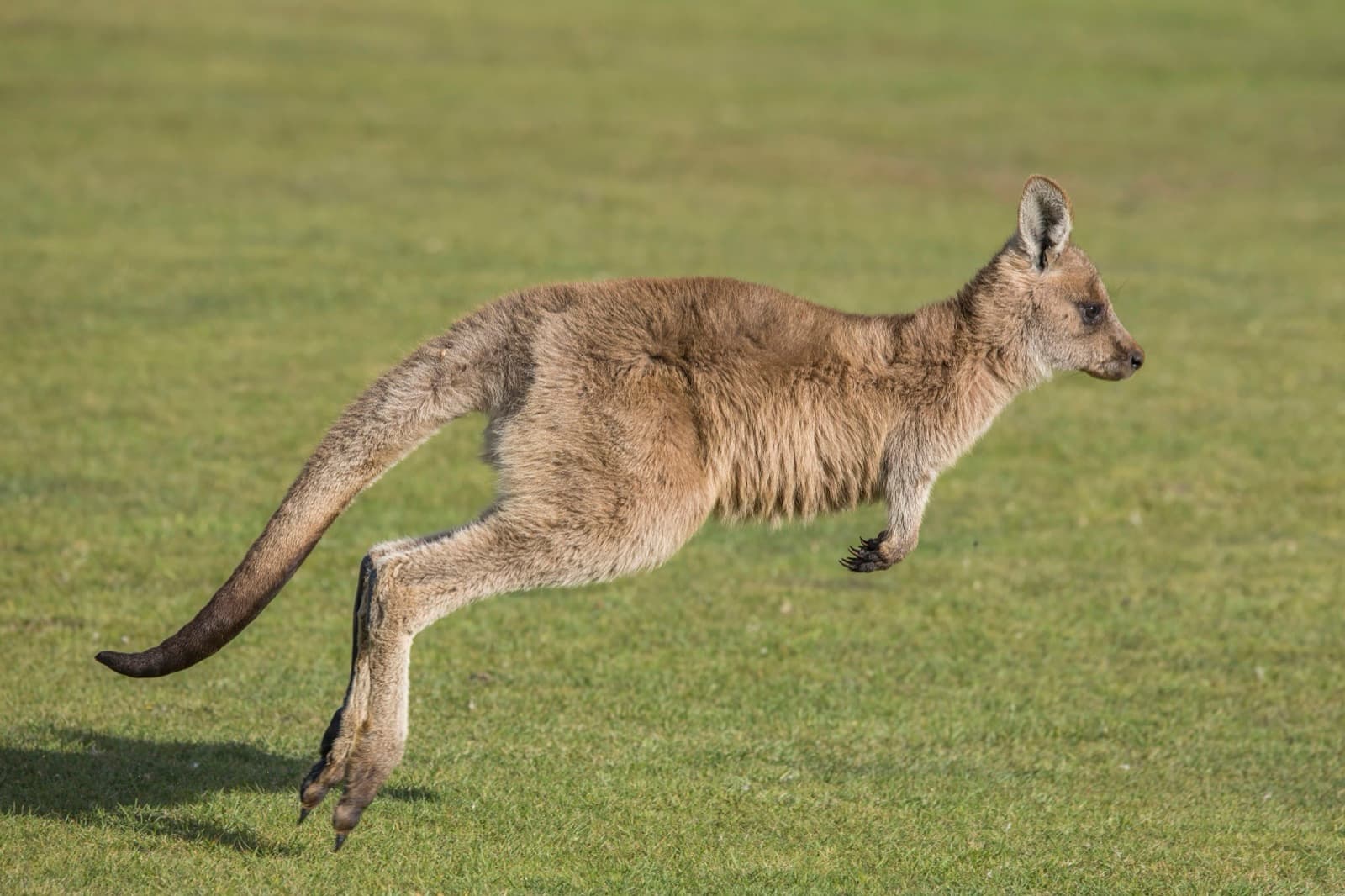
Kangaroos cannot walk. Their back legs are so big and springy that the only way they go forward is by hopping. Their tail works as a third leg, helping them balance as they lean on it. A big kangaroo can hop further in one bounce than most cars are long - up to 9 metres.
A baby kangaroo is born when it is no bigger than a jellybean. It crawls up its mum's tummy and into her pouch, where it stays warm and drinks milk for around six months. Even after the joey starts hopping on its own, it dives back into the pouch when it gets sleepy or scared.
Kangaroos live in groups called 'mobs'. A mob might be just a few kangaroos or it might be a hundred. They eat grass, like cows do, and chew it slowly. Most of the day they rest in the shade, then they come out at dawn and dusk to feed and play.
There are four main kinds of kangaroo: the red, the eastern grey, the western grey and the antilopine. Reds are the biggest and live in the dry Outback. Greys are more common near the coast. All of them are on Australia's coat of arms because, the Aussies say, kangaroos can only hop forwards - never backwards - so the country always moves forward.