
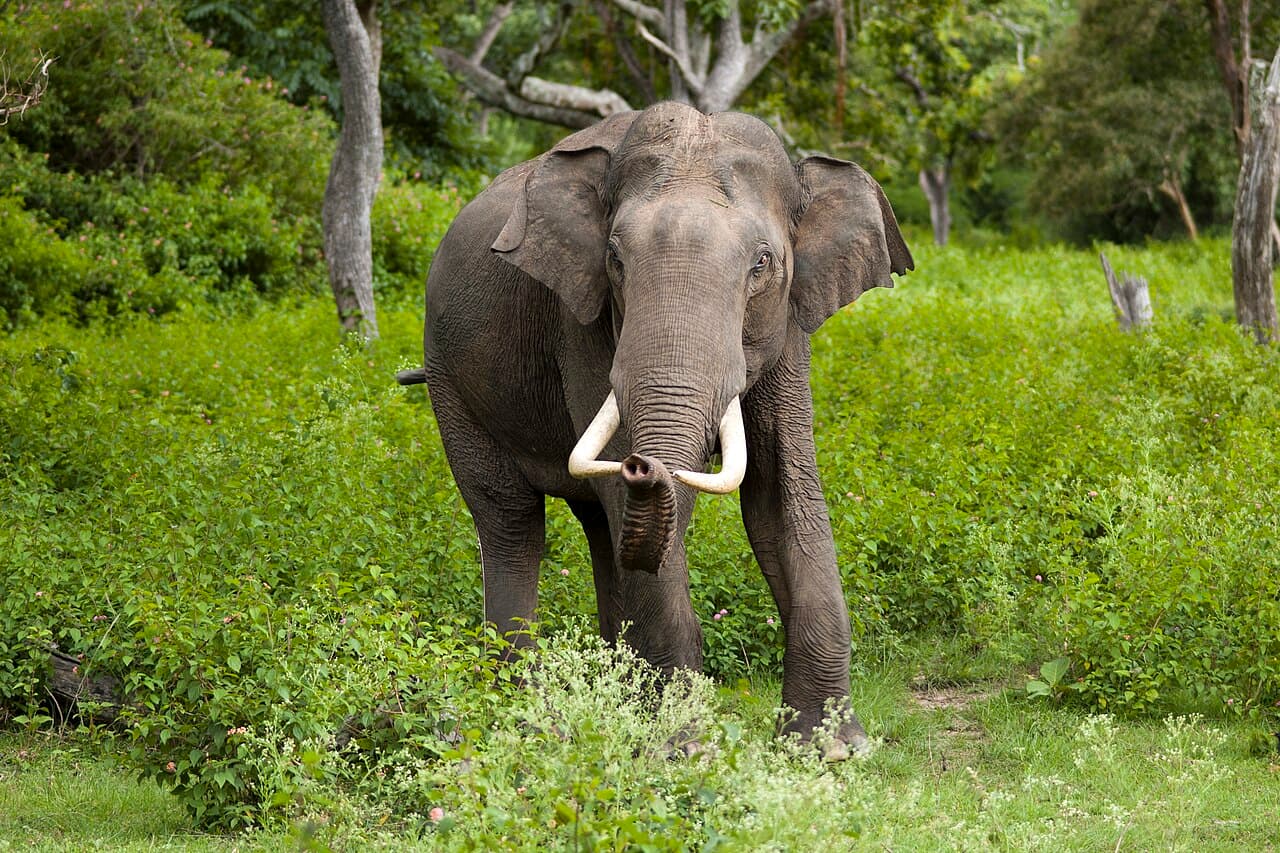
You can tell an Asian elephant from an African one by the ears. African elephants have huge ears shaped a little like the continent of Africa. Asian elephants have smaller, rounder ears - a bit like the shape of India. The smaller ears suit a forest life, where huge fans would catch on every branch.
An elephant's trunk is the most amazing tool in nature. It has around 40,000 muscles in it (your whole body has about 600). They use it like a hand to pick up a single leaf, like a hose to spray themselves with water, and even like a snorkel when crossing a deep river.
Elephants live in family groups led by the oldest grandma, called the matriarch. She remembers where to find water in dry years, which paths are safest, and which other families are friends. Her memory is the family's map. Asian elephants can live for around 60 to 70 years, so a grandma elephant has seen a lot.
Vietnam used to have many elephants, and a small number still live in the forests of the central highlands. Local conservation teams work to protect the forest where they live, so the elephants have enough room to roam and find food. Some of them help take children from nearby schools on visits to learn about the forest.