
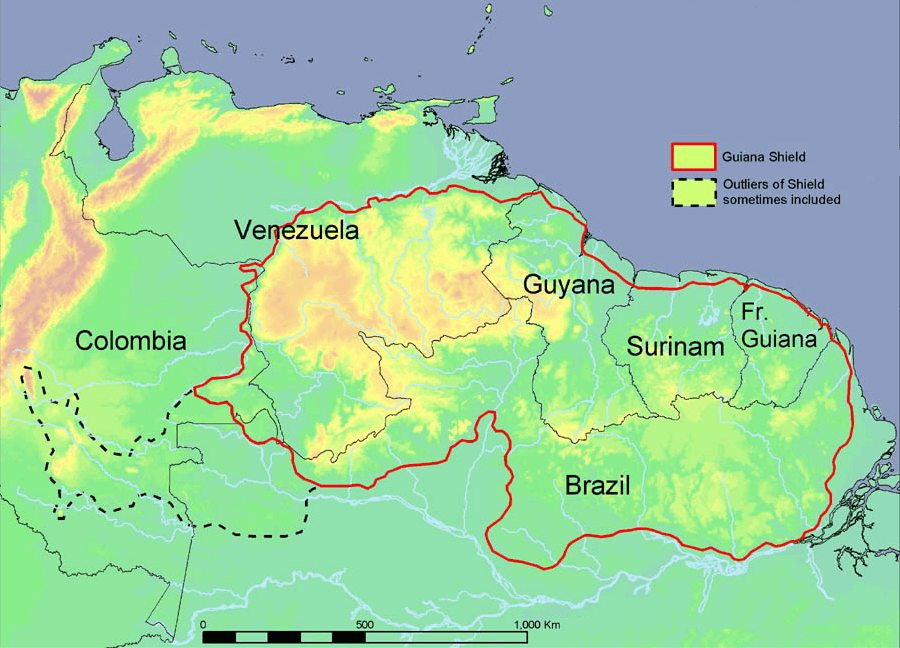
Tepuis are made of very hard sandstone that took about two billion years to form. The land around them slowly wore away with rain and rivers, but the tough sandstone tops did not. Over a very long time, the tops were left standing while everything around them sank.
Mount Roraima is the most famous tepui. Its flat top is more than 30 square kilometres - big enough for a whole town - and it sits over 2,800 metres above the jungle floor. People can walk up one side along a natural rocky ramp; the rest is sheer cliffs.
Because the tops of the tepuis are so tall and so cut off from each other, plants and animals up there have been left to themselves for millions of years. Some flowers, frogs and insects live on just one tepui and nowhere else in the world.
Scientists love tepuis for this reason. Visiting the top of a tepui is a bit like visiting a science laboratory that nature set up before humans even existed. The Pemon people who live nearby call them the 'houses of the gods'.