
Classroom lesson 路 Wildlife馃嚮馃嚜 Venezuela

Scarlet ibis - the bright red bird

A long-legged wading bird the colour of a fire engine

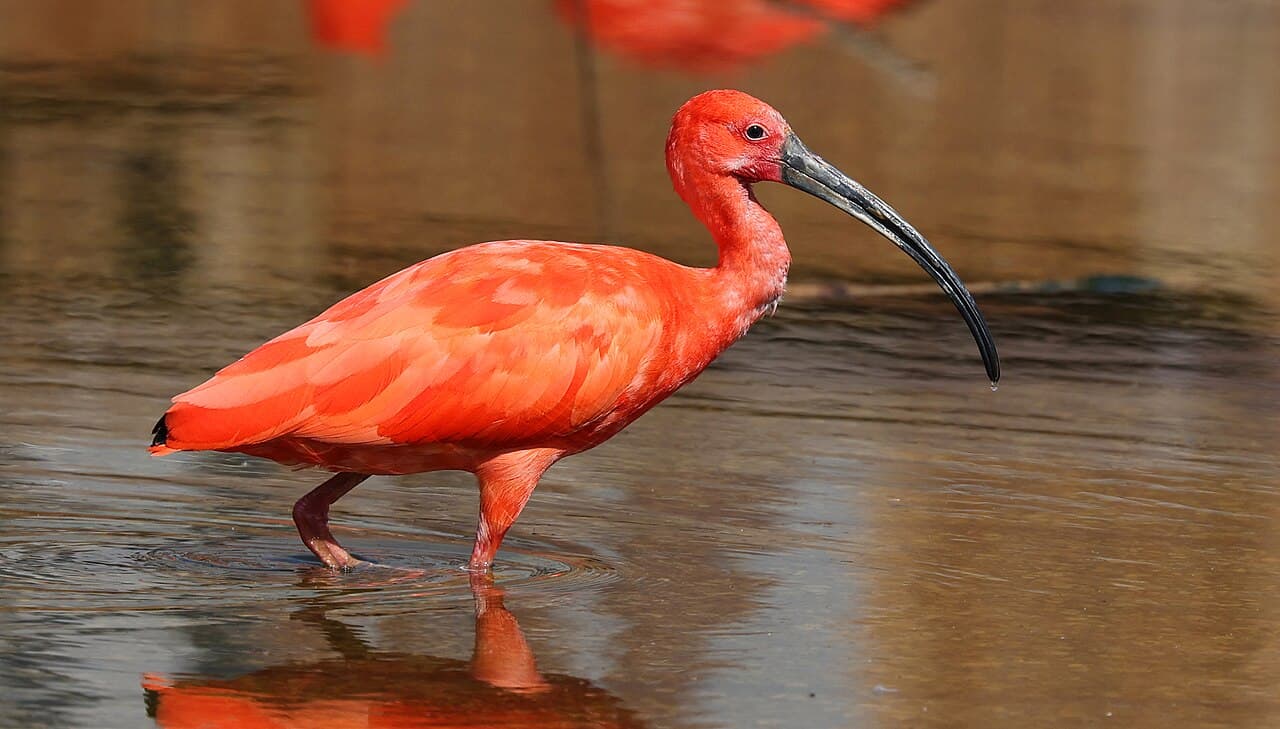
Bright red scarlet ibis birds wading in shallow Venezuelan wetland water

Photo 路 Wikimedia Commons

What is it?

The scarlet ibis is one of the most colourful birds in the world. Its feathers are an electric red - somewhere between strawberry and tomato - and it stands on long thin pink legs. It lives in flocks across the wetlands of Venezuela, especially near the Orinoco delta and Los Llanos.

Tell me more

Scarlet ibises are not born red. Chicks start out grey and brown. The famous red colour comes from what they eat - lots of tiny shrimp and crabs that contain a natural orange-red pigment. The more shrimp the ibis eats, the redder its feathers become. In other words, they are exactly what they eat.

They feed by wading slowly through the shallow water of marshes and mudflats, swinging their long curved beaks from side to side. The beak feels for small creatures hiding in the mud - shrimp, crabs, water insects and tiny fish.

Scarlet ibises live in big flocks of hundreds or even thousands. At sunset they fly together to roost in the same group of trees, often near the coast. When the whole flock takes off at once, the sky fills with red - one of the most amazing sights in the natural world.

The scarlet ibis is one of the national birds of Venezuela's neighbour Trinidad and Tobago, but huge numbers also live in Venezuela's wetlands. Anywhere there is shallow water, mangrove, mud and shrimp, the ibises are usually nearby.

In the classroom

Walk your class through this in 15 minutes.

Talk together

Discussion prompts

  1. 01An ibis's colour depends on what it eats. Do you know of foods that change what humans look like (think: oranges and orange skin)?
  2. 02Lots of birds live in big flocks. What might be the good and bad sides of being part of such a big group?
  3. 03A long curved beak is a tool. What is it shaped that way for? What would a straight beak miss?
Try this

Classroom activity

Pupils each design a brand-new bird with a beak shape suited to their favourite food. (Long and thin for nectar? Strong and short for nuts? Spoon-shaped for water?) Compare designs - what does each bird tell you about its diet?