
Classroom lesson 路 Wildlife馃嚮馃嚜 Venezuela

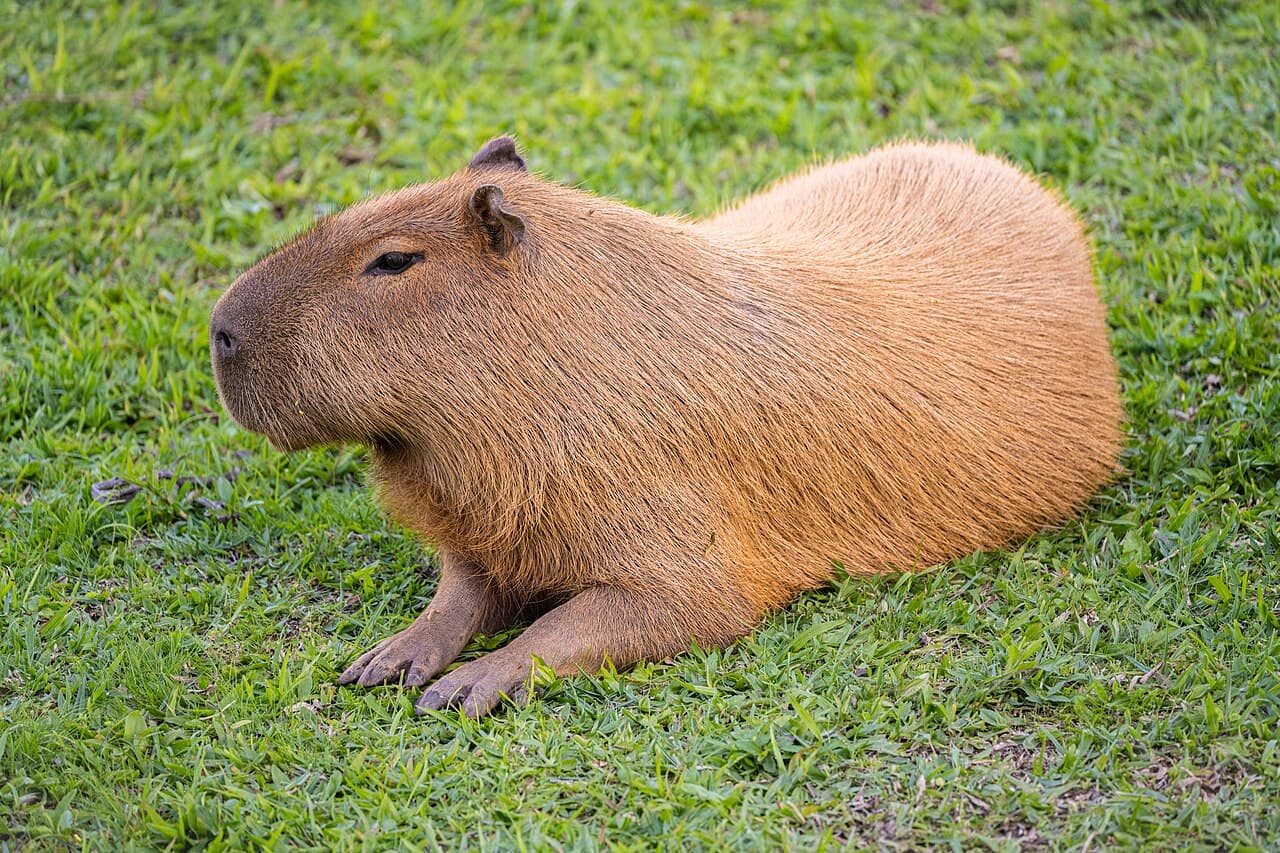
Capybara - the world's biggest rodent

A sheep-sized cousin of guinea pigs that loves to swim

A group of capybaras resting beside water in Los Llanos, Venezuela

Photo 路 Wikimedia Commons

What is it?

Capybaras are the biggest rodents in the world. A grown-up capybara is roughly the size of a sheep - around 60 cm tall and weighing up to 65 kg. They look like enormous guinea pigs (and that's pretty much what they are - very large cousins of guinea pigs). They live across the wet grasslands of Venezuela, especially in Los Llanos.

Tell me more

Capybaras love water. Their feet are slightly webbed, like a duck's, so they are excellent swimmers. They eat grass on the riverbank, then slip into the water to keep cool or to hide from danger. They can hold their breath for up to five minutes underwater.

They live in big family groups - usually around ten or twenty animals, sometimes a hundred. The grown-ups take turns watching over the babies and the rest of the herd. If one capybara sees danger, it lets out a sharp barking sound, and the whole group runs for the water at once.

Capybaras are famously chilled out. Lots of other animals seem to like sitting on them - birds perch on their backs to eat insects, monkeys sometimes ride along, and yes, photographs of them resting peacefully with all sorts of other creatures are some of the internet's favourites.

Their teeth never stop growing. That is why they spend so much time chewing grass - munching helps to keep their long front teeth from getting too long. The same is true of all rodents, from tiny mice to giant capybaras.

In the classroom

Walk your class through this in 15 minutes.

Talk together

Discussion prompts

  1. 01Why is being a strong swimmer useful for a grass-eating animal that lives near rivers?
  2. 02Capybaras live in big herds and take turns watching for danger. What other animals share that habit? What about humans?
  3. 03Other animals like sitting on capybaras. What might make some animals feel 'safe' to others?
Try this

Classroom activity

Capybaras can hold their breath for five minutes. Try holding your breath safely while sitting (under 30 seconds is normal). Now imagine being a capybara at the bottom of a river - what jobs could you do down there? Brainstorm five.