
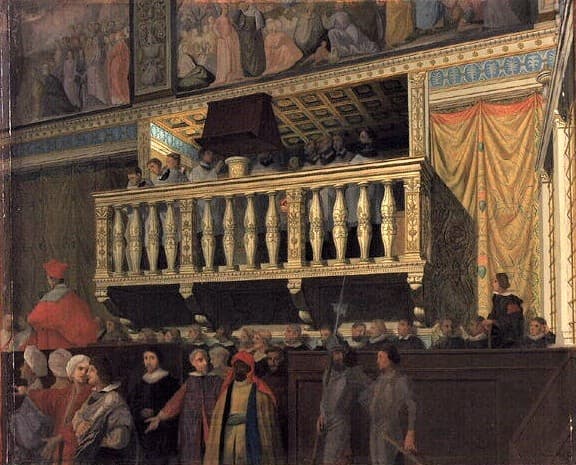
The choir's music is called choral polyphony - which means several different vocal parts singing different notes at the same time, weaving together into a rich, layered sound. In the 1400s and 1500s, this style of singing was cutting-edge and exciting, and composers came from across Europe to write for the Sistine Chapel's skilled singers.
One of the most famous composers connected to the Sistine Chapel Choir was Giovanni Pierluigi da Palestrina, who worked there in the 1500s. He wrote hundreds of pieces of choral music and helped shape the way European choral music developed for the next 200 years. His music is still performed and studied today.
The choir performs using a style of singing called a cappella - meaning without any instruments playing alongside them. Every note you hear comes from a human voice. The Sistine Chapel's stone walls create a natural echo that makes the sound bloom and expand, giving the music a unique quality that cannot be replicated anywhere else. Recordings exist, but everyone who has sung or listened there says nothing compares to being in the room.