
Classroom lesson · The Sistine Chapel Ceiling · 🇻🇦 Vatican City

The Sistine Chapel Ceiling

Michelangelo's masterpiece, painted lying on his back

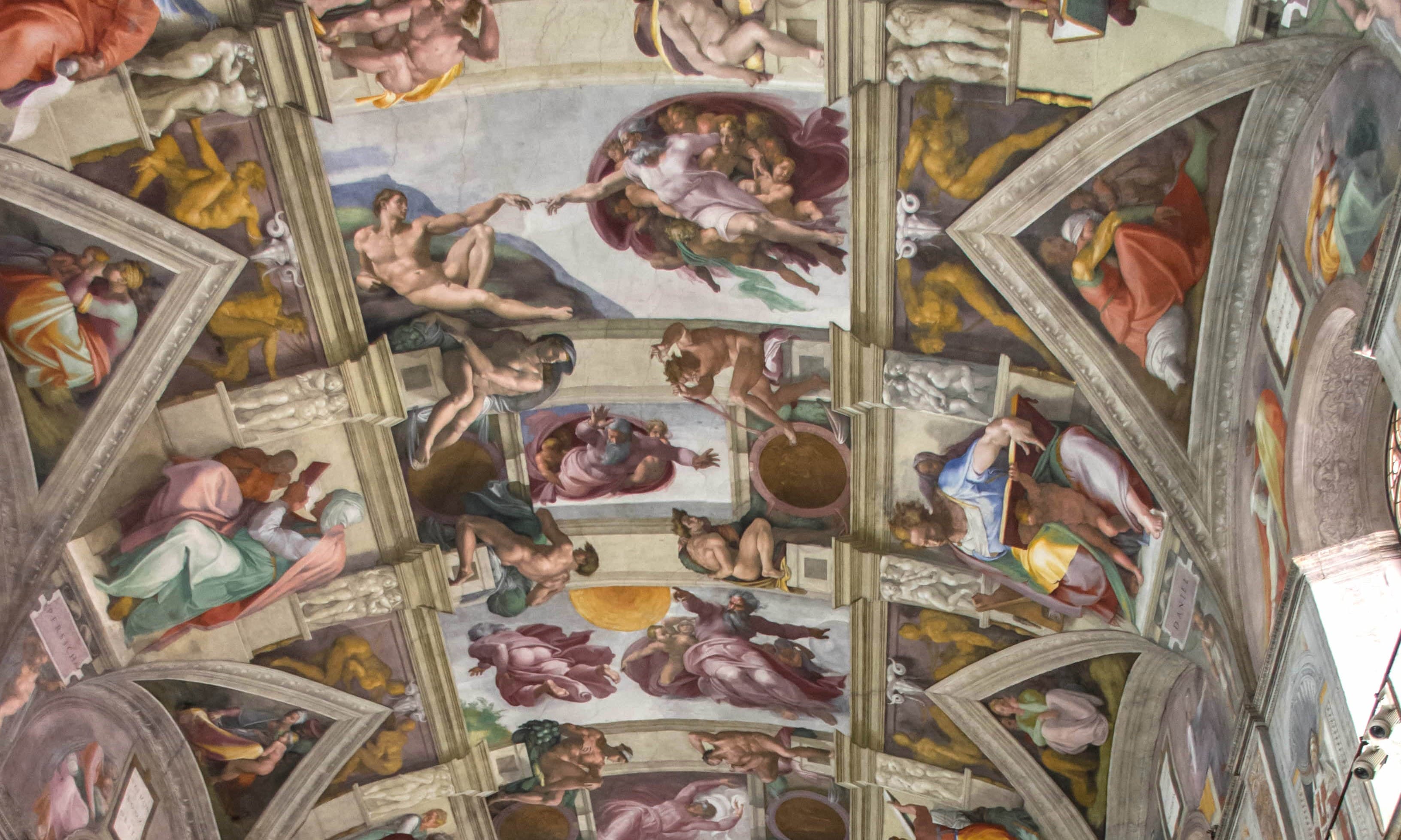
The painted ceiling of the Sistine Chapel showing vivid Renaissance frescoes

Photo · Wikimedia Commons

What is it?

The Sistine Chapel is a famous hall inside Vatican City with one of the most incredible painted ceilings in the world. An artist called Michelangelo painted it between 1508 and 1512 - that is four years of work, mostly lying on his back on a high wooden platform, with paint dripping down onto his face.

Tell me more

Michelangelo painted the ceiling in a style called fresco, where artists apply colour to wet plaster so the pigment soaks in and lasts for hundreds of years. The ceiling is about 40 metres long and 14 metres wide - imagine laying seven double-decker buses end to end. It shows more than 300 figures in vivid colours that still look bright today, over 500 years later.

Michelangelo was 33 years old when he started painting the ceiling. He built a special curved scaffold so he and his assistants could reach the ceiling without hurting the floor below. He worked in sections, starting at the entrance end. Each section had to be finished before the plaster dried - usually within a day - so the paint would bond permanently to the wall.

According to his letters, the work was incredibly uncomfortable. He had to keep his neck bent back and his arms raised for hours at a time, and paint kept falling into his eyes. By the end of four years his neck and eyes hurt so much that he said he could only read letters by holding them above his head. Even so, the finished ceiling is considered one of the greatest artworks ever made.

In the classroom

Walk your class through this in 15 minutes.

Talk together

Discussion prompts

  1. 01Michelangelo spent four years on one painting. Have you ever worked on something for a really long time? How did it feel to finish it?
  2. 02The fresco technique means the paint soaks into the plaster while it is still wet. Why might that make it last longer than paint on a dry wall?
  3. 03Michelangelo found the work very uncomfortable but kept going. What helps you keep going when something is really hard?
Try this

Classroom activity

Tape a sheet of paper under a desk so it hangs upside-down. Lie on your back and try to draw a simple picture on the paper using felt-tip pens. After two minutes, sit up and compare your drawing with what Michelangelo achieved over four years. What was the hardest part?