
Classroom lesson · The Egyptian Obelisk · 🇻🇦 Vatican City

The Egyptian Obelisk

A 4,000-year-old stone from ancient Egypt, right in the middle of Vatican City

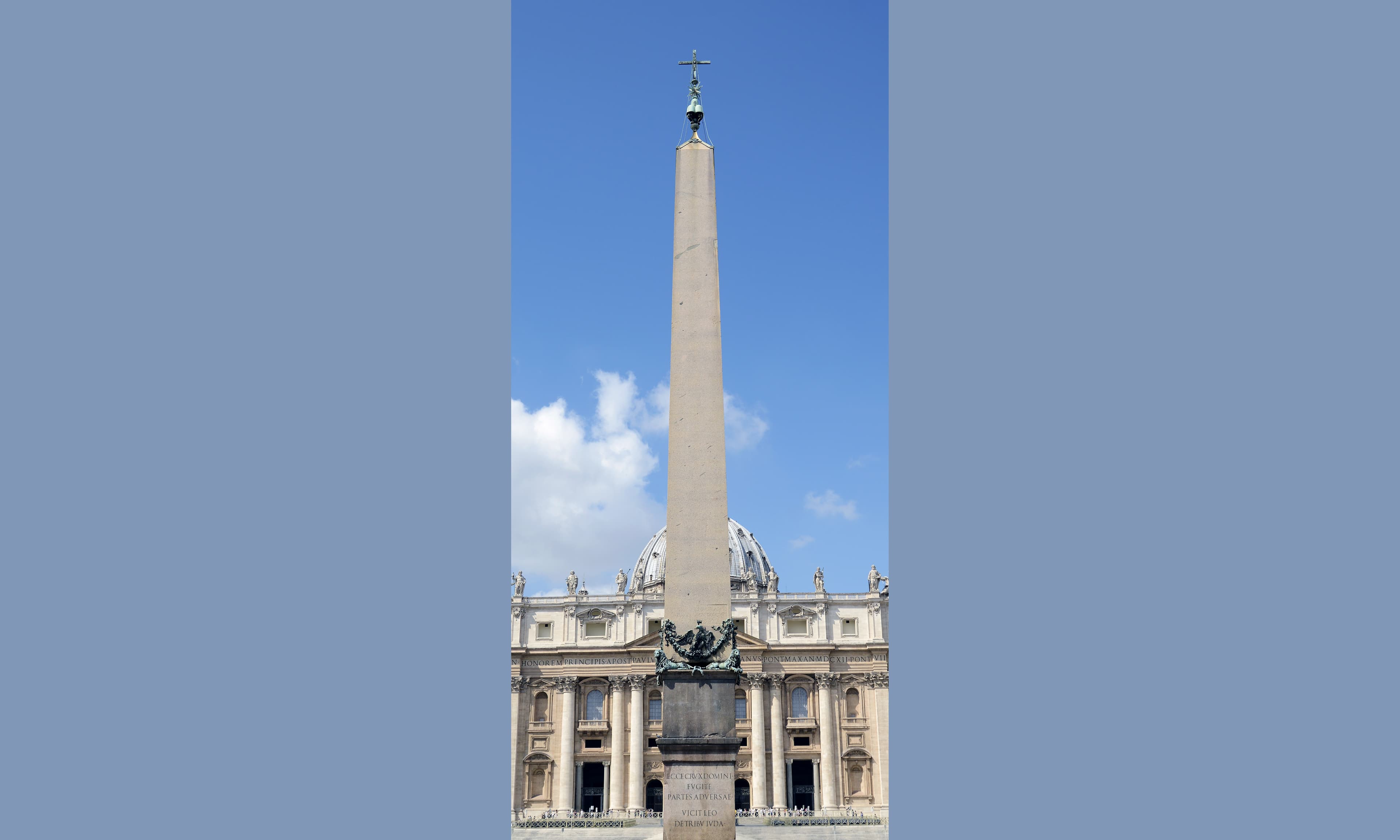
The tall Egyptian obelisk standing in the centre of St Peter's Square

Photo · Wikimedia Commons

What is it?

Standing in the very centre of St Peter's Square is a single tall stone called an obelisk that is about 4,000 years old. It was carved in ancient Egypt and later brought to Rome by the Romans. Today it is one of the most-visited ancient objects on Earth, and millions of tourists photograph it every year.

Tell me more

An obelisk is a tall, four-sided pillar of stone that comes to a point at the top called a pyramid. The Egyptians carved obelisks from single pieces of granite - an extremely hard rock - and covered them with carved pictures called hieroglyphs. This particular obelisk is about 25 metres tall and was originally quarried and shaped in Egypt, probably around 1,800 BCE.

The Romans brought it to Rome by ship across the Mediterranean Sea, which was an extraordinary engineering challenge. Obelisks are extremely heavy - this one weighs around 330 tonnes - and moving one without modern cranes or lorries required enormous skill and hundreds of workers. Once it reached Rome, it stood in a stadium for many centuries.

In 1586, workers moved the obelisk from its old location in Rome to the centre of St Peter's Square - again without any modern machinery. It took hundreds of men, dozens of horses, and many specially built wooden machines to lift the obelisk upright and set it on its stone base. According to the story, the crowd was completely silent during the whole operation, and when it was finally in place, everyone cheered.

In the classroom

Walk your class through this in 15 minutes.

Talk together

Discussion prompts

  1. 01The obelisk was moved in 1586 without any modern machinery. What do you think the workers used, and what would have been the hardest part?
  2. 02The obelisk started in Egypt, moved to Rome, and ended up in Vatican City. Why do you think people moved such a heavy object so far?
  3. 03If you found a 4,000-year-old object, what questions would you want to ask about it?
Try this

Classroom activity

On a world map or blank outline, trace the journey of the Vatican obelisk: quarried in Egypt → shipped across the Mediterranean → placed in Rome → moved to Vatican City. Mark each stop with a small drawing of the obelisk and add an arrow showing the direction of travel. Write one sentence under each stop explaining what happened there.