
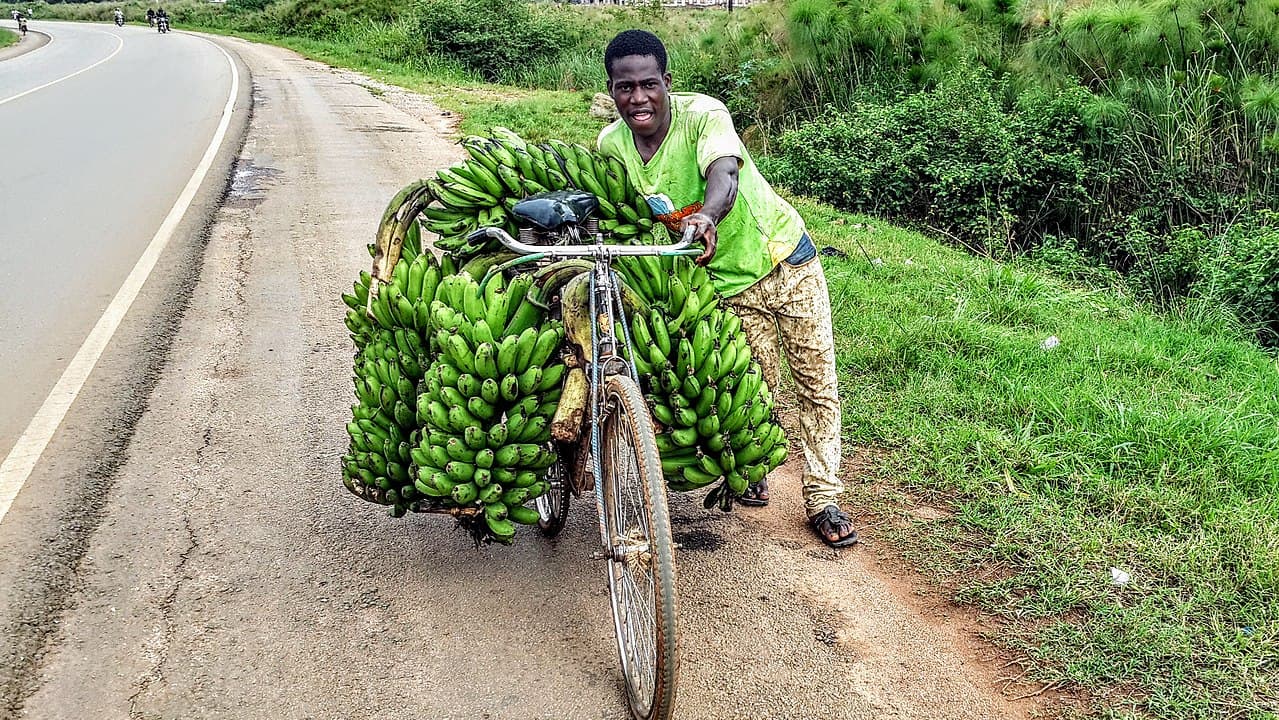
Matoke bananas don't taste like the yellow bananas you might know. They are firmer, less sweet, and they cook into a soft yellow mash a bit like mashed potato. The flavour is gentle, so it works as the perfect base for something more flavourful poured over the top.
The mash is usually served with a stew - groundnut (peanut) sauce, beef in tomato, beans, or fish. Many Ugandan families eat matoke several times a week. It is the kind of food that makes a kitchen smell amazing all afternoon, because the bananas have been steaming gently since lunchtime.
Traditionally, matoke is steamed in a special pot lined with banana leaves. The leaves hold the moisture in and add a gentle, grassy taste. Modern kitchens sometimes use a pressure cooker instead, but many cooks still swear that nothing beats the banana-leaf version. Children sometimes get the leftover banana leaves to play with - rolling them up like little parcels or using them as plates.
Uganda is one of the world's biggest growers of bananas. There are more than 50 different kinds grown in the country. Some are for steaming into matoke. Some are for roasting. Some are for brewing into a fizzy drink. Some are tiny and sweet for snacking. A Ugandan banana market is one of the most colourful places you will ever see.