
Classroom lesson 路 Wildlife馃嚭馃嚞 Uganda

Hippos of the Kazinga Channel

The world's biggest gatherings of hippos live in Uganda's lakes

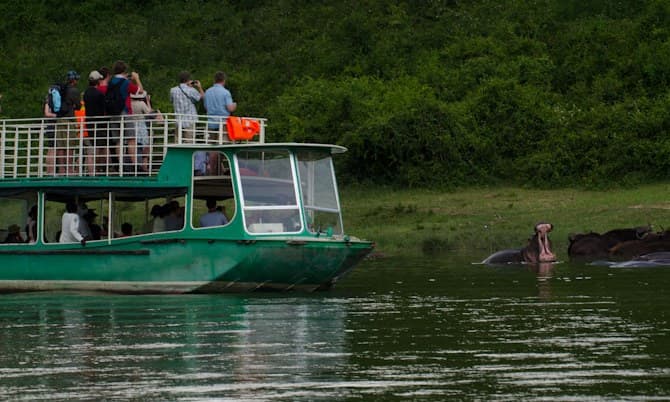
A group of hippos resting in the Kazinga Channel with only their eyes and ears above water

Photo 路 Wikimedia Commons

What is it?

A hippopotamus is a huge, round mammal that spends most of its day in water. An adult hippo can weigh more than a small lorry - around 1,500 kilograms. Uganda's Kazinga Channel, a 32-kilometre stretch of water between two lakes, is home to one of the biggest gatherings of hippos anywhere in the world - sometimes more than 1,000 of them in one channel.

Tell me more

Hippos look slow on land but they are surprisingly fast. They can run at 30 kilometres an hour for short bursts - faster than a human can sprint. Underwater, they don't actually swim. They walk along the bottom of the lake, pushing themselves with their toes. Their eyes, ears and nose are all on top of their heads so they can keep watch while the rest of their body stays cool below the surface.

Hippos spend the day in water to keep their skin from drying out in the strong African sun. Their skin also produces a special pinkish-red oil that works like sunscreen and bug spray rolled into one. People used to think hippos were 'sweating blood', but it is really a clever skin product made by their bodies.

At night, the whole group climbs out of the water and walks to nearby grasslands to feed. A single hippo can eat about 40 kilograms of grass in a night. The same paths get used by hippo families for many generations - they become smooth grooves in the earth, like little hippo motorways.

Baby hippos are born underwater. Within a minute, mum nudges them to the surface for their first breath. They can swim immediately. The babies often ride on their mothers' backs in deeper water and play together in the shallows, splashing and chasing each other.

In the classroom

Walk your class through this in 15 minutes.

Talk together

Discussion prompts

  1. 01If you spent all day in water and all night on land, what kind of body would help you most?
  2. 02Hippos make their own sunscreen. What would you invent for your skin if you could?
  3. 03Why might it help baby hippos to be able to swim from the very first minute?
Try this

Classroom activity

Lie on the floor with only your eyes peeking up - that is the hippo's-eye view of the world. As a class, look around the room from this angle. Then draw a picture of the Kazinga Channel showing what a hippo can see from the surface and what is happening below.