
Classroom lesson 路 Wildlife馃嚬馃嚪 Turkey

The brown bears of Turkey

Big, shy and almost never seen - they live deep in Turkey's forests

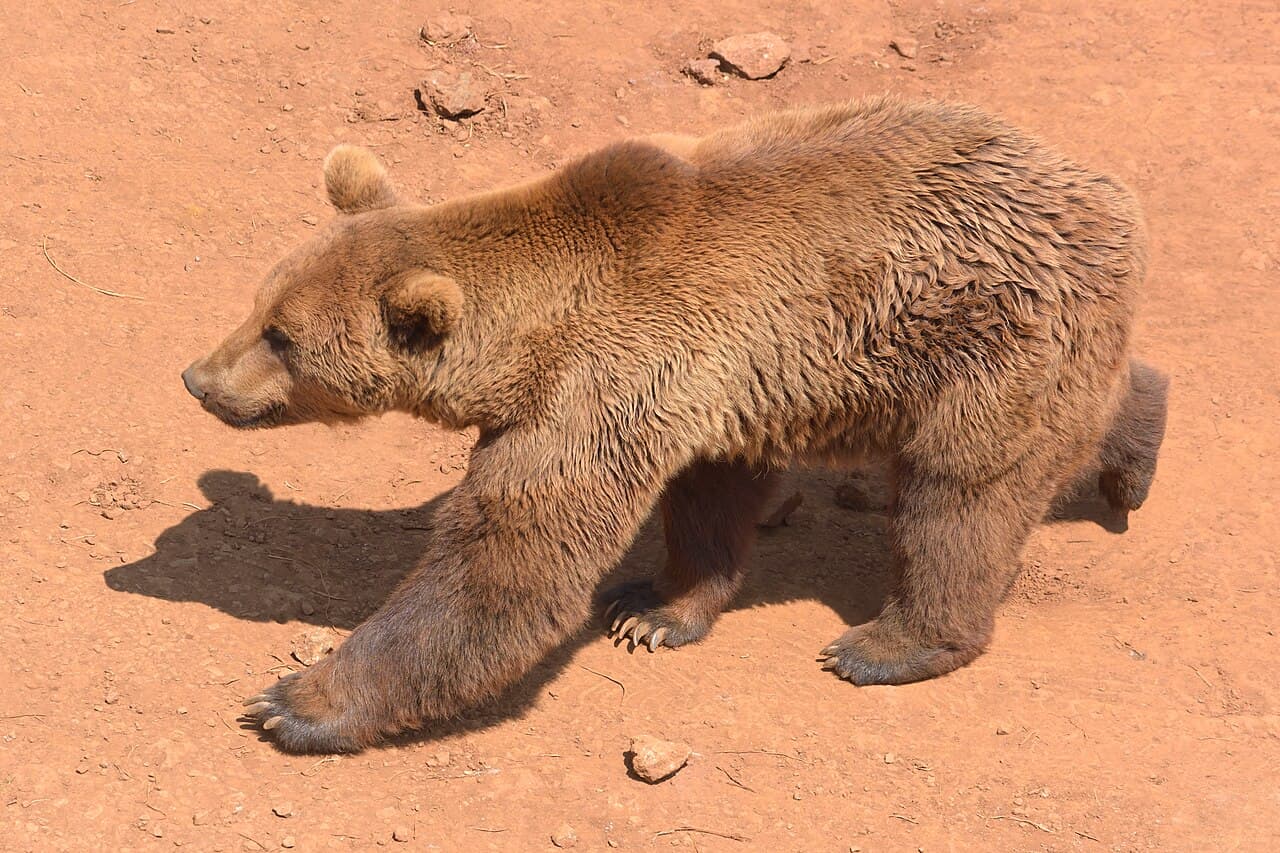
A brown bear walking through a forest in Turkey

Photo 路 Wikimedia Commons

What is it?

Brown bears live in the thick mountain forests of northern and eastern Turkey. They are the biggest wild land animal in the country - a grown-up male can weigh over 250 kilograms. They are also incredibly shy. Most people who walk in Turkey's forests for years never see one.

Tell me more

Brown bears live alone, except for mothers with cubs. A mother bear usually has two or three cubs at once. The cubs are tiny when they are born - about the size of a baby rabbit - and stay with their mum for around two years, learning where to find food.

They eat almost anything. Most of a brown bear's diet is plants: berries, fruit, roots and nuts. They also love honey and will climb trees to reach a wild beehive, ignoring the bee stings. In autumn, they eat as much as they can, putting on weight for winter.

In the coldest months, Turkish brown bears go into a long deep sleep called hibernation. They find a quiet cave or dig a den, curl up, and sleep for several months. Their heart slows right down. They live off the fat they have built up in autumn. When spring comes, they wake up - thinner, hungrier and ready to forage again.

Bears are very strong but, surprisingly, they are also very gentle with their cubs. A mother bear will lift her tiny cub carefully with her huge paw and groom it like a cat with a kitten.

In the classroom

Walk your class through this in 15 minutes.

Talk together

Discussion prompts

  1. 01Why might it be useful for a bear to sleep all winter, instead of staying awake?
  2. 02If a bear's diet is mostly plants, why do we sometimes think of them as scary?
  3. 03What animals near where you live might be 'around but never seen'?
Try this

Classroom activity

Make a class poster of what a Turkish brown bear eats: half plants, half honey-and-occasional-extras. Draw or print pictures of berries, nuts, mushrooms, honeycomb and roots. Compare it with what is in your lunchbox.