
Classroom lesson 路 Pamukkale - the cotton castle馃嚬馃嚪 Turkey

Pamukkale - the cotton castle

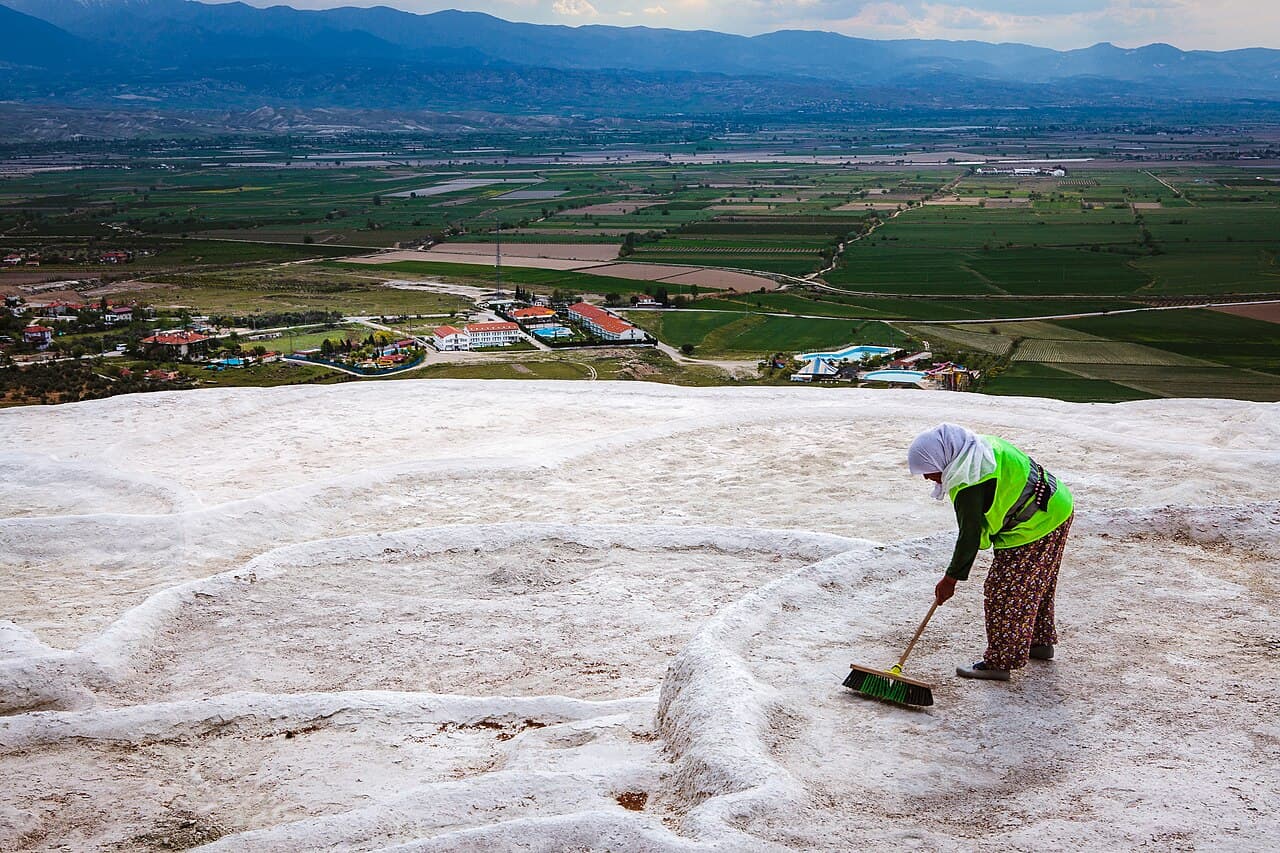
Snow-white stone terraces filled with warm turquoise pools

The white travertine terraces of Pamukkale with pools of blue water

Photo 路 Wikimedia Commons

What is it?

Pamukkale is one of the strangest-looking places on Earth. A whole hillside in the south-west of Turkey is covered in bright white stone, shaped into hundreds of bowl-like terraces. Each terrace is filled with warm, turquoise blue water. From far away, it looks like a wedding cake or a castle made of cotton wool - which is exactly what the name means in Turkish.

Tell me more

The white stone is called travertine. It is made by warm water that bubbles up out of the ground from deep underground. The water is full of a mineral called calcium carbonate (the same thing that makes up chalk and seashells). When the water cools at the surface, the mineral hardens into snow-white rock.

Over thousands of years, the water has dripped down the hillside layer by layer. The rock has built up into bowl-shaped terraces, one stacked above another. Each one looks a bit like a small pond with smooth white edges, holding warm water in the sunshine.

The water arrives at the top warm, because it has been heated by the rocks deep underground. It is around 35掳C - about the same as a comfortable bath. The Romans built a town here 2,000 years ago just so they could come and bathe in the warm pools, and you can still see the ruins of the old Roman streets next door.

Today Pamukkale is so precious that visitors have to take their shoes off to walk on the white terraces. That keeps the rock clean and white, and protects the slow drip-drip-drip that has been building this place for thousands of years.

In the classroom

Walk your class through this in 15 minutes.

Talk together

Discussion prompts

  1. 01How can warm water make a hillside go white?
  2. 02Why might visitors be asked to take their shoes off in a place like this?
  3. 03What other natural places can you think of that look almost too strange to be real?
Try this

Classroom activity

Mix a little flour and water in a slow drip down a tilted tray. Watch how it builds up in layers. That's a tiny version of how Pamukkale was made - except over thousands of years.