
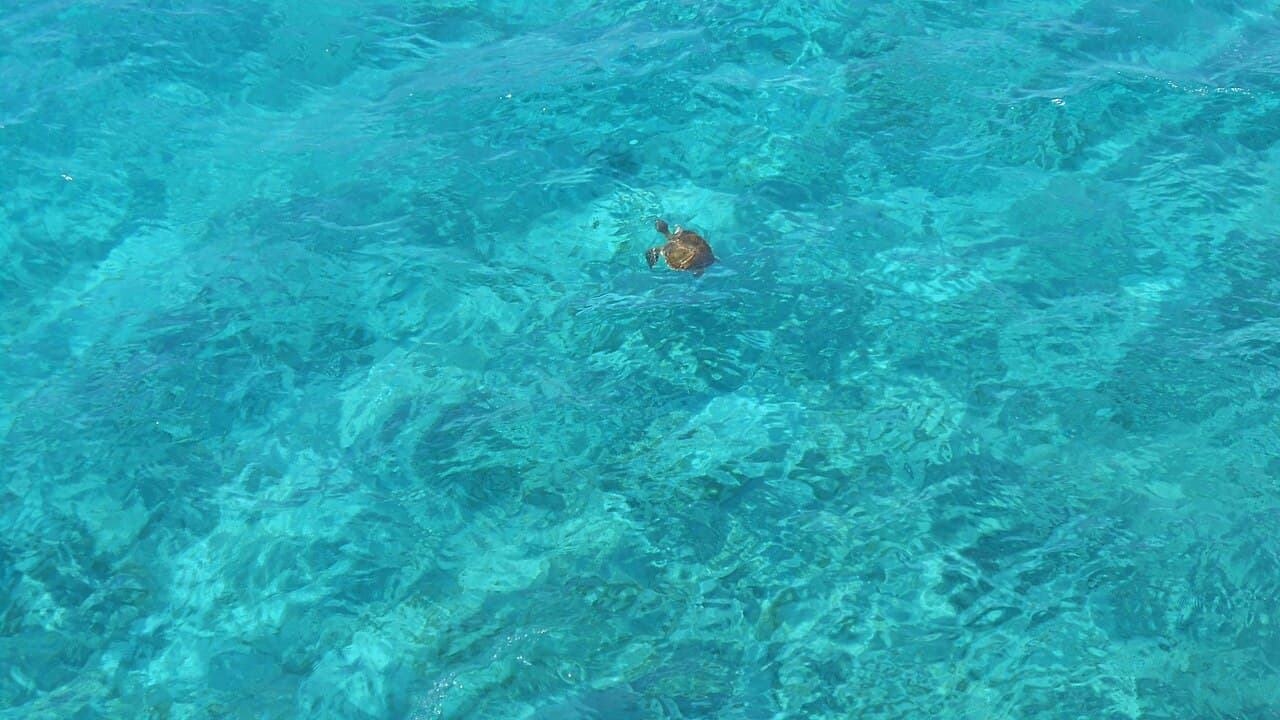
An adult loggerhead is about a metre long - roughly the size of a coffee table - and can weigh up to 150 kilograms. They have a heart-shaped shell and a powerful jaw that they use to crack open crabs and other shellfish.
On a summer night, a mother loggerhead crawls up the beach (sea turtles can't walk well on land). She digs a deep hole with her back flippers, lays around 100 leathery white eggs, and gently covers them up with sand. Then she crawls back to the sea, leaving the eggs to look after themselves.
About two months later, on a warm night, the babies all hatch at once. Each one is the size of a 50-pence coin. They dig their way up through the sand and then scramble as fast as they can towards the sea, following the light of the moon on the water. The dash to the sea is the most dangerous moment of a turtle's whole life.
Beaches in Turkey, like Iztuzu near the town of Dalyan, are protected during nesting season. The sand is roped off, lights are kept low, and volunteers count the nests. Hatchlings get a clear, dark path to follow to the sea. The same beaches have been used by loggerheads for thousands of years.