
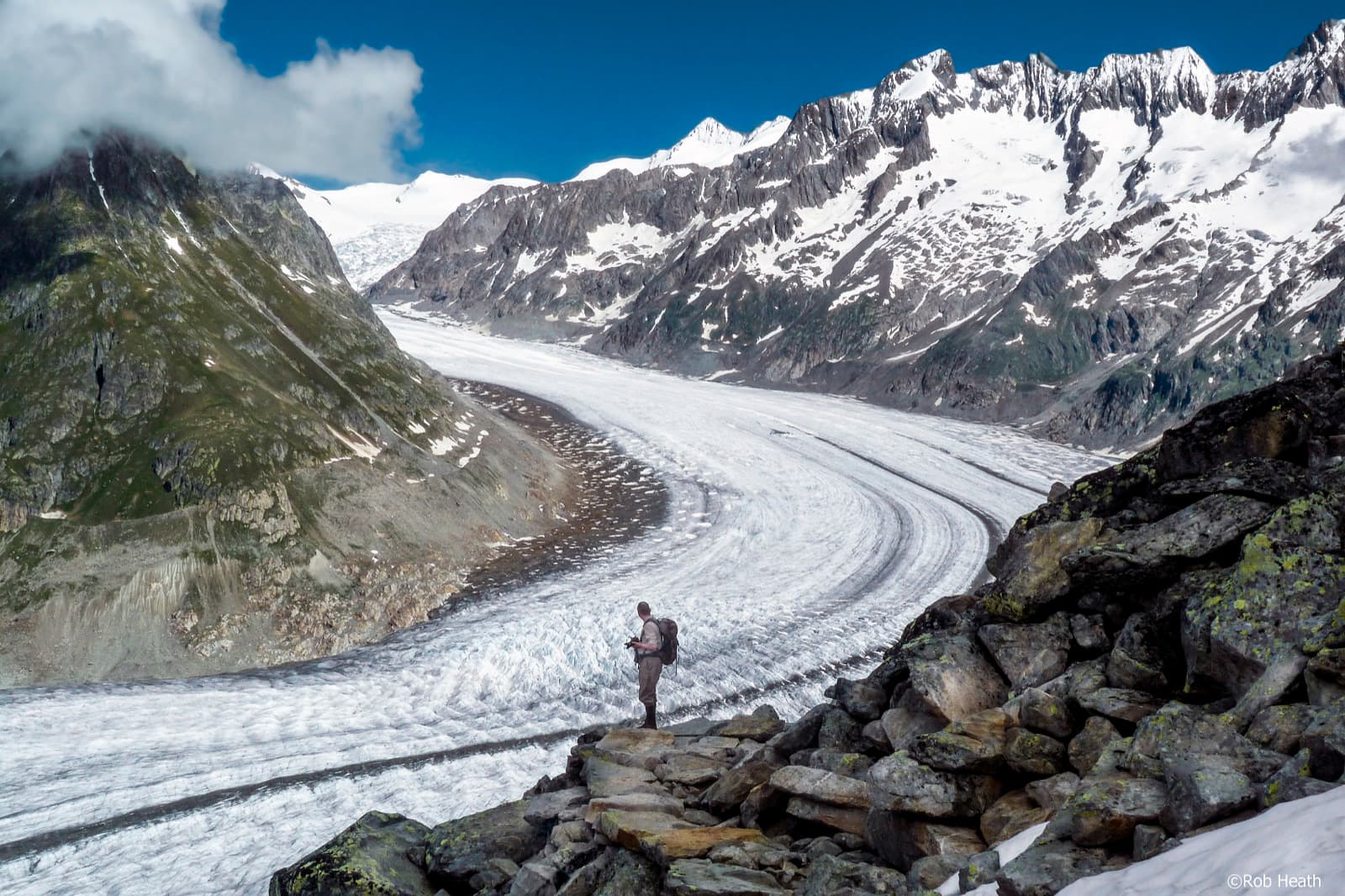
The Alps were formed about 30 million years ago, when two huge pieces of the Earth's surface slowly pushed against each other. The rock had nowhere to go but up. The mountains are still growing today, by about 1 millimetre a year.
Switzerland has 48 mountains taller than 4,000 metres. The highest is called Monnte Rosa (4,634m), but the most famous is the Matterhorn. In winter the high peaks are covered in deep snow. In summer the lower meadows fill with wildflowers and cows wearing big bells that you can hear from a long way away.
Switzerland is famous for its mountain railways. The Jungfraujoch railway climbs to 3,454 metres - the highest train station in Europe. It goes through a tunnel cut right through the inside of a mountain, taking around 35 minutes to reach a station built into the ice. There is even a Swiss train called the Glacier Express that takes 8 hours to cross the country slowly so passengers can look at the views.
In the high Alpine meadows, there is a tradition called 'Alpine summer'. Each spring, farmers walk their cows up the mountain to eat the fresh grass. The cows stay there all summer, making milk that becomes Swiss cheese. In autumn, when the snow returns, the farmers walk them back down - sometimes with flowers on the cows' heads for a special parade called 'Alpabzug'.