
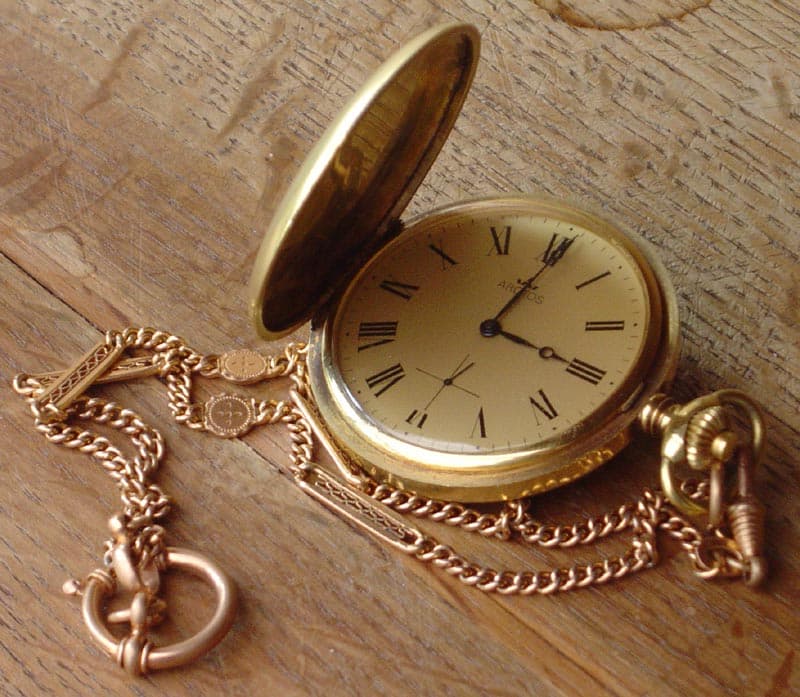
The Swiss watch tradition began in the city of Geneva in the 1500s. Skilled jewellery makers started turning their hands to building tiny clocks. Over time they worked out how to make the gears smaller and smaller until a whole machine could fit on a person's wrist.
Inside a mechanical watch there is a tiny wound-up spring. As the spring slowly unwinds, it powers a chain of little gears that move the hands around the clock face. A really good Swiss watch can keep time accurate to within a few seconds a week, even though it has no battery and no computer.
Many Swiss watches are still made by hand. A single watchmaker may spend weeks putting one watch together, using tiny tweezers under a magnifying glass. The smallest parts are thinner than a human hair. The word 'Swiss made' on a watch face is so trusted that it is protected by law - only watches that meet strict rules are allowed to use it.
Switzerland is also where the colourful, plastic 'Swatch' watch was invented in 1983. Swatches were affordable, fun and came in hundreds of designs. Within five years, Switzerland was selling more watches than anyone else in the world again.