
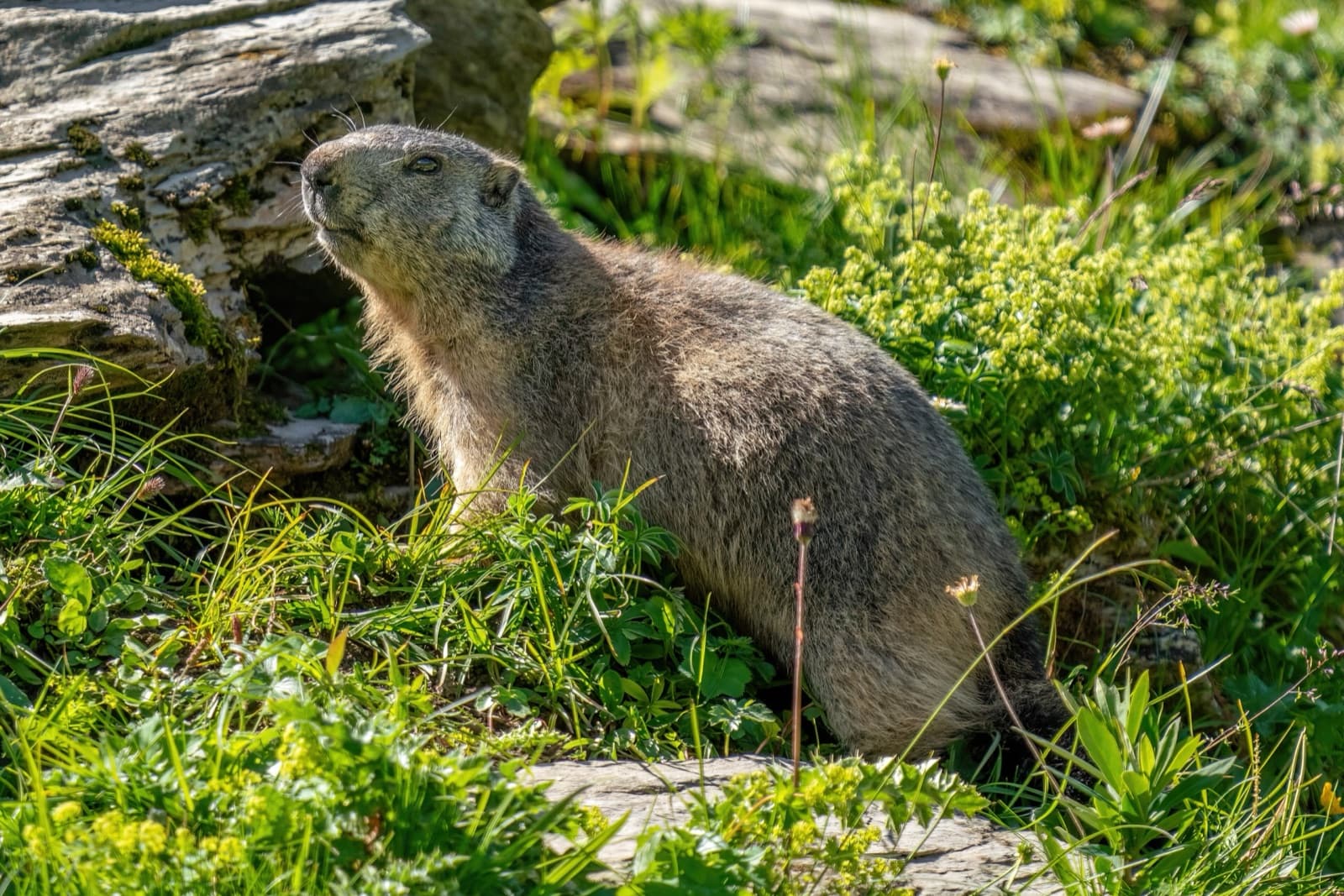
Marmots live together in family groups in burrows under the meadow. The burrows are like underground houses with several entrances, lots of tunnels and a cosy nest at the bottom. A family might have 10 or 12 marmots all sharing the same home.
One marmot is always on lookout. It stands up on its back legs, like a meerkat, and watches for eagles, foxes and people. When it sees danger, it whistles. The other marmots all dive into the nearest tunnel within seconds. Different kinds of whistle mean different things: one long blast means a danger on the ground (like a fox), a series of shorter whistles means danger from above (like an eagle).
Marmots are some of the deepest sleepers in nature. Every winter, the whole family curls up together at the bottom of their burrow and hibernates for around six months. During that time, their heart slows down to only a few beats a minute, their breathing nearly stops, and their body cools right down. They wake up in spring much thinner than when they went to sleep.
Baby marmots, called 'pups', are born underground in May. They stay in the burrow for the first few weeks of their lives. When they finally come out, they spend a lot of time play-fighting, rolling around on the grass and learning the family whistles.