
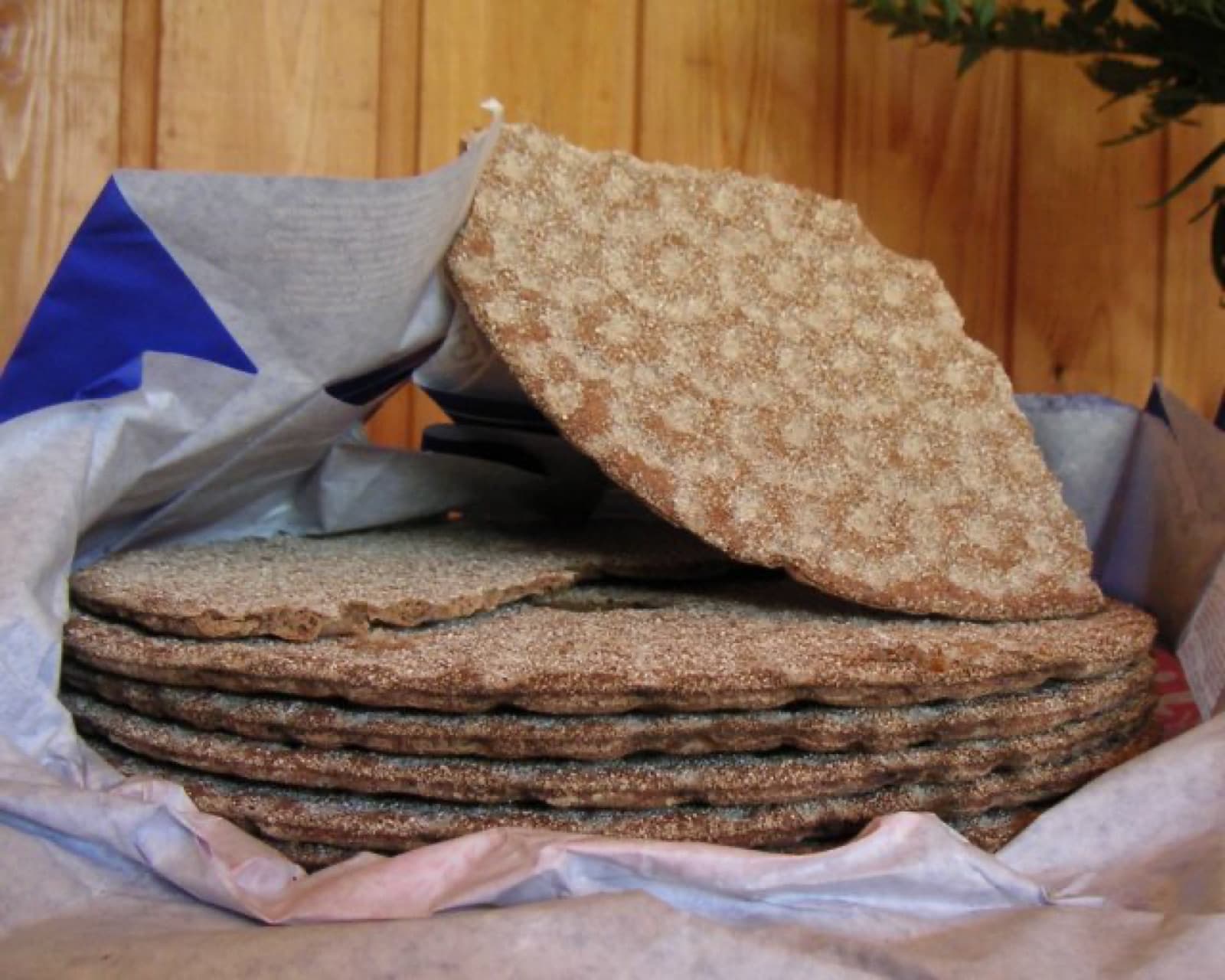
Knäckebröd is made from rye flour - rye is a grain that grows really well in cold places, even when winters are long. The dough is rolled out very thin and then baked in a very hot oven until all the water is driven out. That is what makes it last for ages: with no water inside, it can't go mouldy.
Hundreds of years ago, Swedish farmers used to bake knäckebröd just twice a year - once in spring and once in autumn - and bake enough to last for months. They would hang the round flat breads on a long pole near the ceiling, so the family could grab one whenever they were hungry.
Many traditional knäckebröds have a hole in the middle. That's left over from those old days - it was so the bread could be hung on the pole. Even today, many knäckebröds keep the hole, even though no one hangs them up anymore.
You eat knäckebröd by putting something tasty on top: butter, cheese, cucumber, smoked salmon, jam, or even just a scrape of butter and a sprinkle of salt. It makes a brilliant crunchy snack. Knäckebröd shows up in lunchboxes, picnic baskets, school dinners and on every Swedish breakfast table.