
Classroom lesson 路 Islands馃嚫馃嚜 Sweden

Stockholm - the city on 14 islands

Sweden's capital is built on water, with 57 bridges holding it together

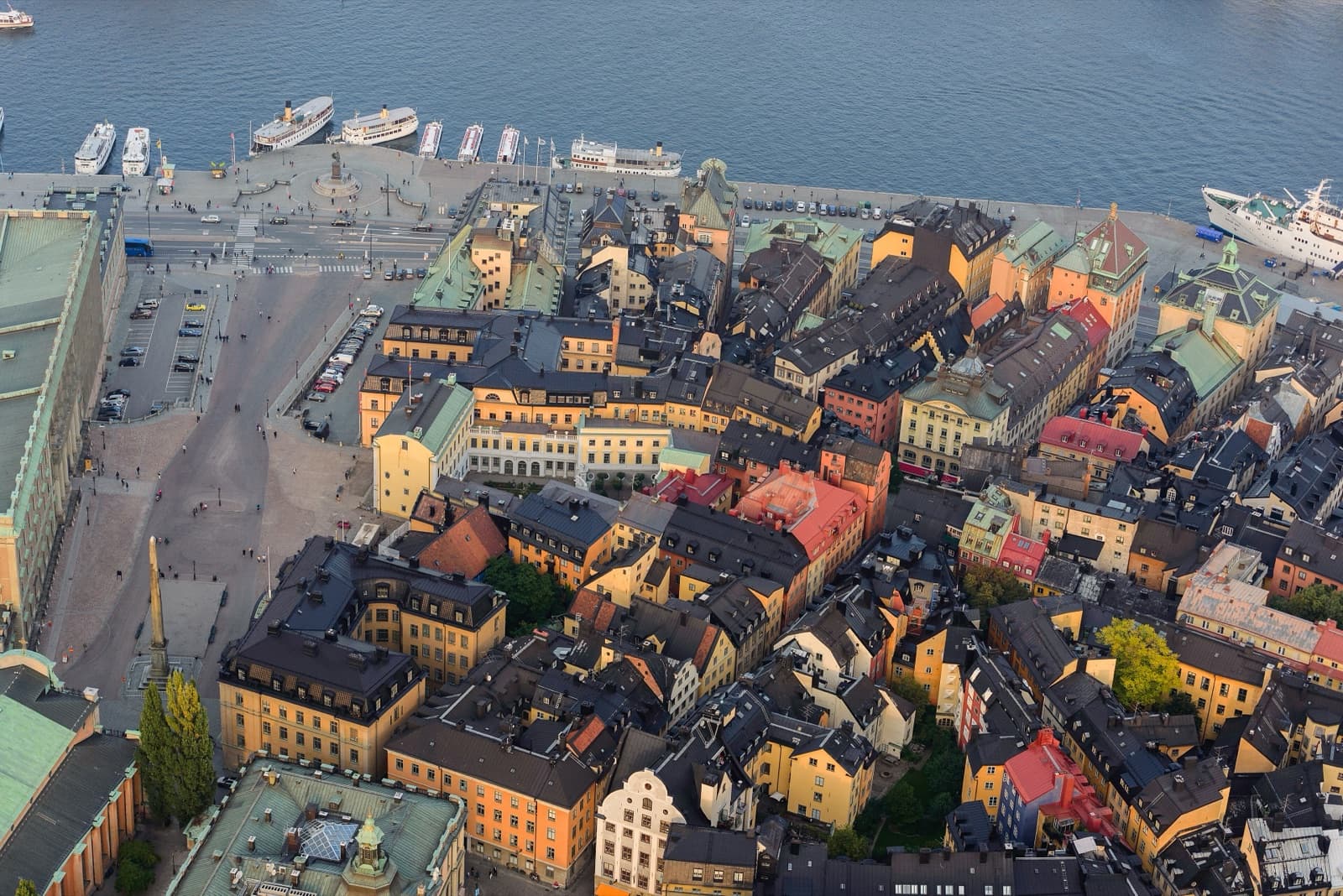
Gamla Stan, the Old Town of Stockholm, with colourful buildings packed onto an island

Photo 路 Wikimedia Commons

What is it?

Stockholm, the capital of Sweden, is built across 14 different islands. The islands are joined together by 57 bridges. Boats and ferries are part of everyday life - some children even take a ferry to get to school.

Tell me more

Stockholm sits where a huge freshwater lake (Lake M盲laren) meets the salty Baltic Sea. The water around the city splits into hundreds of channels and bays, so the land breaks up into islands. The city grew up over the years by hopping from island to island.

The oldest part is called Gamla Stan, which means 'Old Town' in Swedish. It is built on a tiny island in the middle of the water. The streets are narrow and cobbled, the houses are painted yellow, orange and red, and the whole place looks almost exactly like it did 400 years ago.

Just outside Stockholm, there is something even more amazing: the archipelago. That's a fancy word for a group of lots of islands close together. The Stockholm archipelago has around 30,000 islands. Most are tiny - some just a single rock big enough for a few trees. People take boats out to them in summer to swim and have picnics.

Because there is so much water, Stockholm is one of the cleanest big cities in the world. You can fish in the middle of the city, and the water is clean enough to swim in.

In the classroom

Walk your class through this in 15 minutes.

Talk together

Discussion prompts

  1. 01What would it be like if your town was split across lots of islands? How would your daily walk to school change?
  2. 02Why do you think people built a city in such a watery place in the first place?
  3. 03Most cities are joined together by roads. What would change if your town was joined together by bridges and boats instead?
Try this

Classroom activity

On a sheet of A3, design your own island city. Decide how many islands you have, where the bridges go, and where the school, the shops and the park sit. Give each island a name. Compare with a partner: whose city would be easier to walk across?